Plan your trip to Sumba
Everything you need to fall in love with Sumba and get around it well: when to go, how to get here, what it costs, where to go and how to respect the island.
Sumba is the island people describe with the same words Bali earned decades ago: quiet roads, empty beaches, villages where the old Marapu faith is still alive. It is also big, slow to cross and short on cash machines, so a little planning makes the difference between a rushed trip and the trip of a lifetime. Start with the essentials below, then dive into our guides.
Sumba in 30 seconds
- Size
- About 200 km long, roughly twice the size of Bali
- Getting there
- About 1 h 30 by plane from Bali, to Tambolaka (west) or Waingapu (east)
- Best time
- Dry season, roughly May to October
- Don't miss
- The Pasola horseback ritual, in February and March
- Time zone
- WITA, UTC+8 (same as Bali)
- Money
- Indonesian rupiah (IDR). Carry cash: ATMs are only in the towns
Before you go
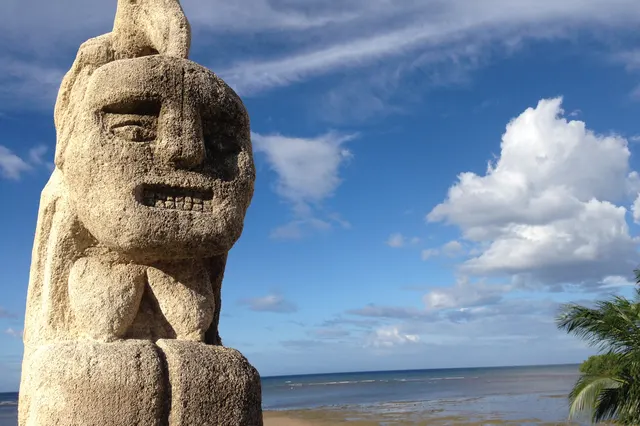
Useful words in Sumba: Indonesian and local phrases for travellers
Outside the resorts, English runs out fast. These Indonesian essentials, plus a few verified words in Kambera and Weyewa, will carry you through markets, roads and villages.
Australia to Sumba: flights from Perth, Darwin, Sydney and Melbourne via Bali
Sumba is closer to Australia than most people think: fly to Bali, sleep under a frangipani tree if you need to, and the next morning a short flight takes you to an island with almost no crowds at all.
Europe to Sumba: flights via Doha, Dubai, Istanbul or Singapore, and how long it takes
Getting from Europe to Sumba takes one long-haul flight to Bali and one short hop, and with the right stopover the journey becomes part of the adventure.
Surabaya to Sumba: the direct Nam Air flight, Bali connections and Pelni ships
Surabaya is one of the few cities outside Nusa Tenggara with a non-stop flight to Sumba, and when it does not fit your dates, Bali is just an hour away.
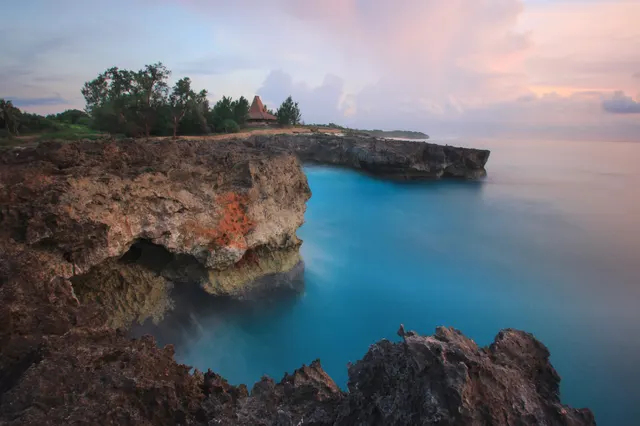
Is Sumba safe? Health, malaria, water, money and phone tips for travellers
Sumba is calm, friendly and far less crowded than Bali, but malaria, strong surf, long distances to a good hospital and patchy signal mean a little preparation goes a long way.
Labuan Bajo to Sumba: flights to Tambolaka, ferries and combining Komodo with Sumba
Komodo's dragons and Sumba's clan villages are less than an hour apart by air, which makes them one of the most rewarding pairings in eastern Indonesia, if you get the timing right.
Kupang to Sumba: flights to Waingapu and Tambolaka, and the Pelni ships
From Timor, Sumba is just over an hour away by turboprop, or a long, slow night at sea on a Pelni ship that stops at Ende on Flores along the way.
Jakarta to Sumba: flights via Bali, Kupang or Surabaya, and how long it takes
There is no non-stop flight from Jakarta to Sumba, but one well-timed connection gets you from the capital's traffic to the quiet savanna of Sumba in a single day.
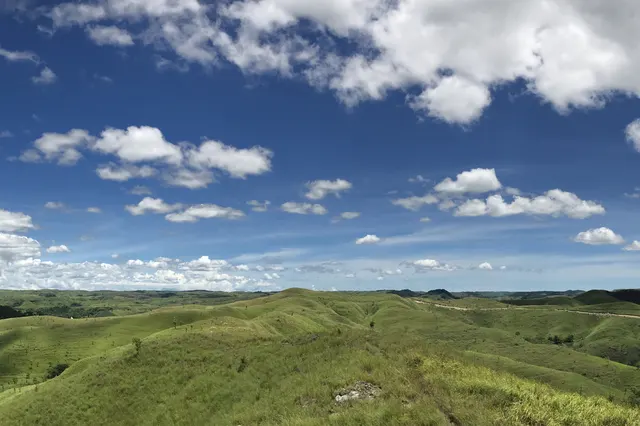
Getting around Sumba: car with driver, scooter, buses and real driving times
A table of real driving times between Tambolaka, Waikabubak, Kodi, Waingapu and the island's best sights, plus the truth about roads, fuel and night driving.
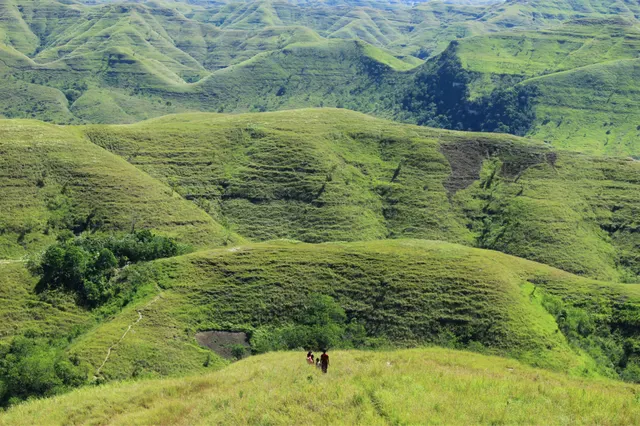
How much does a trip to Sumba cost? Budget, mid-range and luxury
Flights, drivers, fuel, village donations and a 7-day budget table: what Sumba really costs in 2026, and how to spend it well.
Sumba in facts and figures: 47 key data points
Area, population by regency, airports and codes, languages, religions, climate, national park, birds and visitors: the island in numbers, every figure sourced.
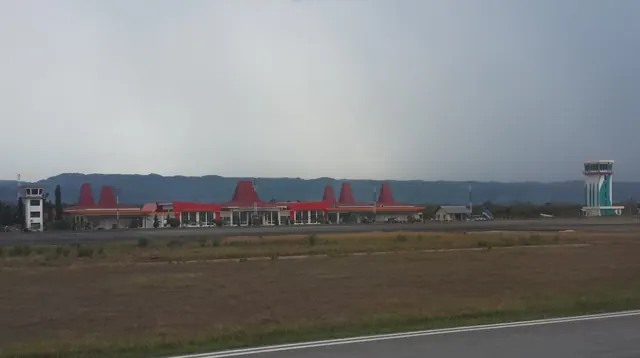
How to get to Sumba from Bali: flights, airports and the route that works best
Two airports, short flights and one simple rule: arrive at one end of the island and leave from the other.
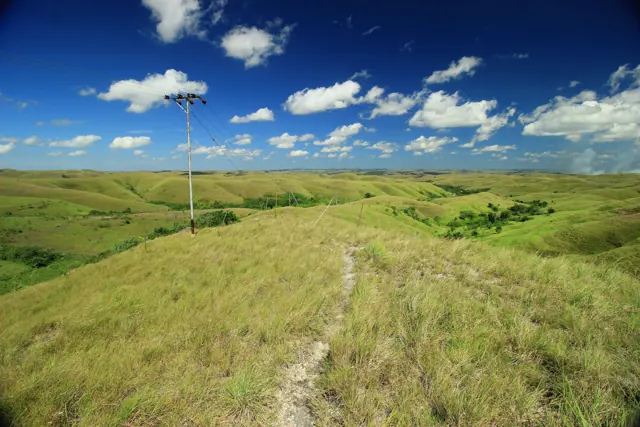
Where to stay in Sumba: every kind of hotel on the island, listed fairly
About 1,500 rooms for an island twice the size of Bali. Here they are, in alphabetical order.
On the island
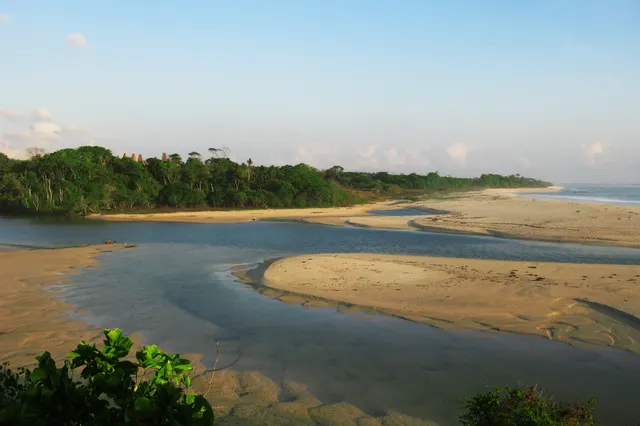
Surfing in Sumba: waves, seasons and what to know before you go
Empty reef breaks, river-mouth peaks and long rights a boat ride offshore: how to surf Sumba well, safely and with respect for the people who live by these waves.
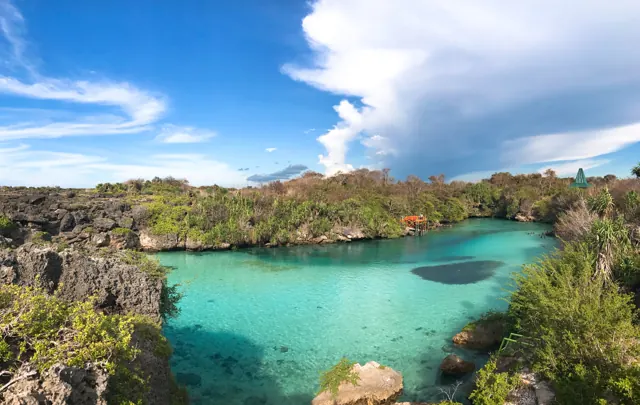
Sumba vs Bali vs Flores: which island is right for you, and how to combine them
Three islands, three very different trips: an honest comparison of crowds, nature, culture, beaches, prices and comfort, plus the routes that let you see two or all three.
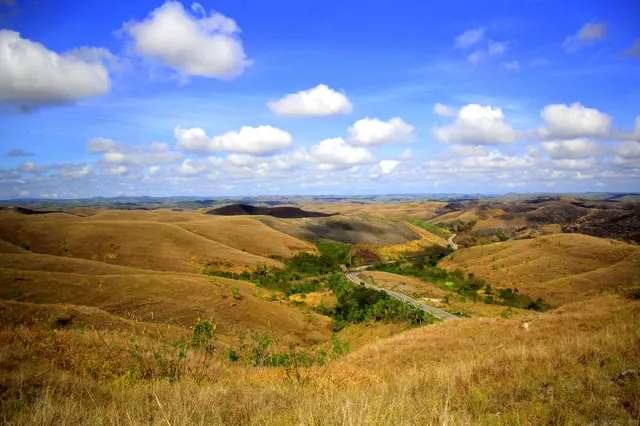
Best time to visit Sumba: a month-by-month guide
Green hills or golden savanna, roaring waterfalls or clear pools, Pasola horsemen or empty surf: in Sumba, the month you choose decides the trip you get.
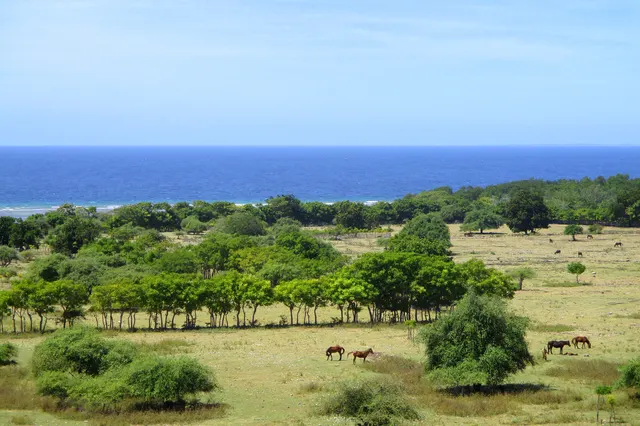
Sumba itinerary: 5, 7 and 10 days from west to east
Fly into Tambolaka, cross the island through villages, waterfalls and savanna, and fly out of Waingapu without wasting a single day backtracking.
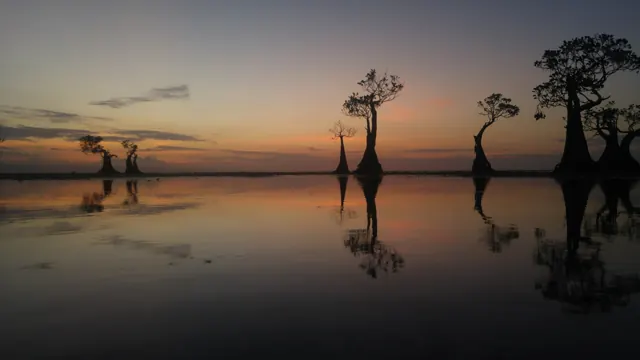
Sumba's beaches, lagoons and waterfalls: nine places worth the drive
From a turquoise lagoon in the north-west to mangroves that seem to dance at sunset in the east.
Culture and people
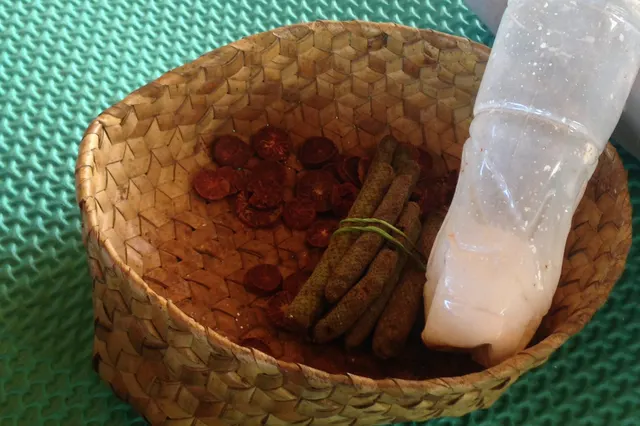
What to eat in Sumba: local dishes, markets and coffee
Corn and rice, sweet katemak, grilled fish by the harbour, betel nut on every veranda and an award-winning robusta: a practical guide to eating well and politely in Sumba.
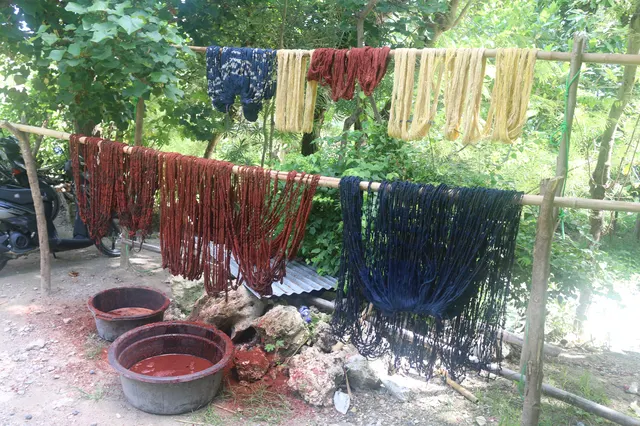
Sumba ikat: how it is made, what it means and where to buy it from the weavers
A single hinggi can take most of a year to make, and every horse, shrimp and skull tree on it says something. Here is how to read it, where to watch it being woven and how to buy one fairly.
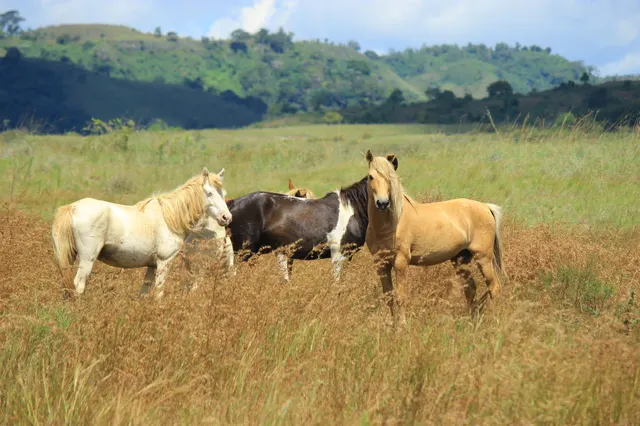
The horses of Sumba: the Sandalwood pony, the Pasola and horse culture
Small, fast and sacred: why the Sandalwood pony is part of every Sumbanese wedding, funeral and festival, and how to see these horses without disturbing them.
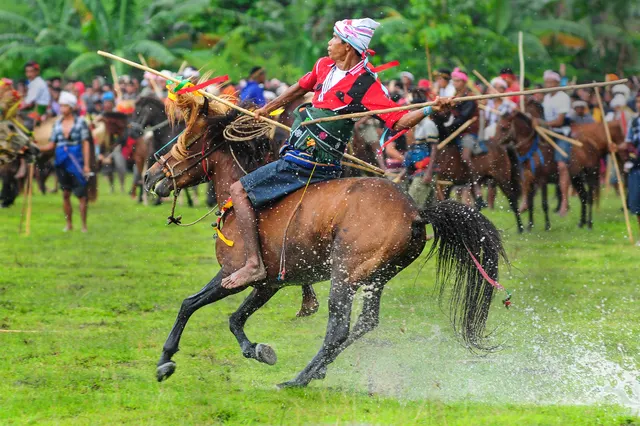
Pasola 2027 in Sumba: dates, places and how to see it
Who sets the dates, which fields hold the battles in February and March, every date from 2024 to 2026, and how to watch safely and respectfully.
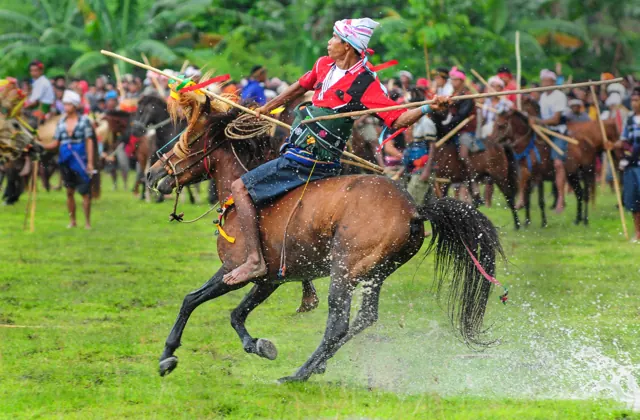
The Pasola, explained: Sumba's ritual battle on horseback
Riders throw blunt wooden spears at each other across an open field. It is not a show. It is a ritual that opens the planting season.
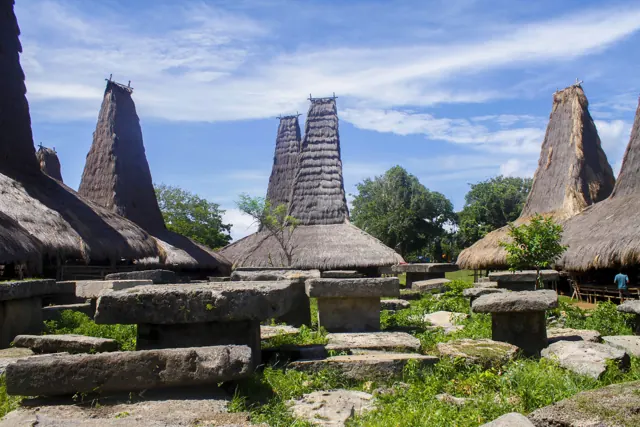
Marapu, ikat and the traditional villages: a respectful guide to Sumba's culture
Tall thatched roofs, stone tombs still in use and cloth that takes hundreds of hours to weave.
Places
Central Sumba (Sumba Tengah): what to know before you go
The regency most travellers drive straight through hides Sumba's greatest stone tombs, a jungle waterfall and quiet villages on the Anakalang plain. Here is why to stop.
Southwest Sumba (Sumba Barat Daya): what to know before you go
The airport, the lagoon, the high-roofed villages of Kodi and the February Pasola: Southwest Sumba is where most trips begin. Here is how it fits together.
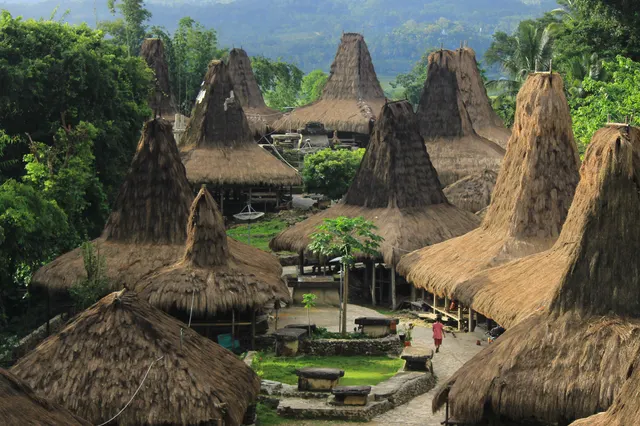
West Sumba (Sumba Barat): what to know before you go
The smallest regency packs in a cool highland capital, clan villages on every hill, jungle waterfalls and two Pasola fields: a practical guide to West Sumba.
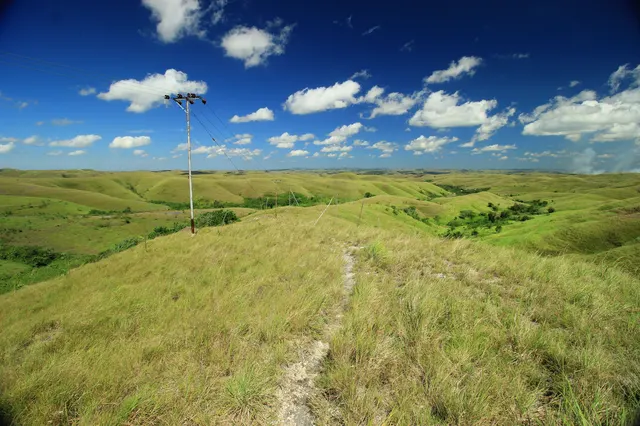
East Sumba (Sumba Timur): what to know before you go
Two thirds of the island, a few hundred thousand people and a lot of sky: how East Sumba works, where to go and what to sort out before you leave Waingapu.
Waingapu, Sumba: what to do in East Sumba's main town
Horse-trading port, market town and gateway to the savanna: how to spend a day in Waingapu and use it as a base for East Sumba.
Londa Lima Beach, Sumba: Waingapu's nearest white-sand beach
White sand, calm water and savanna hills running down to the sea, a short drive from town: an easy swim and a quiet afternoon on Sumba's north coast.
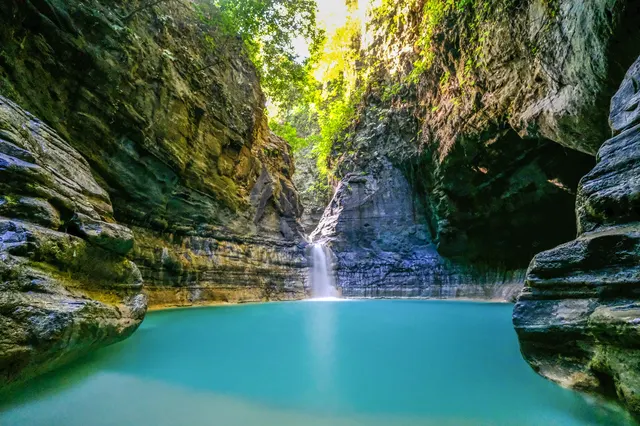
Waimarang Waterfall, Sumba: the turquoise pool in the forest
A short, steep walk down through the trees to a bright blue pool ringed by limestone walls: how to reach Waimarang and enjoy it before the crowds.
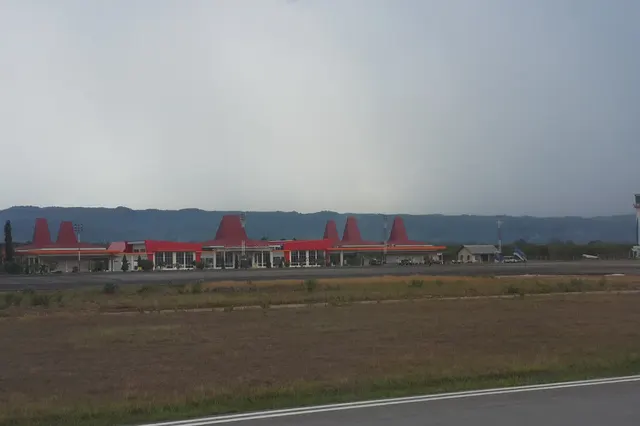
Tambolaka, Sumba: the airport town, what to do and what to know
Most travellers only pass through, but Sumba's western gateway has the island's largest market, a cultural museum and beaches minutes from the runway: a practical guide.
Laiwangi Wanggameti National Park, Sumba: forest and highest peak
Cloud forest, cockatoos and the 1,225 m summit of Sumba in the remote south-east: how to plan a visit to the island's wildest corner.
Kerewe Beach, Sumba: surf, karst islets and quiet bays in Lamboya
A long right-hand wave, rock islets at the western end and hidden coves over the hill: what Kerewe (Kerewei) is like, how to reach it and what to know.
Bukit Persaudaraan, Sumba: Waingapu's easy sunset hill
A grassy limestone hill across from Waingapu airport, with rice fields, the town and the sea below and old wartime caves on top.
Pau village, Sumba: the weavers of the old Umalulu kingdom
In the Melolo river delta, noblewomen still weave the raised patterns of pahikung cloth: a quiet, rewarding stop for anyone who loves textiles.
Watu Maladong Beach, Sumba: rock islands, tides and access
Limestone towers rising from a turquoise bay on the south coast of Kodi, one with an arch you can walk under at low tide: how to get there and how to stay safe.
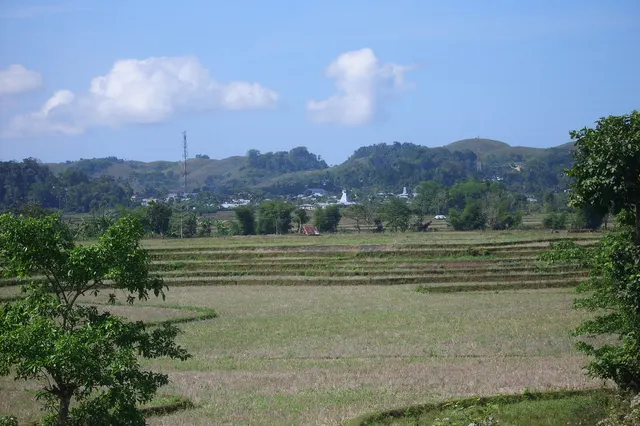
Waikabubak, Sumba: a guide to West Sumba's highland town
A small, cool hill town where clan villages sit inside the town limits and buffaloes walk home through the streets at dusk.
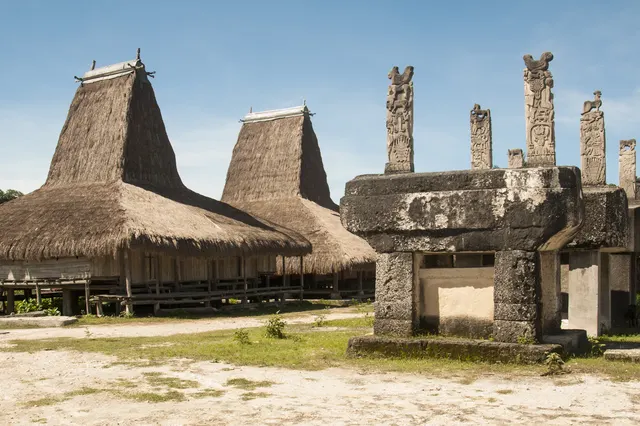
Rende village, Sumba: royal tombs and ikat in the south-east
Massive carved stone tombs between two rows of tall houses, in the old domain of the kings of Rindi: what to know before visiting Rende and Praiyawang.
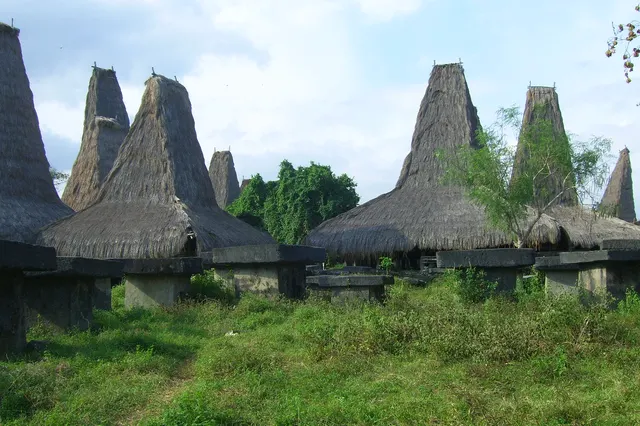
Kodi, Sumba: villages, beaches and Pasola in the far west
The westernmost corner of Sumba, where tall thatched roofs meet the Indian Ocean: what Kodi is, how to get there, when to go and how to travel it respectfully.
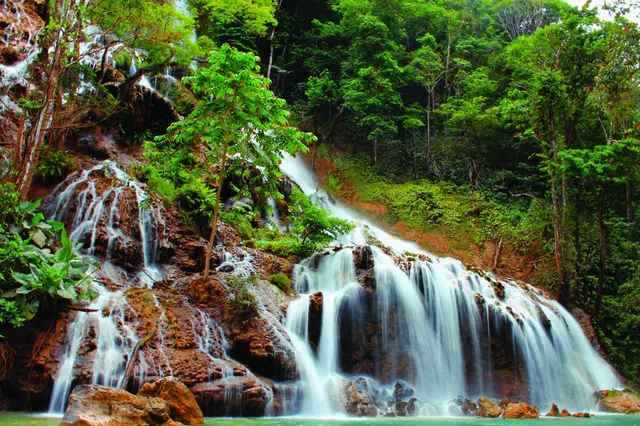
Manupeu Tanah Daru National Park, Sumba: visitor guide
The last big lowland forest of western Sumba, home to the Sumba hornbill, the Sumba cockatoo and the island's most famous waterfalls.
Prailiu village, Sumba: the royal weaving village in Waingapu
Tall thatched roofs, carved stone tombs and the click of backstrap looms, a few minutes from Waingapu airport: how to visit Kampung Raja Prailiu respectfully.
Wainyapu village, Sumba: tombs, tall roofs and how to visit
One of the largest traditional villages in Kodi, facing Ratenggaro across a river mouth, with stone tombs by the hundred and a Pasola field at its edge: how to visit with care.
Marosi beach, Sumba: getting there, surf and safe swimming
Almost 4 km of soft white sand curving around a lone rock island on Lamboya's south coast, with waves that draw surfers from May to October.
Tarimbang Beach, Sumba: the south coast bay and its surf
A horseshoe of white sand between cliffs and forest, with a long right-hand wave breaking out on the reef: why Tarimbang is worth the long, winding road.
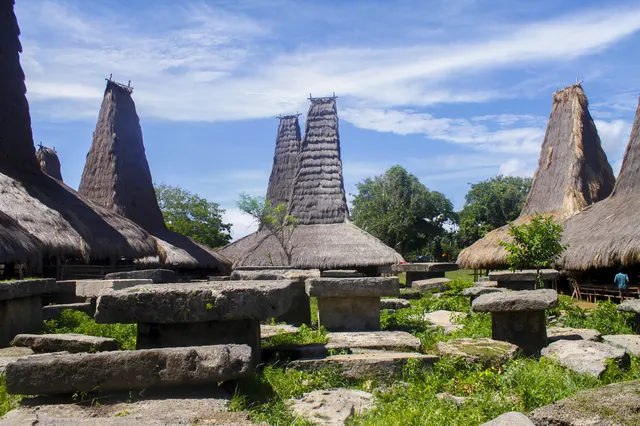
Ratenggaro village, Sumba: how to visit respectfully
Towering thatched roofs and centuries of stone tombs on a lagoon by the Indian Ocean: how to reach Ratenggaro, what to give, what to avoid and when to go.
Waikelo Sawah waterfall, Sumba: cave river and swim stop
An underground river bursts from a limestone cave into rice fields: a cool, easy stop on the road between Tambolaka and Waikabubak.
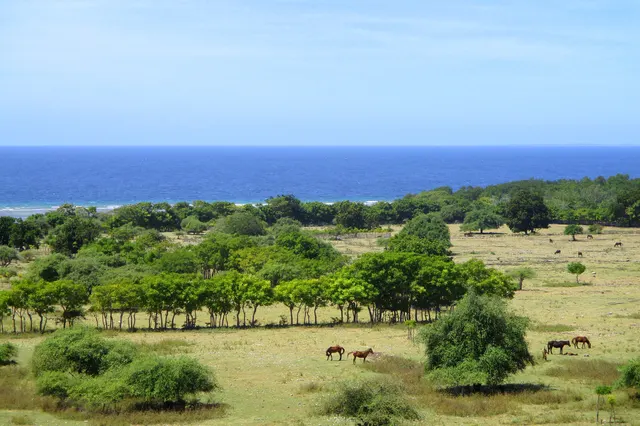
Puru Kambera, Sumba: savanna, wild horses and a calm beach
Golden grassland where Sumba's horses graze free, then a long casuarina-lined beach with gentle water: an easy half day from Waingapu.
Pero Beach, Sumba: fishing village, surf and sunsets in Kodi
Painted wooden houses, outrigger canoes and a long reef break at the western edge of Sumba: how to reach Pero, when to go and how to enjoy it with respect.
Matayangu waterfall, Sumba: the jungle trek and what to know
A 75 m fall pouring from a cave into a blue-green pool, reached only on foot through some of Sumba's last lowland forest.
Tanggedu Waterfall, Sumba: the canyon pools of East Sumba
Turquoise water braiding through a carved limestone gorge after a long walk across the savanna: what it takes to reach Tanggedu and how to enjoy it safely.
Bawana (Mbawana) Beach, Sumba: getting there and what to know
Golden sand under tall cliffs on Sumba's south-west coast, reached by a steep stairway: what is left after the famous arch fell, how to get there and how to stay safe.
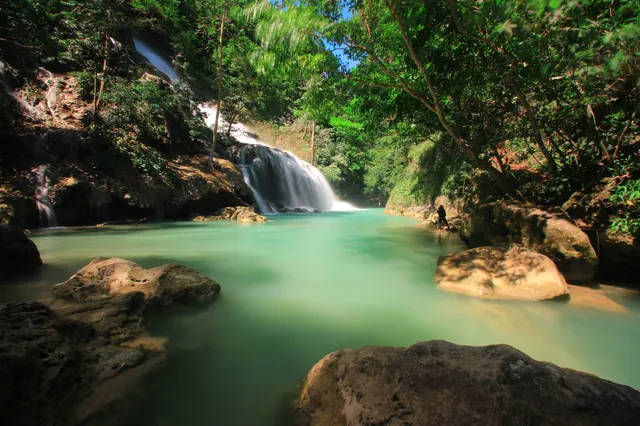
Lapopu waterfall, Sumba: how to get there and when to go
Sumba's tallest waterfall spills down a staircase of rock inside the national park, a short forest walk from the road.
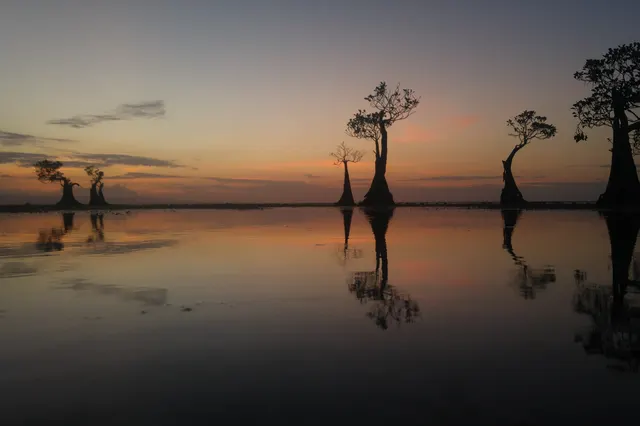
Walakiri Beach, Sumba: the dancing mangroves at sunset
Small, twisted mangrove trees standing in shallow water, black against an orange sky: how to time the tide and the light at East Sumba's best-known sunset beach.
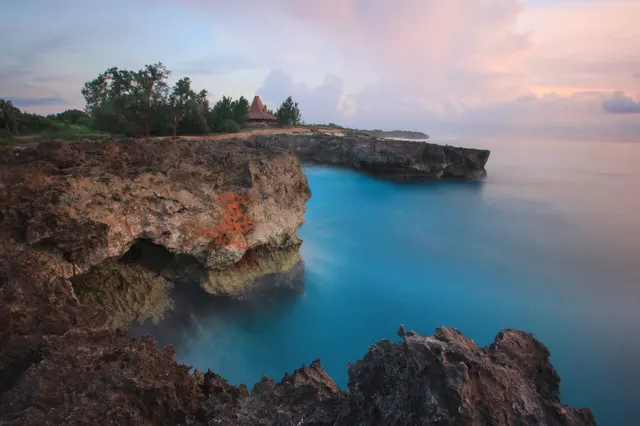
Mandorak Beach, Sumba: how to get there and what to expect
A pocket of white sand between two limestone cliffs, opening to the ocean through a narrow gap: what Mandorak is like, how to reach it and how to visit without surprises.
Tarung village, Sumba: visiting Waikabubak's ritual heart
A hilltop clan village in the middle of a town, where Marapu priests still set the calendar of the sacred month.
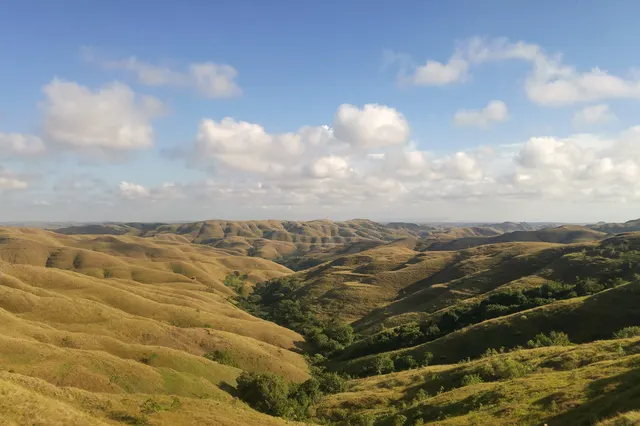
Wairinding Hill, Sumba: when to go, how to get there, what to know
Rolling grass hills that turn from green to gold with the seasons, half an hour from Waingapu: the most famous view in East Sumba and how to see it well.
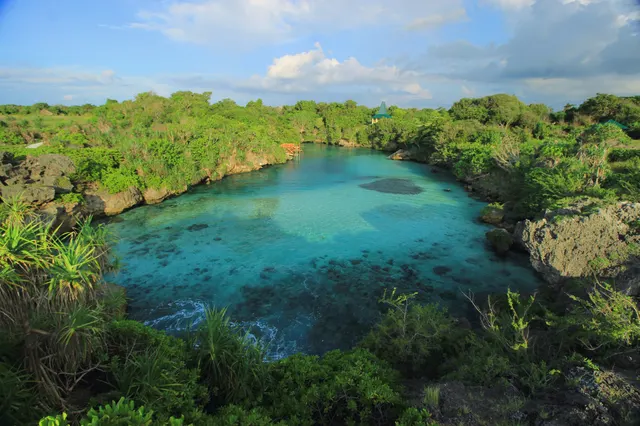
Weekuri Lagoon, Sumba: how to get there, when to go, what to know
A pool of clear salt water fed by the Indian Ocean through the coral, on the far western tip of Sumba: how to reach it, when the light is best and how to swim safely.
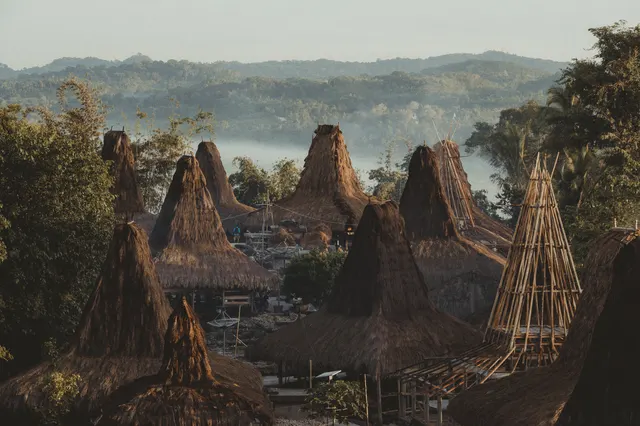
Praijing village, Sumba: how to visit and what to know
Terraces of towering thatched roofs on a hill above Waikabubak, a living Marapu village that now runs its own tourism.
Map of Sumba: the places in our guides
Tap a point to see its name. Map data © OpenStreetMap contributors, tiles by OpenFreeMap.
Trip budget calculator
Estimated total, including return flights from Bali…
A rough estimate built from the ranges in our cost guide (2026 prices), not a quote. Prices rise in July-August and Pasola weeks. How we calculate it →
Frequently asked questions
When is the best time to surf in Sumba?
The dry season, roughly April to October, brings the most consistent south-west groundswell to the west and south-west facing breaks. The early season (around March-June) and the late season (around October-December) can offer cleaner conditions and fewer surfers. In the wet season, some sheltered or south-east facing breaks in East Sumba work better. →
Is Sumba good for beginner surfers?
Only with care. Most waves break over shallow reef and are powerful. Beginners should come with a local guide, surf small days and look for sandy sections, such as the beach-break parts of Marosi at low tide. →
Is Sumba better than Bali?
Not better, different. Sumba is far quieter, with empty savannas, beaches and living traditional villages, while Bali has much better infrastructure, food and variety. Many travellers combine them, since Sumba is about 1h30 from Bali by air. →
Can you fly from Sumba to Labuan Bajo?
Yes. Wings Air flies Tambolaka (TMC) to Labuan Bajo (LBJ) non-stop about three times a week, a flight of roughly 45 minutes. Check current days with the airline, as schedules change. →
What is the best month to visit Sumba?
June to August offers the most reliable sunshine and easiest roads. May and September are nearly as good and quieter. →
When is the rainy season in Sumba?
Roughly December to March, with the turn of the rains anywhere from late October to December. The east is drier than the west. →
How many days do you need in Sumba?
Seven days is ideal for a west-to-east crossing. Five days works at a fast pace with one long driving day; three or four days is enough for only one end of the island. →
Should I fly into Tambolaka or Waingapu?
Fly into one and out of the other. Tambolaka has several daily flights from Bali; Waingapu has a direct TransNusa flight from Bali four times a week (Tue, Wed, Fri, Sat) since July 2026. →
What language do they speak in Sumba?
Indonesian is the common language, understood almost everywhere. At home people speak local languages such as Kambera in the east and Weyewa, Kodi, Wanukaka or Lamboya in the west. →
Do people speak English in Sumba?
Only a little, mostly in towns, hotels and among guides. In villages and the interior you will need some Indonesian or a local guide. →
Can you fly directly from Australia to Sumba?
No. You fly to Bali and connect to Tambolaka or Waingapu, a domestic flight of about 1 hour 30 minutes. Check the airline before booking because schedules change. →
How long does it take to get from Perth to Sumba?
About 3.5-4 hours to Bali plus about 1 hour 30 minutes to Sumba. With a morning flight from Perth and a same-day connection, roughly 7-9 hours airport to airport. →
Can you fly directly from Europe to Sumba?
No. You fly to Bali with one stop, usually in Doha, Dubai, Istanbul or Singapore, and then take a domestic flight of about 1 hour 30 minutes to Tambolaka or Waingapu. →
How long does it take to get from Europe to Sumba?
About 16-18 hours from London to Bali with one stop, plus about 1 hour 30 minutes to Sumba. With the usual night in Bali, plan on roughly 1.5-2 days door to door. →
Ask The Sumba Times
A question about Sumba our guides do not answer? Send it to the desk. We read every one, and the most common questions become new guides.
Low Tide, every Sunday
One short letter a week about living well, from an island with more horses than traffic lights. Free.
We only use your email to send the letter. Unsubscribe in one click.