Culture
The Pasola, explained: Sumba's ritual battle on horseback
Riders throw blunt wooden spears at each other across an open field. It is not a show. It is a ritual that opens the planting season.
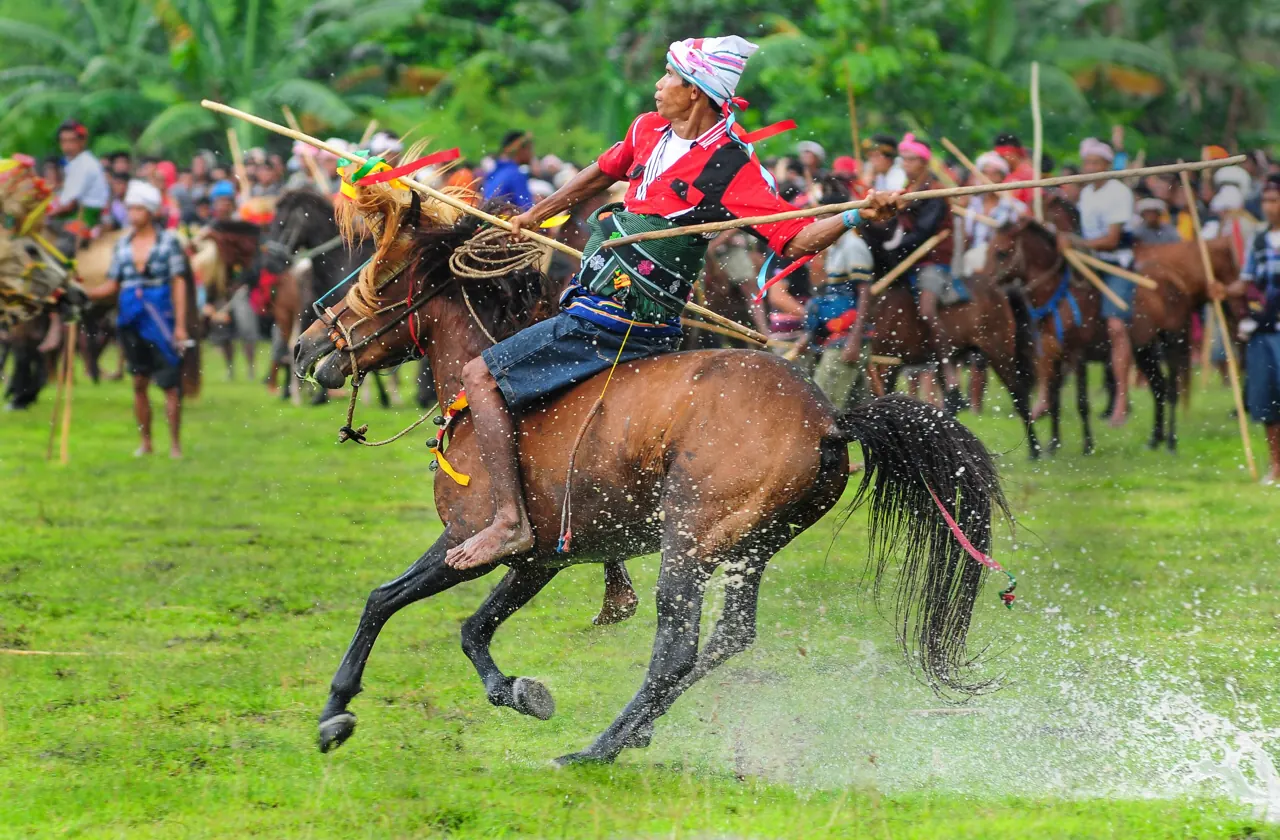
Every year, usually in February and March, horsemen in West and Southwest Sumba gather in two teams on an open field and charge at each other, throwing wooden spears while they dodge. This is the Pasola.
Why it happens
The Pasola belongs to Marapu, the ancestral religion of Sumba. It is tied to the farming year and to the ancestors. Older accounts say that blood spilled on the field fed the land. Today the spears are blunt, but the ritual meaning remains.
Who sets the date
There is no fixed date on the calendar. The rato, the traditional elders, read the signs. One of them is the arrival of the nyale, sea worms that appear on the shore. When the nyale come, the Pasola can begin.
Where
In the regions of Kodi, Lamboya, Wanokaka and Gaura. Most visitors stay near Tambolaka and drive up to about 2.5 hours to the fields.
2026, for reference
Local schedules announced for 2026 were 9-11 February (Homba Kalayo, Bondo Kawango, Rara Winyo) and 9-11 March (Maliti Bondo Ate, Wai Ha, Wainyapu). Dates for 2027 will depend, as always, on the elders.
How to be a good guest
- Remember that this is a ritual, not a performance for tourists.
- Dress modestly and stay well back from the field. Riders fall, and horses run where they want.
- Ask before photographing people, especially during the ceremonies around the battle.
- Bring water, sun protection and cash. There is usually no ticket.
- Go with a local guide or driver who can tell you when and where to be.
Spotted an error? Write to info@ecobeachcity.com.
Low Tide, every Sunday
One short letter a week about living well, from an island with more horses than traffic lights. Free.
We only use your email to send the letter. Unsubscribe in one click.