Culture
The horses of Sumba: the Sandalwood pony, the Pasola and horse culture
Small, fast and sacred: why the Sandalwood pony is part of every Sumbanese wedding, funeral and festival, and how to see these horses without disturbing them.
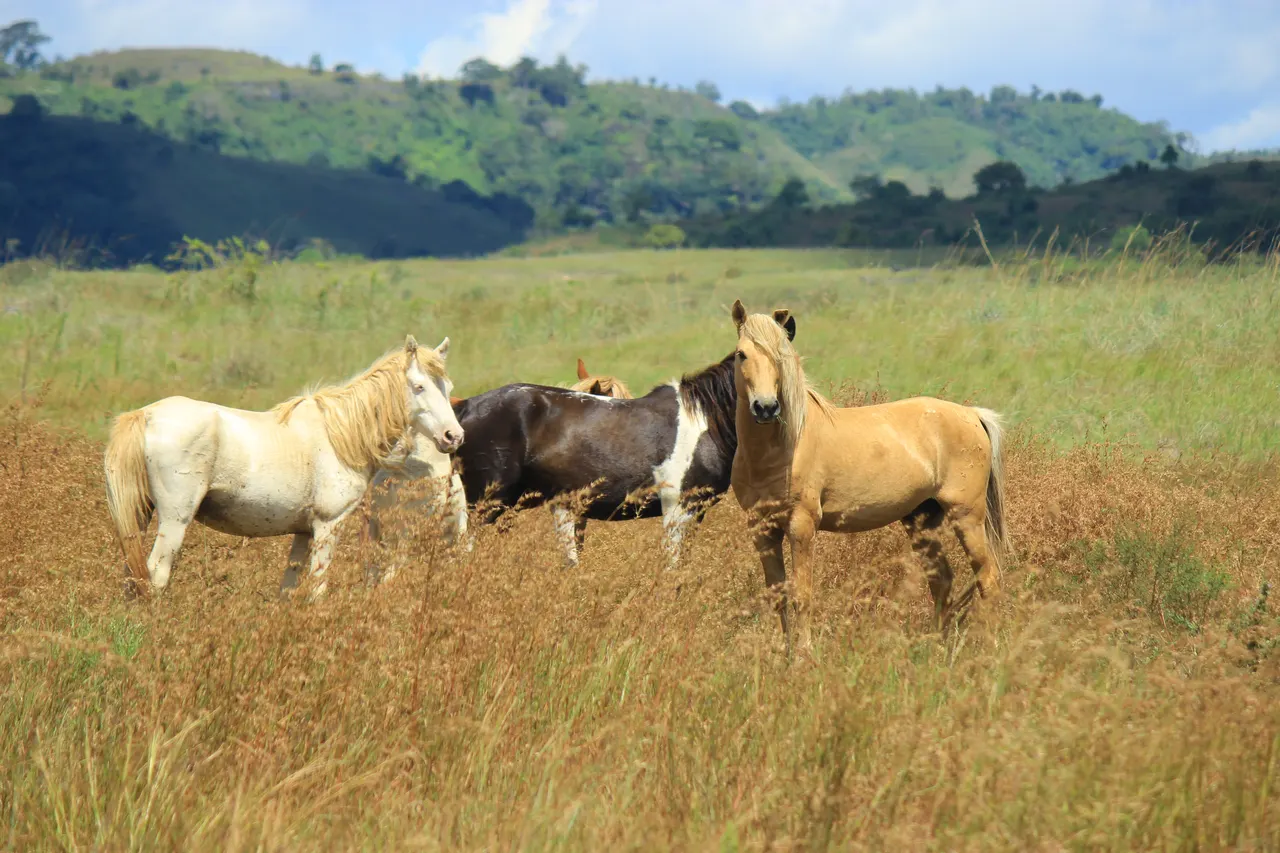
The Sandalwood pony is Sumba's native horse breed, a small (around 12-13 hands, roughly 120-130 cm), hardy and fast pony named after the sandalwood the island once exported, with Arabian blood in its lineage. Horses are central to Sumbanese life: they are part of the belis (bride price), are sacrificed at funerals to carry the soul to the afterlife, and are ridden in the Pasola and in horse races. Visitors can see them grazing on the savannas and beaches, ideally with a local guide and always with the owner's permission before touching, riding or photographing up close.
- Breed
- Sandalwood pony (local name ndara), native to Sumba and Sumbawa
- Size
- Around 12-13 hands (roughly 120-130 cm), about 250 kg
- Name
- From sandalwood, the island's historic export
- Official status
- One of Indonesia's eight official native horse breeds (designated 2014)
- Cultural role
- Belis (bride price), funeral sacrifice, Pasola, horse races
- Where to see them
- Savannas and beaches of East Sumba; Pasola fields in Feb-Mar
Late afternoon on the grasslands of East Sumba. The hills turn gold, the wind combs the dry grass, and a small herd moves slowly across the slope: a cream mare, a bay, a pinto with a pale mane, heads down, tails swishing. Further down, at the edge of a beach, a boy rides bareback into the shallows to wash his horse, and the two of them stand in the low sun as if nothing else in the world were happening.
On Sumba, horses are not a tourist attraction. They are wealth, family, transport, ritual and pride. The local name for horse in East Sumba is ndara, and the animal's status is described as close to that of the ancestral spirits. If you want to understand the island, start with its horses: the Sandalwood pony, a small breed that has been raised here for centuries and still appears at every important moment of a Sumbanese life.
What is the Sandalwood pony?
The Sandalwood pony is a native Indonesian breed from the islands of Sumba and Sumbawa. It is usually 12-13 hands high (about 122-132 cm), with Indonesian sources giving adult heights of roughly 110-130 cm, and it weighs around 250 kg. Coats come in almost any colour: bay, chestnut, black, grey, cream and pinto are all common. Breed descriptions highlight a fine head with small ears, a short muscular neck, a deep chest and good endurance, and say these ponies are fast and easy to manage. Indonesia recognises the Sandalwood as one of its eight official native horse breeds; it was formally designated as a breed by a Ministry of Agriculture decree in 2014.
Low Tide, every Sunday
One short letter a week about living well, from an island with more horses than traffic lights. Free.
We only use your email to send the letter. Unsubscribe in one click.The name comes from sandalwood (cendana), the fragrant wood that once covered the island and made Sumba famous among traders, so much so that it was long known as Sandalwood Island. The horses and the wood travelled together: the ponies carried timber across the dry plains, and both became prized export goods.
A short history of horses on Sumba
Nobody knows exactly when horses first reached the islands of Nusa Tenggara, and sources tell slightly different stories. The broad picture is this:
- Asian roots. Indonesian horses are thought to descend from Mongolian-type horses brought into the archipelago over many centuries through Java and maritime trade. One horse specialist quoted by Al Jazeera summed up a local story: Chinese traders swapped ponies for sandalwood.
- Arabian blood. Later, Arabian horses arriving through sea trade were bred into local stock, which is why the Sandalwood is often described as one of the finest ponies in Indonesia.
- A trading island. A Dutch record from 1890 notes that Sumbanese nobles were exporting horses to other islands at least from 1840, mostly through the port of Waingapu.
- Colonial crossbreeding. In the 1800s, under Dutch rule, European horses were imported and crossed with Sumba horses to produce bigger animals, and Dutch colonists introduced circuit-style racing in the 1930s.
- Today. Breeders cross Sandalwood mares with larger Australian Thoroughbreds to make faster racehorses. As a result, pure Sandalwood ponies are becoming harder to find. A 2018 provincial count recorded 32,983 Sandalwood and crossbred horses together, with no clear split between them, and the East Sumba livestock office says pure ponies now appear only sporadically in some areas. A severe drought in 2019 also killed many horses. The government has designated Matawai La Pawu district in East Sumba as a breeding source area to protect the pure line.
Horses in Sumbanese life: belis, funerals and Marapu
The belis, or bride price
When a Sumbanese man marries, his family gives the bride's family a belis, a bride price in which horses are a central part. Horses in the belis are not a simple payment: they seal an alliance between two clans, and a family's standing in the community has long been tied to how many good horses it owns. The exact number depends on the family, the clan and the status of the bride, and negotiations can take a long time. Horses were also given as gifts to make peace between clans in the past.
Funerals and the journey of the soul
In the Marapu belief, the indigenous religion still practised alongside Christianity and Islam on Sumba, the horse is the vehicle that carries the soul of the dead to the world of the ancestors. At important funerals a family may sacrifice a horse, often its best one, so that the deceased can ride on to the afterlife. Local tradition says that the ancestors themselves travelled on horseback. "Horses are always present in every Sumbanese traditional ceremony," a cultural figure from East Sumba told Mongabay. To learn more about Marapu, read Marapu, ikat and traditional villages.
Horses without names
One detail surprises many visitors: Sumbanese horses are traditionally not given personal names, because naming a horse is considered demeaning to an animal held in such high regard. Owners recognise their horses by colour, markings and character.
The Pasola: Sumba's ritual battle on horseback
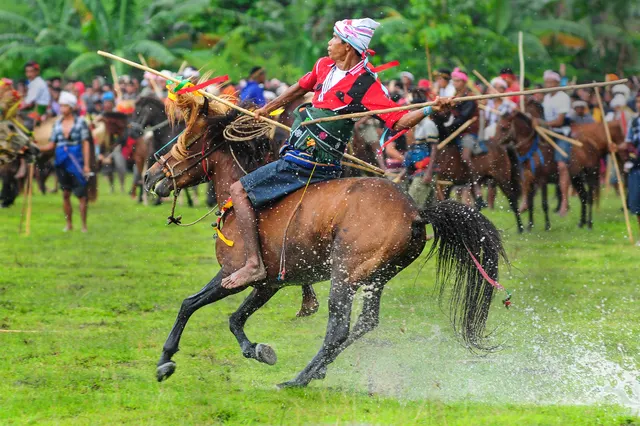
The most famous expression of Sumba's horse culture is the Pasola. Each year, usually in February in Kodi and Lamboya and in March in Wanukaka and Gaura, hundreds of riders on Sandalwood ponies gallop bareback across open fields in two teams and throw wooden spears at each other. The date is set by the Rato elders, who follow the arrival of the nyale sea worms on the shore. The spears are blunt today, but riders still fall and injuries happen. In the Marapu view, blood spilled on the ground helps make the land fertile for the coming harvest. The Pasola is a religious ritual first and a spectacle second, so dress modestly, stay well behind the crowd line and follow instructions from organisers. Our full guide: the Pasola, explained.
Horse races and festivals
After the Pasola, horse racing (pacuan kuda) is Sumba's favourite horse event. Several championships are held each year on tracks around the island, and bareback races on the islands can run over long distances, sometimes more than 3 miles (4.8 km). Jockeys are often young; Al Jazeera reported children as young as eight riding in beach races, and horse-welfare experts have warned that some crossbred racehorses are raced too early. If you attend, enjoy the noise and colour, but keep a safe distance from the track.
Sumba has also hosted the 1001 Sandalwood Horses parade, a festival of decorated horses and riders in traditional dress. In 2017 it ran from 3 to 10 July, moving between Waingapu, Anakalang, Waikabubak and Tambolaka, alongside an ikat weaving festival; a parade has also been held on Walakiri beach in East Sumba. Dates and formats change from year to year, so check local news before planning around it.
How to see Sumba's horses respectfully
You will see horses everywhere on Sumba: grazing on the savannas of East Sumba, tied in village yards, crossing roads and, most photogenically, walking along beaches at sunrise and sunset. Every one of them belongs to someone. A few simple rules make a big difference:
- Look, don't touch. Do not approach, pat, feed or try to ride a horse without the owner's permission. Small ponies kick, and a horse is valuable property and part of a family's wealth.
- Ask before photographing riders. A smile and a gesture toward your camera is usually enough. If someone asks for a small tip for posing on a beach, it is fair to pay or to politely decline and move on.
- Keep drones away. Drones frighten horses and can cause accidents for riders and children.
- Do not stand behind horses or between a mare and her foal, and give way to riders on paths and beaches.
- Choose horse rides carefully. If you want to ride, go with a local guide who knows the owner, check that the horse looks healthy, and avoid anything that looks like a tired or very young animal being overworked.
- Respect ritual animals. At funerals or ceremonies, horses may be prepared for sacrifice. Do not interfere, and ask your guide whether it is appropriate to stay or to photograph.
The best places to see free-roaming horses are the open hills and savannas of East Sumba, the coastal plains near Waingapu and beaches such as Walakiri, especially in the dry season (roughly May to September) when the grass turns gold. For more coastline ideas see beaches, lagoons and waterfalls, and for timing read the best time to visit Sumba.
Plan your visit
To see the Pasola, plan for February or March and stay in West or Southwest Sumba, arriving through Tambolaka. To see horses on savannas and beaches, spend a few days in East Sumba, arriving through Waingapu. A week lets you do both; our Sumba itinerary for 5, 7 or 10 days shows how. For transport and budget, see getting around Sumba and Sumba travel costs. And for the other great symbol of Sumbanese identity, do not miss our guide to Sumba ikat weaving and where to buy it.
Frequently asked questions
What is a Sandalwood pony?
A small, hardy and fast native horse breed from Sumba and Sumbawa, usually about 12-13 hands (roughly 120-130 cm). It is named after the sandalwood the islands once exported and has Arabian blood in its ancestry.
Why are horses so important in Sumba?
Horses are wealth and status. They are part of the belis (bride price) at weddings, are sacrificed at funerals to carry the soul to the ancestors in the Marapu belief, and are ridden in the Pasola and in horse races.
How many horses are given as belis in Sumba?
There is no fixed number. It depends on the families, the clans and the bride's status, and is negotiated between the two families.
Where can I see horses on the beach in Sumba?
Horses are common on beaches and savannas in East Sumba, including around Waingapu and Walakiri beach, especially at sunrise and sunset. They are always owned, so ask permission before approaching or photographing riders up close.
Can tourists ride horses in Sumba?
Yes, through local guides who know the owners. Check that the horse looks healthy, avoid very young or tired animals, and never ride a horse you find on a beach without the owner's permission.
When is the Pasola horse festival?
Usually in February (Kodi and Lamboya) and March (Wanukaka and Gaura). The exact dates are set each year by the Rato elders following the arrival of the nyale sea worms.
Places in this guide
- Walakiri Beach · Pandawai, East Sumba · Open in maps
- Sandalwood Pony, Wikipedia
- A ride to heaven: Why Sumba loves the Sandalwood pony, Al Jazeera, 11 June 2021
- Kuda Sumba, warisan alam Tanah Marapu yang semakin menghilang, Mongabay Indonesia, 8 December 2019
- Di Sumba kuda adalah segalanya, tapi ras aslinya semakin sulit ditemukan, Mongabay Indonesia, June 2026
- Sandalwood ponies: meet Sumba's legendary horses of wealth, ritual and speed, SEAsia, 15 July 2026
- The unique 1001 Sandalwood Horses Festival on Sumba Island, Indonesia Travel (Ministry of Tourism)
- 1001 Sandalwood horse parade on Walakiri Beach, Sumba Island, Tempo English
- Sandalwood Pony, kuda pacu Sumba yang melegenda, Good News From Indonesia, 10 December 2020
Spotted an error? Write to info@ecobeachcity.com.
Low Tide, every Sunday
One short letter a week about living well, from an island with more horses than traffic lights. Free.
We only use your email to send the letter. Unsubscribe in one click.