Culture
What to eat in Sumba: local dishes, markets and coffee
Corn and rice, sweet katemak, grilled fish by the harbour, betel nut on every veranda and an award-winning robusta: a practical guide to eating well and politely in Sumba.
Everyday Sumbanese food is simple and filling: rice often mixed with corn, cassava and other tubers, vegetables such as cassava and papaya leaves, grilled fish on the coasts and plenty of sambal, while pork and buffalo are mainly feast meat at weddings and funerals. Try jagung katemak (a corn stew), kaparrak and manggulu snacks, local robusta coffee from Southwest Sumba, and the morning markets in Waingapu and Waikabubak. Accept sirih pinang (betel nut) when offered, or politely take the coffee instead.
- Staples
- Rice, often mixed with corn (nasi jagung); cassava, yams and sweet potato
- Dishes to try
- Jagung katemak, jagung titi, kaparrak, manggulu, ikan bakar with sambal
- Feast meat
- Buffalo and pork at weddings and funerals; pigs and chickens at rituals
- Coffee
- Mainly robusta from Wewewa, Southwest Sumba; often sweet with ginger
- Main markets
- Pasar Inpres (Waingapu), Pasar Waikabubak; go early morning
- Typical warung meal
- Around Rp 20,000-50,000 (2025-2026)
Early morning at the market in Waingapu smells of wood smoke, dried fish and wet green leaves. Women sit behind small pyramids of chillies, shallots and limes; piles of betel leaf and areca nut sit next to bags of white lime paste; someone is selling bundles of cassava leaves and freshly pulled sweet potatoes. Out in the villages, a guest is first offered a box of sirih pinang and a glass of coffee so sweet the spoon almost stands up. Sumba is not a gourmet destination, and travellers should not expect Bali's café scene, but its food tells you a great deal about how people live on a dry, proud island.
The short answer: you will eat rice (often mixed with corn), tubers, leafy greens, grilled fish and chicken with fiery sambal in simple warungs, and you will drink strong, sweet local coffee. Pork and buffalo appear above all at ceremonies. Learn the betel nut etiquette and you will be welcomed everywhere.
The staples: corn, rice, cassava and tubers
Sumba is one of the driest islands in Indonesia, and its kitchen is built on crops that survive drought.
Low Tide, every Sunday
One short letter a week about living well, from an island with more horses than traffic lights. Free.
We only use your email to send the letter. Unsubscribe in one click.- Rice and corn. In many rural homes the daily staple is nasi jagung, rice cooked together with corn, eaten at lunch and dinner. Plain white rice is "first class": it is the food of weddings, funerals and rituals, and families with enough rice eat it whenever they can. Rice grows in irrigated valley fields; corn grows in hillside gardens.
- Cassava and tubers. Cassava (ubi kayu), yams (uwi), sweet potato and taro are eaten boiled or roasted for breakfast with coffee or sweet tea. In the lean months before the harvest, roughly December to February, they become the main food. Dried cassava (gaplek) and cassava flour are kept as reserves.
- Greens. Cassava leaves (daun ubi), papaya leaves and papaya flowers (bunga pepaya), often slightly bitter, are everyday vegetables. Daun ubi soup is so ordinary that some warungs serve it free with a meal.
Dishes to try in Sumba
Jagung katemak
The dish most associated with Sumba and the rest of East Nusa Tenggara. In East Sumba it is a slow-cooked stew of corn with pumpkin, green beans and vegetables, finished with sliced palm sugar until it smells of caramel, something like a savoury-sweet kolak. Elsewhere in the province katemak is a savoury soup of corn, sweet potato and cassava or papaya leaves, sometimes with meat. Recipes vary by family, so ask what is in yours.
Jagung titi and kaparrak
Jagung titi is corn toasted without oil, a little like popcorn, seasoned sweet or spicy. Kaparrak is fried corn pounded with peanuts, grated coconut and sugar; it keeps for months and is eaten at breakfast with coffee.
Manggulu
A traditional East Sumba sweet of dried banana pressed with peanuts and wrapped in dried banana leaf, chewy like dodol. Both manggulu and kaparrak have become rare, so look for them at markets, culinary festivals and shops selling Sumbanese food souvenirs.
Grilled fish, chicken and sambal
On the coasts, ikan bakar (grilled fish) is the easiest local meal to find, especially around the old harbour in Waingapu. Grilled or fried chicken (ayam bakar, ayam goreng) is everywhere. Both come with rice, vegetables and sambal: fresh chilli paste, sometimes with tomato, lime or shallot. Local warungs cook spicier than tourist-oriented places; say tidak pedas (not spicy) or sedikit pedas (a little spicy).
Southwest Sumba chicken dishes
In Southwest Sumba look for ayam rebus, boiled chicken, in a Kodi style with coconut milk or a Wewewa style in a spicy broth, and rice porridge with pounded sweet potato leaves.
Indonesian everyday food
Towns also have the standard Indonesian repertoire: nasi goreng, mie goreng, cap cay (stir-fried vegetables), Padang restaurants with their cabinet of pre-cooked dishes, and Javanese and Sundanese warungs. Goat is also worth trying.
Pork, buffalo and feast food
Meat in Sumba is first of all a matter of ceremony and exchange. Water buffalo provide the meat for ritual feasts and are a measure of wealth; at noble funerals many animals may be slaughtered, although government rules now limit the number. Pigs and chickens are offered at planting rituals and brought as gifts to family events, and horses, buffalo and pigs move between families as bridewealth and counter-gifts alongside ikat cloth (see our guide to Sumba ikat).
If you are invited to a wedding or funeral, you may be offered meat from animals sacrificed that day, usually with plain rice. It is an honour to be fed. Eat what you comfortably can, and if you do not eat meat, say so quietly to your host or guide rather than refusing in front of everyone. Slaughter at funerals is public and can be confronting; it is part of the ritual, not a show, so keep your camera down unless invited.
Sirih pinang: betel nut culture and etiquette
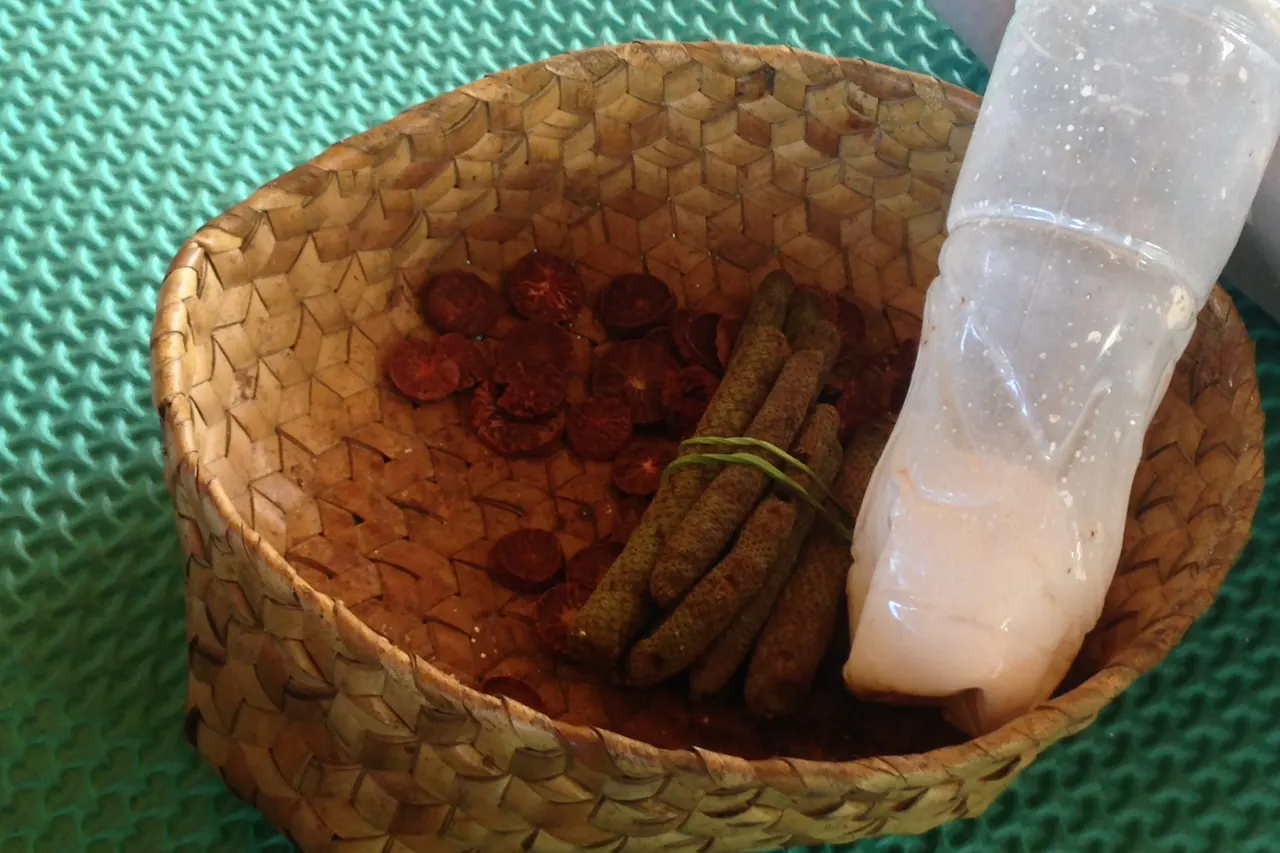
You will see red-stained smiles and red spit marks everywhere in Sumba. Sirih pinang is the chewing of betel leaf or catkin (sirih) with areca nut (pinang) and slaked lime (kapur). In East Sumba the offering of betel to a guest is called pahappa, and the woven or carved box that holds it is a mbola happa. Offering sirih pinang is the basic gesture of respect to a visitor; it is also shared at weddings, funerals and at the graves of ancestors to ask for their blessing.
- Bring some. A small bag of sirih pinang bought at a market is the classic gift when visiting a village, alongside your donation. Ask your guide how much to buy.
- When offered, accept with your right hand. You do not have to chew it. Taking a piece, or simply touching the box, acknowledges the welcome. Visitors who do not take betel are offered coffee instead, and that is perfectly acceptable.
- If you do try it, chew only a little, do not swallow the juice and spit discreetly. Lime paste is caustic and areca nut is a stimulant; it is not a habit to adopt.
Sumba coffee
Coffee is drunk in nearly every Sumbanese household. The island grows mainly robusta, especially in the cool highlands of Wewewa in Southwest Sumba, where coffee trees stand in most yards in mixed gardens. In 2017 a fermented robusta from Kadi Roma village in Central Wewewa was named Indonesia's best-tasting robusta at the Festival Kopi Nusantara, with tasters noting chocolate flavours.
Traditionally families roast the beans at home with slices of ginger and serve the coffee with a lot of sugar, so kopi jahe (ginger coffee) is a local classic. If you want it without sugar, say kopi pahit or tanpa gula. Small packs of local ground coffee are a good gift to take home. Larger towns now also have cafés with espresso, typically under about Rp 40,000 (around EUR 2) a cup in 2026.
Markets in Waingapu and Waikabubak
Waingapu: Pasar Inpres in the Matawai area of town is the main morning market: vegetables, herbs, chillies, spices, fish, betel nut and sometimes woven textiles or ceremonial items. Go early in the morning for the busiest scenes. It is the place to buy sirih pinang before heading out to the villages. In the evening, grilled fish is easy to find near the old harbour.
Waikabubak: Pasar Waikabubak (often called Pasar Baru) near the town centre is a working market, not polished for tourists: produce, dried fish, live chickens, betel nut, household goods and sometimes local cloth. It is a few minutes from the traditional village of Kampung Tarung.
Market etiquette: ask before photographing stallholders, carry small notes, and accept that prices for produce are usually fair and fixed. Bargaining is more common for textiles than for food.
Muslim and Christian food considerations
Most Sumbanese are Christian (Protestant and Catholic), roughly 30% still follow the Marapu religion and around 6% are Muslim, many living in coastal towns such as Waingapu and Melolo. In practice:
- Pork is common in Christian and Marapu households and at feasts. In a local warung, ask ada babi? (is there pork?) if it matters to you.
- Halal food is easiest in Muslim-run warungs, Padang restaurants and Javanese stalls in the towns. These places do not serve beer, and Padang restaurants may close for Friday prayers.
- Alcohol: most non-Muslim restaurants serve beer, but it may not be cold. The local palm spirit is a form of arak; be cautious with home-distilled spirits.
- Dog meat is served at a few local warungs, though not on general menus. If you want to avoid it, ask.
Tips for vegetarians
Vegetarians eat well enough in Sumba with a little planning. Useful phrases: saya vegetarian, tanpa daging (without meat), tanpa ikan (without fish). Reliable dishes are cap cay, sayur daun ubi, papaya flower, tempe and tahu (tofu), gado-gado or pecel, egg dishes and fried rice without meat. Be aware that sambal and some soups contain shrimp paste (terasi) or fish stock; ask pakai terasi?. Katemak is often vegetarian in its sweet East Sumba version. In the countryside choices are very limited and many warungs close by about 19:00, so pack snacks and lunch for long drives.
Food hygiene and staying well
- Do not drink tap water. Use bottled or refilled filtered water, and bring a refillable bottle to cut plastic.
- Choose busy places where food is cooked fresh and hot. Grilled fish and chicken straight off the coals are generally safe; dishes that have sat in the sun for hours are riskier.
- Ice in towns is usually made from treated water; in remote spots, skip it if unsure.
- Peel fruit yourself and be careful with raw salads.
- Carry rehydration salts and basic stomach medicine. For clinics, pharmacies and travel insurance see our Sumba safety and health guide.
What does food cost in Sumba?
Food is cheap by international standards (about Rp 100,000 = EUR 5 / USD 6). As a rough guide for 2025-2026, a simple warung plate of rice, vegetables and chicken or fish costs around Rp 20,000-50,000; a medium grilled fish around Rp 50,000 at market price; a meal in a tourist-oriented restaurant around Rp 50,000-100,000 per person; and a small bag of sirih pinang for a village visit a few tens of thousands of rupiah. Prices vary by town and season. See Sumba travel costs for a full daily budget, and our itineraries for where to plan meal stops on long drives.
Frequently asked questions
What is the traditional food of Sumba?
Rice (often cooked with corn), cassava and other tubers, leafy greens like cassava and papaya leaves, and corn dishes such as jagung katemak, jagung titi and kaparrak. Buffalo and pork are mostly feast foods at weddings and funerals.
What is katemak?
A corn-based dish from East Nusa Tenggara. In East Sumba it is a sweet-savoury stew of corn, pumpkin and green beans with palm sugar; elsewhere it is a savoury corn and vegetable soup, sometimes with meat.
Should I accept betel nut (sirih pinang) in Sumba?
Accept the offer with your right hand; you do not have to chew it. Taking a piece or touching the box acknowledges the welcome, and if you decline you will be offered coffee instead. Bringing a small bag of sirih pinang to a village is a classic gift.
Is Sumba coffee good?
Yes. Sumba grows mainly robusta, especially in Wewewa (Southwest Sumba), and a fermented robusta from Kadi Roma village was named Indonesia's best-tasting robusta at the 2017 Festival Kopi Nusantara. Locals often drink it very sweet, sometimes roasted with ginger.
Is it easy to be vegetarian in Sumba?
Manageable with planning. Ask for tanpa daging (no meat), order cap cay, tempe, tofu, gado-gado or vegetable dishes, and check sambal for shrimp paste (terasi). Options are limited in rural areas, so carry snacks.
Is halal food available in Sumba?
Yes, mainly in Muslim-run warungs, Padang restaurants and Javanese stalls in towns such as Waingapu, Waikabubak and Tambolaka. Pork is common elsewhere, so ask ada babi? if unsure.
Places in this guide
- Pasar Inpres Waingapu · Waingapu, East Sumba · Open in maps
- Pasar Waikabubak · Waikabubak, West Sumba · Open in maps
- Cerita tentang pangan dan pakan di daerah Kodi, Sumba Barat Daya, Jurnal Kawistara (UGM), Rich, 2019
- Kuliner khas Sumba, jagung titi dan jagung ketemak masih digemari, TIMES Indonesia, 2018
- Manggulu and Kaparrak: rediscovering the rare delights of Sumba's culinary heritage, TIMES Indonesia, 2023
- Pahappa, tradisi keramahan nan autentik dari Sumba Timur, TIMES Indonesia, Sept 2023
- Kopi Sumba terenak se-Indonesia, Antara Kupang, 26 Sept 2017
- Elisabet Malo strives to promote Sumba coffee to the world, The Jakarta Post, 23 Jun 2019
- Waingapu, Sumba: what to do, where to stay and travel tips, Backindo, 27 Aug 2025
- Eat in Waikabubak, Travelfish (Sally Arnold)
Spotted an error? Write to info@ecobeachcity.com.
Low Tide, every Sunday
One short letter a week about living well, from an island with more horses than traffic lights. Free.
We only use your email to send the letter. Unsubscribe in one click.