Culture
Pasola 2027 in Sumba: dates, places and how to see it
Who sets the dates, which fields hold the battles in February and March, every date from 2024 to 2026, and how to watch safely and respectfully.
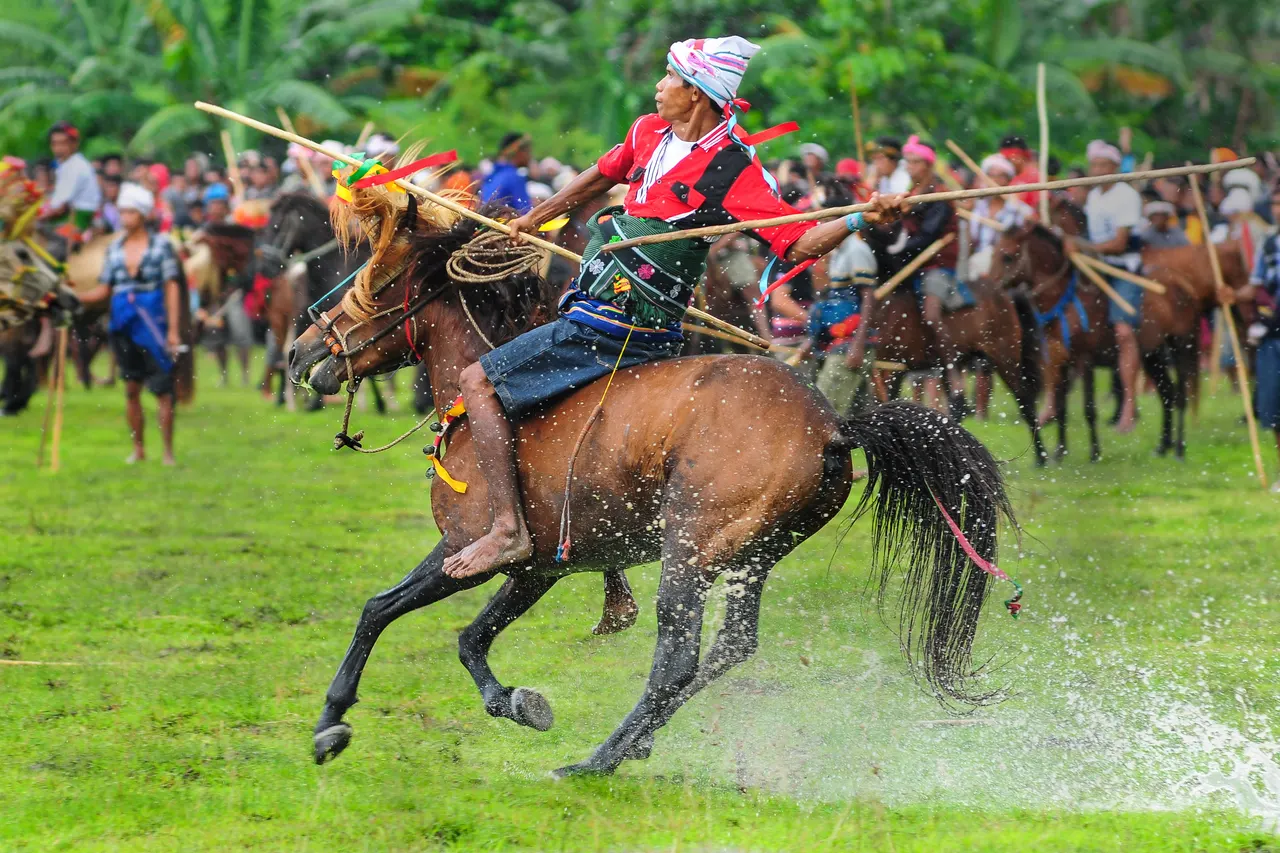
Pasola is held every February and March in Kodi (Southwest Sumba) and in Lamboya, Wanokaka and Gaura (West Sumba), on days set by the Rato elders following the moon and the nyale sea worms. As of 7 November 2026 the 2027 dates have not been announced; they are usually confirmed only weeks ahead, with the Kodi schedule fixed in the second half of January, and this page will be updated. In 2026 Pasola fell on 9-11 February and 9-11 March in Kodi, 10 February in Lamboya, 9 March in Wanokaka and 14 March in Gaura.
- Months
- February and March, every year
- Where
- Kodi (Southwest Sumba); Lamboya, Wanokaka and Gaura (West Sumba)
- Who sets the dates
- The Rato (Marapu elders), following the moon and the nyale sea worms
- Pasola 2026
- Kodi 9-11 Feb and 9-11 Mar; Lamboya 10 Feb; Wanokaka 9 Mar; Gaura 14 Mar
- Pasola 2027
- Not announced yet (as of 7 Nov 2026); Kodi dates usually fixed in late January
- Entry
- No formal ticket; bring small cash for water and snacks
Before sunrise the field is already ringed with people: farmers wrapped in ikat cloth, children perched on stone tombs, women carrying baskets of betel nut. Then the ground starts to tremble. Dozens of riders on small, fast Sandalwood ponies, heads tied in bright cloth, gallop towards each other and hurl blunt wooden spears while the crowd roars and the elders watch from the edge of the grass. This is the Pasola, the ritual mounted battle of western Sumba, and it happens on only a handful of days each year.
The short answer: the Pasola takes place every year in February and March in four areas of West and Southwest Sumba: Kodi, Lamboya, Wanokaka and Gaura. The exact days are set by the Rato, the customary elders of the Marapu faith, who follow the moon and the arrival of the nyale sea worms, and they are usually confirmed only a few weeks in advance. As of 7 November 2026, no official dates for Pasola 2027 have been announced. We will update this page as soon as the elders and the regency governments publish them.
Pasola 2027: what we know so far
Nothing official yet. But the last three seasons show a clear pattern that helps you plan:
Low Tide, every Sunday
One short letter a week about living well, from an island with more horses than traffic lights. Free.
We only use your email to send the letter. Unsubscribe in one click.- Kodi (Southwest Sumba) holds two rounds of three Pasola each, one in February and one in March. In 2024 and 2025 the schedule was agreed at a meeting of Rato, police and regency officials on 24 January, and in 2026 the Rato announced it on 21 January. Expect the 2027 Kodi dates around the second half of January 2027.
- Lamboya (West Sumba) has fallen in early or mid February: 1 February in 2025 and 10 February in 2026.
- Wanokaka and Gaura (West Sumba) follow in March, a few days apart: 21 and 22 March in 2025, 9 and 14 March in 2026.
Because the calendar follows the moon, dates shift by up to three weeks from one year to the next. The first Kodi Pasola fell on 3 February in 2024, 18 February in 2025 and 9 February in 2026. If you want to see the Pasola in 2027, keep a flexible window of at least a week in February and another in March, book changeable flights, and check this page again from late January. Our guide on how to get to Sumba from Bali explains the flight options.
How the Pasola dates are set
The Pasola is not a festival with a fixed date on a tourist calendar. It belongs to the Marapu ritual year and marks the start of the planting season, and it is the Rato who decide when it happens. The elders read the phases of the moon and signs in nature. The decisive sign is the nyale: sea worms that appear on the shore around the full moon at this time of year. In the nyale ceremony that opens the Pasola, the worms are gathered at dawn; plump, healthy worms are read as the promise of a good harvest, and the Pasola can only take place once they have been found.
The month before is a sacred period, the month of nyale, with taboos for the local community, such as not holding parties or building houses. In West Sumba the Pasola is also preceded by pajura, a traditional boxing ritual held at night or before dawn a day or two earlier. In February 2026 the head of tourism in West Sumba put it simply: it is the community that sets the schedule, and the government only supports it. Regency offices and police then publish the dates and organise security.
For the meaning of the ritual, its legend and the role of the ancestors, read our Pasola explainer, and for the wider belief system our guide to Marapu, ikat and traditional villages.
Where the Pasola is held
Kodi, Southwest Sumba (February and March)
Kodi, at the western tip of the island, has the longest Pasola season. Six separate Pasola are held across three districts: Homba Kalayo and Maliti Bondo Ate in Kodi Bangedo, Bondo Kawango and Rara Winyo in Kodi, and Wai Ha and Wainyapu in Kodi Balaghar. The February round (Homba Kalayo, Bondo Kawango, Rara Winyo) and the March round (Maliti Bondo Ate, Wai Ha, Wainyapu) each run over three days. For 2026 the Southwest Sumba tourism office published start times between 08:00 and 13:00 WITA, with most sessions lasting four or five hours. Wainyapu, on a wide field close to the sea, is one of the best known.
Lamboya, West Sumba (February)
Lamboya, on the south coast of West Sumba, usually holds its Pasola in February. In 2026 it took place on 10 February at the Hobakalla field in Lamboya district.
Wanokaka, West Sumba (March)
Wanokaka (also spelled Wanukaka), south of Waikabubak, hosts one of the most visited Pasola, on a field near the beach known as Kamaradena. It is preceded by the pajura boxing ritual. In 2026 it was held on 9 March.
Gaura, West Sumba (March)
Gaura, in the Laboya Barat district, closes the season a few days after Wanokaka. It can stretch over two days: in 2026 it was announced for 13-14 March, with the main day reported on 14 March at the Gaura field.
Past Pasola dates: 2024, 2025 and 2026
This table brings together the dates reported by regency governments, police and local media. Provisional calendars published earlier in each year sometimes listed different days, which is exactly why you should always wait for the final schedule.
| Pasola (district) | 2024 | 2025 | 2026 |
|---|---|---|---|
| Homba Kalayo (Kodi Bangedo) | 3 Feb | 18 Feb | 9 Feb |
| Bondo Kawango (Kodi) | 5 Feb | 20 Feb | 10 Feb |
| Rara Winyo (Kodi) | 6 Feb | 21 Feb | 11 Feb |
| Lamboya (West Sumba) | Not confirmed | 1 Feb | 10 Feb |
| Maliti Bondo Ate (Kodi Bangedo) | 4 Mar | 20 Mar | 9 Mar |
| Wai Ha (Kodi Balaghar) | 5 Mar | 21 Mar | 10 Mar |
| Wainyapu (Kodi Balaghar) | 6 Mar | 22 Mar (one listing: 18 Mar) | 11 Mar |
| Wanokaka (West Sumba) | Around 1 Mar | 21 Mar | 9 Mar |
| Gaura (Laboya Barat, West Sumba) | Not confirmed | Not confirmed | 14 Mar (13-14 Mar announced) |
Where these dates come from. Kodi 2024: the schedule agreed by the Rato and Southwest Sumba police on 24 January 2024 (Sergap), with a dated video report confirming Wainyapu on 6 March 2024 (Kompasiana). Kodi 2025: the police report of the scheduling meeting of 24 January 2025 (Tribrata News Southwest Sumba) and the Triptrus event listing, which gives 18 March for Wainyapu instead of 22 March. Kodi 2026: detikBali and the Southwest Sumba tourism office. Lamboya: the Triptrus listing and a dated video of the event for 2025, detikBali for 2026. Wanokaka: the official Indonesia Travel listing for 2024 (Bara Bedang field), a police report of 21 March 2025 and Kompas coverage of the pajura on 20 March 2025, and iNews and Waingapu.com for 2026. Gaura: Swara Timor for 2026. We could not find a confirmed date for Lamboya in 2024 or for Gaura in 2024 and 2025.
How to attend respectfully
- Remember it is a ritual, not a show. The Pasola honours the Marapu ancestors and asks for a good harvest. Visitors are welcome, but you are a guest at a ceremony.
- Go with someone local. A guide or driver from the area knows the field, the families, and when the ritual moments (the nyale gathering, offerings) take place.
- Dress modestly. Cover shoulders and knees, wear a hat and closed shoes. You do not need traditional dress.
- Do not walk onto the field, and do not touch spears, horses, offerings or tombs. Never climb on graves for a better view.
- Ask before photographing people, especially during the rituals away from the main field. A smile and a gesture towards your camera is enough; accept a no.
- No alcohol. In 2026 police in West Sumba banned drinking or selling alcohol and carrying machetes or other sharp weapons during the pajura and the Pasola.
- Bring small cash. There is usually no formal entry ticket, and the 2024 official listing described entry as free. Buy water and snacks from local sellers, and if a village group welcomes you, a small contribution is appropriate.
Safety: where to stand and what to avoid
Spear tips are blunt today, but riders still fall, horses bolt into the crowd and spears fly wide. Accidental deaths still happen occasionally. Crowds can also turn tense: on 9 March 2026 the Wanokaka Pasola was stopped after a stone allegedly thrown by a spectator set off a brawl; police used tear gas and a water cannon, and the ritual was not resumed. Disturbances were also reported at Wanukaka in 2023 and at Wainyapu in 2024.
- Stand well back from the edge of the field, ideally on slightly raised ground with other spectators in front of you. Avoid the ends of the field, where horses turn and sometimes run out.
- Keep an exit route behind you, and do not get pinned against a fence, a wall or a parked vehicle.
- Watch the spears, not your screen. Look up between shots; spears can come from both sides.
- Keep children close and well away from the front row.
- Leave calmly if tension rises: shouting, stones or a sudden surge of people are your signal to walk away with your guide.
- Follow the elders and police if they move the crowd back.
Getting there and planning your day
Fly to Tambolaka (TMC) in Southwest Sumba, the closest airport to all four Pasola areas. The Wainyapu field in Kodi lies about 35 km in a straight line south-west of the airport; on rural roads, allow roughly 1-1.5 hours. Lamboya, Wanokaka and Gaura are south of Waikabubak; the Wanokaka field is about 10 km south of the town. From Tambolaka, a drive to the fields can take up to about 2.5 hours. Public transport is very limited, so hire a car with a local driver for the day.
- Start early. Sessions often begin around 08:00 WITA and the best moments (riders dressing, horses being decorated) come before.
- Expect rain and mud. February and March are the rainy season: bring a light rain jacket, sun protection, water and shoes you do not mind ruining.
- Bring a long lens. A telephoto of 200 mm or more lets you stay back safely and still fill the frame.
- Book a bed early. Rooms near the fields are few and fill quickly in Pasola weeks. See where to stay in Sumba.
- Combine it with the coast. Kodi is close to some of the island's most beautiful beaches and lagoons.
For quick numbers about the island, from airports to distances, see Sumba in facts and figures. We will publish the 2027 Pasola dates here as soon as they are confirmed.
Frequently asked questions
When is Pasola 2027?
The 2027 dates have not been announced yet (as of 7 November 2026). Pasola always falls in February and March, but the Rato elders confirm the exact days only weeks ahead. In recent years the Kodi schedule was fixed in the second half of January, so check again from late January 2027; we will update this page.
How are the Pasola dates decided?
By the Rato, the customary elders of the Marapu faith. They follow the phases of the moon and the appearance of the nyale sea worms on the shore, which open the ritual. Regency governments and police then publish the dates and organise security, but they do not set them.
Where can I watch the Pasola?
In four areas of western Sumba: Kodi in Southwest Sumba (six Pasola, including Homba Kalayo in February and Wainyapu in March), Lamboya in February, and Wanokaka and Gaura in March, all in West Sumba. The nearest airport is Tambolaka (TMC).
Is the Pasola dangerous for spectators?
It can be. Spears are blunt, but horses run into the crowd and riders fall, and in March 2026 the Wanokaka Pasola was stopped after a brawl among spectators. Stand well back on raised ground, avoid the ends of the field, keep an exit route and leave calmly if tension rises.
Do I need a ticket to see the Pasola?
Usually not: there is no formal entry ticket and the official 2024 listing described it as free. Bring small cash for water, snacks and parking, and leave a small contribution if a village group welcomes you.
Can I take photos at the Pasola?
Yes, the battle itself is widely photographed, but ask before photographing people, especially during rituals away from the main field. Use a long lens (200 mm or more) so you can stay at a safe distance, never walk onto the field and do not climb on tombs.
Places in this guide
- Wainyapu Pasola field · Southwest Sumba · Open in maps
- Wanukaka Pasola field · West Sumba · Open in maps
- Tambolaka Airport (TMC) · Southwest Sumba · Open in maps
- Jadwal Pasola Sumba Barat Daya Februari-Maret 2026, detikBali, 23 Jan 2026
- Pasola Sumba Barat Daya 2026, Dinas Pariwisata Kabupaten Sumba Barat Daya, 2026
- Rapat penentuan jadwal Pasola awal Februari 2024 oleh Polres SBD bersama para Rato, Sergap, 25 Jan 2024
- Kapolres Sumba Barat Daya hadiri rapat penentuan jadwal Pasola, Tribrata News Polres SBD, 24 Jan 2025
- Festival Pasola 2025, Triptrus, 2025
- Pasola Lamboya di Sumba Barat kembali digelar 10 Februari, detikBali, 5 Feb 2026
- Dari atraksi budaya ke kepanikan: ritual adat Pasola Wanokaka berakhir oleh kericuhan, Waingapu.com, 9 Mar 2026
- Kapolres hadiri rakor pengamanan Pasola Wanukaka 2026, larangan miras dan sajam, Tribrata News Polres Sumba Barat, 3 Mar 2026
- Wagub Johni Asadoma minta tradisi Pasola Gaura di Sumba Barat terus dijaga, Swara Timor, 14 Mar 2026
- Polres Sumba Barat laksanakan pengamanan Pasola Wanokaka, Sergap, 21 Mar 2025
- Tradisi Pasola di Sumba Barat: sejarah hingga waktu pelaksanaan, detikBali, 9 May 2024
- Pasola Sumba Barat (event listing, 2024), Indonesia Travel, Ministry of Tourism
- Pasola Festival in Sumba: dates, meaning, and how to see it, Backindo, 30 Jan 2026 (updated Jul 2026)
- Pasola, Wikipedia
Spotted an error? Write to info@ecobeachcity.com.
Low Tide, every Sunday
One short letter a week about living well, from an island with more horses than traffic lights. Free.
We only use your email to send the letter. Unsubscribe in one click.