Travel
How much does a trip to Sumba cost? Budget, mid-range and luxury
Flights, drivers, fuel, village donations and a 7-day budget table: what Sumba really costs in 2026, and how to spend it well.
For two people travelling together for 7 days, a trip to Sumba costs roughly IDR 8.5-12.5 million in total on a tight budget (about USD 470-690), roughly IDR 15-29 million mid-range with a car and driver (about USD 830-1,600), and from around IDR 45 million in high-end resorts. The big costs are flights from Bali (often around IDR 2.3-2.8 million return per person), accommodation and transport (a car with driver is roughly IDR 600,000-1,000,000 a day); food and entrance fees stay cheap, but bring cash because ATMs exist only in the main towns.
- Return flight Bali to Tambolaka
- Often around IDR 2.3-2.8 million per person (late 2026)
- Car with driver
- Roughly IDR 600,000-1,000,000 per day (USD 33-55)
- Scooter rental
- Roughly IDR 150,000-200,000 per day in 2025-2026
- Petrol (Pertalite)
- IDR 10,000/litre at the pump (Nov 2026); more from roadside bottles
- Village donation
- Usually IDR 10,000-40,000 per person; around IDR 50,000 at Ratenggaro
- 7 days for two people
- About IDR 8.5-12.5 M budget, 15-29 M mid-range, 45 M+ luxury
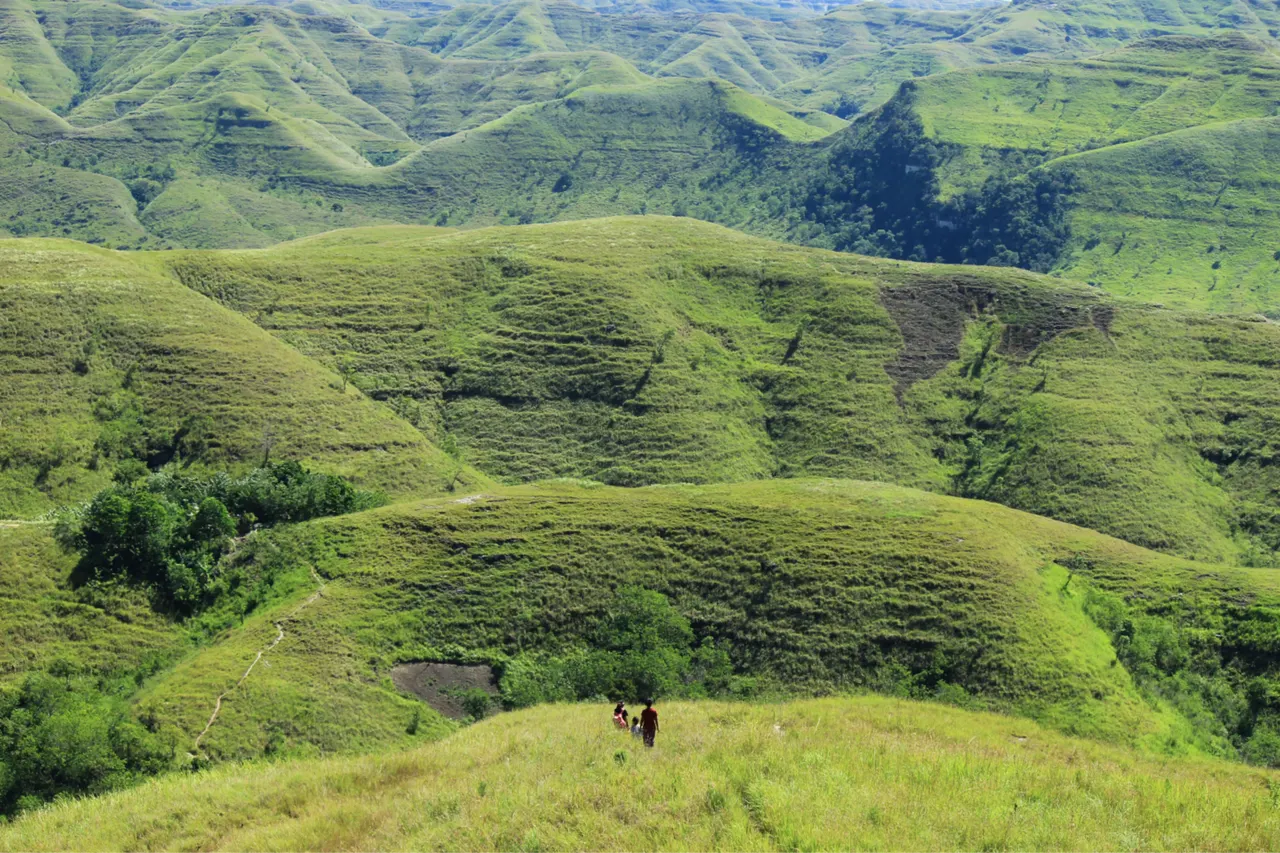
The plane drops over a coast of white limestone and pale green hills, and the first thing you notice in Tambolaka is the quiet: a few scooters, a horse grazing on the verge, the smell of woodsmoke and cloves. Sumba feels far from Bali, yet it is only about an hour's flight away, and it can be visited on almost any budget. What changes the bill is not the food or the entrance fees, which stay small, but three big items: your flights, where you sleep and how you move around an island roughly twice the size of Bali.
The short answer: for two people travelling together for 7 days, count on roughly IDR 8.5-12.5 million in total on a tight budget (about USD 470-690 or EUR 420-620), roughly IDR 15-29 million mid-range with a private car and driver (about USD 830-1,600 or EUR 750-1,430), and from around IDR 45 million upwards in high-end resorts (about USD 2,500 or EUR 2,250 and up). Prices below are typical ranges reported in 2025-2026; they vary with season, demand and your negotiating, so treat them as a guide, not a quote.
Exchange rate and how to read the prices
In early November 2026, one euro was worth around IDR 20,200 and one US dollar around IDR 18,150. A quick rule: IDR 1,000,000 is roughly USD 55 or EUR 50, and IDR 100,000 is roughly USD 5.50 or EUR 5. All prices here are in Indonesian rupiah (IDR), with rounded conversions.
Low Tide, every Sunday
One short letter a week about living well, from an island with more horses than traffic lights. Free.
We only use your email to send the letter. Unsubscribe in one click.Flights from Bali
Almost every visitor flies in from Bali (Denpasar, DPS). There are two airports: Tambolaka (TMC) in the north-west and Waingapu (WGP) in the east. Bali to Tambolaka has several daily flights of about an hour to an hour and a half; Bali to Waingapu has had a non-stop TransNusa service four times a week since July 2026. Read our guide on how to get to Sumba from Bali for the route that works best.
- Typical fare Bali to Tambolaka: booking sites showed one-way direct fares of around IDR 1.2-1.4 million (about USD 65-80) for November 2026, so a return ticket is often around IDR 2.3-2.8 million per person.
- Baggage: small regional planes often carry low allowances (10 kg has been common on some fares). Extra kilos can cost more than you expect, so check before you pack.
- Save money: book early for July-August and the Pasola weeks in February-March, and compare one-way tickets, flying into one airport and out of the other.
Getting around: the biggest daily cost
Public transport is thin and irregular, so most visitors either rent a car with a local driver or ride a scooter. Our guide to getting around Sumba covers the roads and real driving times.
- Car with driver: roughly IDR 600,000-1,000,000 per day (about USD 33-55), according to recent travel guides; some international guides quote around USD 75 per day, especially when a guide is included or in high season. Always ask whether fuel, the driver's meals and his accommodation on overnight trips are included.
- Self-drive car: roughly IDR 400,000-650,000 per day without fuel, where available. Few visitors do this: signs are rare and an International Driving Permit is required.
- Scooter: reported between about IDR 70,000 and 200,000 per day; in 2025-2026, IDR 150,000-200,000 was the usual quote in Tambolaka and Waingapu. In August, scooters can be fully booked up to two weeks ahead.
- Fuel: in November 2026 the official pump price of Pertalite, the standard petrol, was IDR 10,000 per litre, and Pertamax IDR 15,950. Roadside sellers charge more: in Waingapu in October 2026, a 1.5-litre bottle of Pertalite sold for around IDR 20,000.
- Buses and shared cars: cheap but slow. Older listings show the cross-island bus at around IDR 50,000-100,000 and local minibuses at IDR 15,000-30,000; expect prices to have risen.
- Airport transfers: Waingapu airport to town is about 5-6 km, and a taxi has been around IDR 50,000; hotel transfers around IDR 50,000-100,000. Agree the price before you get in.
Where you sleep
- Homestays and simple guesthouses: roughly IDR 150,000-300,000 per night.
- Mid-range hotels in Tambolaka, Waikabubak or Waingapu: roughly IDR 300,000-1,500,000; well-reviewed town hotels often sit around USD 35-55.
- High-end resorts on the south-west coast: commonly USD 250-400 per night, and the most exclusive places go well beyond USD 1,000.
See where to stay in Sumba to choose a base by region.
Food and drink
Eating like a local is cheap. A plate of rice with fish, chicken or vegetables at a warung costs roughly IDR 20,000-50,000 (about USD 1-3). Mid-range restaurants and hotel menus run roughly IDR 70,000-150,000 per dish. Resort dining is priced like Bali's. Bottled water, coffee and fruit are inexpensive in town markets, but stock up before long drives: the countryside has few shops. Our guide to Sumbanese food tells you what to order.
Entrance fees, village donations and guides
Sumba's sights are cheap, but there are many small payments, almost all in cash. Carry small notes (IDR 10,000, 20,000 and 50,000).
- Traditional villages: you are usually asked to sign a guest book and leave a donation, typically around IDR 10,000-40,000 per person in 2026 guides. Some popular villages ask more: Ratenggaro has been reported at around IDR 50,000 per person. International guides put village fees at roughly USD 2-5. The money supports the community, so give it gladly.
- Betel nut (sirih pinang): a small bundle bought at a market is a traditional, welcome gift when you visit a village. Remember that villages are homes, not museums: ask before taking photos, dress modestly, and never touch graves or ritual objects. More in our guide to Marapu, ikat and traditional villages.
- Weekuri Lagoon: once a voluntary donation, it later moved to a ticket, reported at IDR 20,000 for foreigners and IDR 5,000 for Indonesians; a small extra fee applies for the shower.
- Tanggedu waterfall: around IDR 5,000-10,000 per person plus IDR 5,000-10,000 parking (late 2025), and some visitors pay a local rider for the last stretch.
- Beaches: many are free, such as Tarimbang; others ask for parking. At Mandorak, a parking fee of IDR 50,000 per motorbike has been reported.
- Extras: at Wairinding hill, locals rent horses or traditional costumes for photos for around IDR 50,000. Boat crossings, showers and photos with children all carry small charges or tips.
- Guides: many drivers double as informal guides. A separate local guide (useful for ceremonies, quieter villages or waterfalls like Lapopu) is negotiated directly; one 2023 traveller was quoted around AUD 150 a day for a driver plus guide. Agree the price and the plan the evening before.
For the sights themselves, see our guide to beaches, lagoons and waterfalls.
SIM cards and data
Buy your SIM or eSIM in Bali, at the airport or in town. Telkomsel has the widest coverage in Sumba; other networks are weaker outside the towns. A 30-day tourist package has cost roughly IDR 250,000 (about USD 15). Phones bought abroad must have their IMEI registered to work on Indonesian networks; tourist SIMs handle this for a limited period, so check the terms when you buy.
Sample 7-day budget for two people
These are rough totals for two people sharing a room and transport for 7 days and 6 nights, starting and ending in Bali. They are estimates built from the ranges above, not quotes.
| Item (2 people, 7 days) | Budget | Mid-range | Luxury |
|---|---|---|---|
| Return flights Bali to Sumba | IDR 4.6-5.6 M | IDR 4.8-5.6 M | IDR 4.8-6 M |
| Accommodation (6 nights) | IDR 0.9-1.8 M (homestays) | IDR 3-9 M (hotels) | IDR 27-44 M (resorts) |
| Transport | IDR 1.35-1.9 M (scooter, fuel, one bus) | IDR 4.2-8 M (car with driver, fuel) | IDR 7-10.5 M (car, driver and guide) |
| Food and drink | IDR 0.85-2.1 M | IDR 2-4.5 M | IDR 5-12 M |
| Fees, donations, betel nut, tips | IDR 0.3-0.6 M | IDR 0.6-1.2 M | IDR 1-2 M |
| SIM cards and data | IDR 0.5 M | IDR 0.5 M | IDR 0.5 M |
| Total for two | about IDR 8.5-12.5 M (USD 470-690, EUR 420-620) | about IDR 15-29 M (USD 830-1,600, EUR 750-1,430) | about IDR 45-75 M (USD 2,500-4,100, EUR 2,250-3,700) |
| Per person | about IDR 4.2-6.3 M | about IDR 7.5-14.5 M | about IDR 22.5-37.5 M |
Travelling solo, you pay the car and room alone, so the mid-range daily cost per person rises sharply. Sharing a car and driver with other travellers is the easiest way to save. To plan the days themselves, read our 5, 7 and 10-day Sumba itineraries and check the best time to visit Sumba, since July-August and Pasola weeks push prices up.
Cash and ATMs
Cash is king in Sumba. ATMs exist in the main towns, Tambolaka, Waikabubak and Waingapu, but are rare or absent in the countryside, at beaches and in villages, and the airports have no money exchange. Card payments are mostly limited to larger hotels.
- Withdraw enough in town for the next few days, and keep a reserve in case an ATM is empty or offline.
- Carry plenty of small notes: donations, parking, warungs and roadside fuel all need them.
- Pay your driver in cash; agree the total in advance and confirm what it includes.
- Be fair when bargaining. Haggling too hard over ikat or souvenirs can cause offence; see our guide on where to buy ikat in Sumba.
Ways to spend less (and better)
- Fly into Tambolaka and out of Waingapu (or the reverse) so you never drive the same road twice.
- Stay in fewer bases: long transfers eat a day's car hire.
- Eat at warungs at lunch, and buy fruit at markets.
- Travel in May-June or September-October, when it is dry but quieter than July-August.
- Spend locally: buy ikat directly from weavers, and give donations at villages; this is how tourism helps Sumba.
Before you go, also read our Sumba safety and health guide.
Frequently asked questions
Is Sumba expensive compared with Bali?
Day to day, Sumba is cheap: warung meals cost roughly IDR 20,000-50,000 and village donations are small. What makes it feel expensive is transport, since you usually need a car with driver (roughly IDR 600,000-1,000,000 a day), plus the flight from Bali and a limited choice of mid-range hotels.
How much does a car with driver cost per day in Sumba?
Roughly IDR 600,000-1,000,000 per day according to recent guides, and around USD 75 in some international quotes, especially with a guide or in high season. Ask whether fuel, the driver's meals and his overnight accommodation are included.
Do I need to pay to visit traditional villages in Sumba?
Usually yes: you sign a guest book and leave a donation, typically around IDR 10,000-40,000 per person, and around IDR 50,000 has been reported at Ratenggaro. A small bundle of betel nut is a welcome gift. Always ask before taking photos.
Are there ATMs in Sumba?
Yes, in the main towns: Tambolaka, Waikabubak and Waingapu. They are rare or absent in the countryside, at beaches and in villages, and airports have no money exchange, so withdraw enough cash in town and carry small notes.
How much cash should I bring for a week in Sumba?
It depends on your style, but plan to pay most things in cash: driver, fuel, warungs, donations and parking. Withdraw in town every few days rather than carrying everything, and keep a reserve in case an ATM is empty.
What is the cheapest way to travel around Sumba?
A rented scooter (roughly IDR 150,000-200,000 a day in 2025-2026) plus public buses for the long cross-island leg. Buses are cheap but slow and irregular, and you need an International Driving Permit with a motorcycle category to ride legally.
Places in this guide
- Tambolaka · Southwest Sumba · Open in maps
- Waikabubak · West Sumba · Open in maps
- Waingapu · East Sumba · Open in maps
- Weekuri Lagoon · Southwest Sumba · Open in maps
- Ratenggaro village · Southwest Sumba · Open in maps
- Wairinding hill · East Sumba · Open in maps
- Getting around Sumba: public transport, taxis, car rental, MileHacker, accessed Nov 2026
- A guide to Sumba, Indonesia, Lonely Planet, 10 Apr 2026
- Traditional Villages in Sumba: Which Ones to Visit and What to Expect, Backindo, 30 Jan 2026
- Harga BBM terbaru November 2026, Fortune IDN, 2 Nov 2026
- Air Terjun Tanggedu, surga di Sumba Timur, Metro TV, 2 Dec 2025
- Penerbangan Bali ke Tambolaka, Trip.com, accessed Nov 2026
- Sumba: Kodi and Southwest Sumba (Weekuri, Mandorak fees), The Spice Route End, updated 2023
- 14 Crucial Tips For How To Get Around Sumba Island, Londoner in Sydney, 2023
Spotted an error? Write to info@ecobeachcity.com.
Low Tide, every Sunday
One short letter a week about living well, from an island with more horses than traffic lights. Free.
We only use your email to send the letter. Unsubscribe in one click.