Travel
Best time to visit Sumba: a month-by-month guide
Green hills or golden savanna, roaring waterfalls or clear pools, Pasola horsemen or empty surf: in Sumba, the month you choose decides the trip you get.
For most travellers the best time to visit Sumba is the dry season, roughly May to October, with June to August the sunniest and most comfortable months. Come in February or March for the Pasola and green hills, accepting rain and muddy roads; April and early May are a sweet spot, when the island is still green but the rains are ending.
- Best overall
- Dry season, roughly May-October (June-August classic)
- Wettest months
- December-March (Waingapu: about 135-170 mm a month)
- Driest months
- August-September (about 5 mm, 1 rainy day)
- Pasola
- Usually February (Kodi, Lamboya) and March (Wanokaka, Gaura)
- Green vs golden
- Green: late Jan-April; golden: July-October
- Surf season
- Roughly April-October, south and west coasts
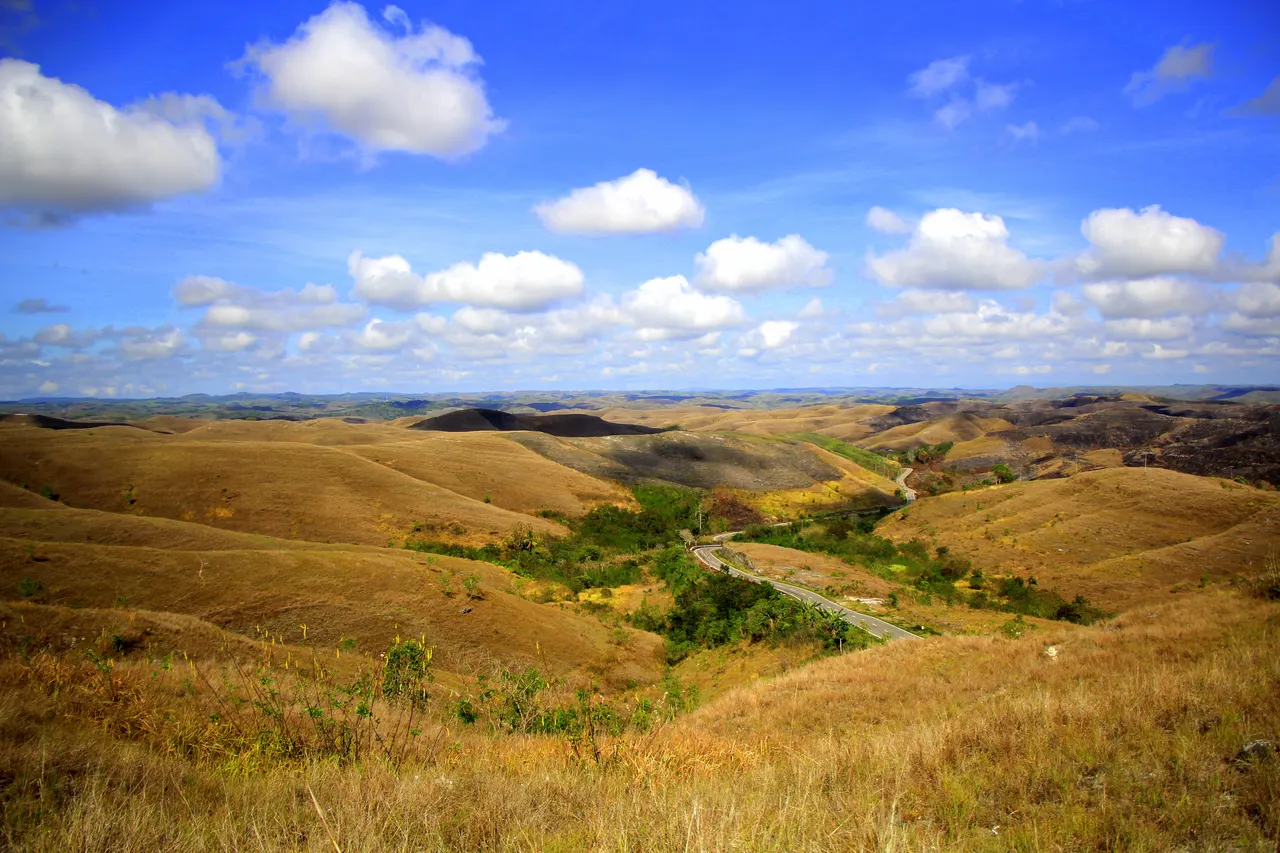
In March the hills of East Sumba are the colour of new rice, waterfalls thunder brown through the forest and the air is thick and warm after an afternoon storm. By August the same hills have turned to gold and copper, the grass hisses in a dry wind, horses stand in the shade of a single tree and the sky is clean enough to see the curve of the coast from Wairinding. Sumba is one island with two faces, and the month you choose decides which one you meet.
The quick answer: the dry season, roughly May to October, is the best time for most trips, with clear skies, easier roads and calm swimming. June to August is the classic window. February and March bring the Pasola and the greenest landscapes, but also the heaviest rain. April to early May is the in-between season many photographers love.
Sumba's climate in one paragraph
Sumba sits in the drier part of Indonesia. In Waingapu, on the north-east coast, average rainfall is only about 810 mm a year, falling on roughly 80 days, according to 1991-2020 climate data. Almost all of it comes between December and March: January averages about 170 mm, while August and September get about 5 mm each. Temperatures barely change, with daytime highs around 31-33 C all year and nights from about 20 C in August to about 24 C in the wet season. The west is wetter and greener than the east, and inland hills get more rain than the coast. Wikipedia sums it up as a dry season from May to November and a rainy season from December to April; local sources put the turn of the rains anywhere from late October to December, depending on the year and the area.
Low Tide, every Sunday
One short letter a week about living well, from an island with more horses than traffic lights. Free.
We only use your email to send the letter. Unsubscribe in one click.| Month | Rain in Waingapu | Rainy days | Max / min | Sea |
|---|---|---|---|---|
| January | 170 mm | 13 | 32 / 24 C | 29.5 C |
| February | 160 mm | 13 | 32 / 24 C | 29 C |
| March | 145 mm | 11 | 32 / 24 C | 29.5 C |
| April | 70 mm | 9 | 32 / 23 C | 29.5 C |
| May | 35 mm | 6 | 32 / 23 C | 28.5 C |
| June | 25 mm | 4 | 31 / 22 C | 27.5 C |
| July | 10 mm | 3 | 31 / 21 C | 27 C |
| August | 5 mm | 1 | 31 / 20 C | 26.5 C |
| September | 5 mm | 1 | 32 / 21 C | 27 C |
| October | 10 mm | 2 | 33 / 23 C | 28 C |
| November | 40 mm | 6 | 33 / 24 C | 29.5 C |
| December | 135 mm | 11 | 33 / 25 C | 29.5 C |
These figures are for Waingapu, the driest part of the island. In West Sumba and in the hills expect more rain, especially from December to March.
Month by month
January: green, hot and wet
The wettest month in the east. Hills are deep green, rivers are full and waterfalls are at their most powerful, but often brown with mud and too strong to swim near. Dirt roads to remote beaches and villages can become impassable. Fewer visitors, and a good month only if you are flexible and happy with a slower trip.
February: Pasola in the west
Still rainy, but this is when the first Pasola ritual battles usually take place, in the Kodi and Lamboya areas of the west. The dates are set by the Rato elders following the appearance of the nyale sea worms, and are often confirmed only a week or two ahead. In 2026 they fell on 9, 10 and 11 February. If you plan around the Pasola, build in spare days and book transport early.
March: the second Pasola and the greenest island
The Pasola moves to Wanokaka and Gaura, usually in March (in 2026, on 9, 10 and 11 March). Rain eases a little through the month. The landscape is at its greenest, which many visitors find surprising in an island famous for golden savanna. Waterfalls are full, and Matayangu in particular is spectacular after rain.
April: the sweet spot begins
Rainfall in Waingapu halves to about 70 mm. Hills are still green, waterfalls still flowing and roads start to dry out. A very good month for photographers and for travellers who want the green island without the worst of the rain. Surf on the south and west coasts starts to pick up as the southern swell season begins.
May: green turning gold
One of the best all-round months. Rain drops to a few showers, skies clear, waterfalls such as Lapopu and Tanggedu start to run clear and are safer to swim in, and the first gold appears on the eastern savanna. Visitor numbers are still modest.
June: dry season in full
Sunny days, cooler nights and very little rain. Swimming at Weekuri Lagoon is perfect, and from June into July the sun sets right between the two cliffs at Mandorak beach. Roads are at their easiest. Indonesian school holidays usually begin in late June, so domestic travel increases.
July: peak season
The coolest nights of the year (around 20-21 C in Waingapu) and steady sunshine. This is the busiest month on the island, with both foreign holidays and Indonesian school holidays (in East Nusa Tenggara the new school year started on 13 July 2026). Flights and the limited supply of rooms fill up, so book cars and accommodation weeks ahead. Even at its busiest, Sumba is quiet by Bali standards.
August: golden Sumba
The driest month, with about one rainy day. The savanna of Wairinding and Puru Kambera turns fully golden, horses graze on dry grass and the light at sunset is extraordinary. Waterfalls are lower but clear, and some in the interior can almost dry up. The sea is at its coolest, around 26-27 C, and the south-east trade winds blow.
September: hot, dry and quiet
Very dry, increasingly hot and less busy after the holidays end. One of the best months for the dry, golden landscape without the crowds. Late afternoons can be hazy from grass fires.
October: the hottest month
Daytime highs of around 33 C. The landscape is at its driest and dustiest. Surfers often find glassy days and solid swells from October into December. The first storms may arrive late in the month, especially inland and in the hills.
November: the turn of the season
The rains begin, first as short afternoon storms. In the east the dry weather often lasts well into November; in the west it usually breaks earlier. The first rains turn the hills green again within days. Fewer visitors and lower prices.
December: rain and holidays
Rain becomes regular, about 135 mm and 11 rainy days in Waingapu. The Christmas and New Year period (the end-of-semester school break in East Nusa Tenggara runs from 21 December 2026 to 2 January 2027) brings families home to Sumba, and local beaches such as Walakiri fill with people at weekends. Book flights early.
Green hills or golden savanna?
This is the question photographers ask most. The answer is simple: for green hills, come during or just after the rainy season, roughly late January to April. For the classic golden savanna of East Sumba, come in the dry season, from about July to October. May and June are a transition, with patches of both.
Waterfalls by season
Sumba's waterfalls are a trade-off between power and clarity. In the rainy season Lapopu, a 90 m multi-tiered fall, runs brown and strong and you cannot get close; Matayangu becomes a wall of water, but the trail is muddy and slippery. In the dry season the water is lower but clear, the pools are calm and swimming is easier and safer. Some smaller falls in the interior can almost dry up by September. The best compromise for most travellers: April to June. See our guide to beaches, lagoons and waterfalls.
The sea, surf and swimming
The sea is warm all year, from about 26.5 C in August to 29.5 C in the wet months. The surf season on the south and west coasts runs roughly from April to October, when the southern hemisphere winter sends Indian Ocean swells and the south-east trade winds blow offshore at many breaks. October to December can bring glassy days. Some breaks work in the wet season westerlies. Big swells also mean strong currents: swim only where locals do, and never alone on empty beaches. More in surfing in Sumba.
Crowds, holidays and prices
Sumba is never crowded in the way Bali is. East Sumba counted 41,524 visitors in the whole of 2025, about one in eight from abroad, with an average stay of three nights. But the island has very few rooms, so busy periods are felt quickly:
- Busiest: July and August (foreign and Indonesian holidays), and late December to early January.
- Busy around the Pasola: a few days in February and March in the west.
- Quietest: January (outside New Year), November and the shoulder months of April-May and September-October.
Accommodation and car hire cost more in the dry season. Lonely Planet (2026) notes that rooms and cars should be booked ahead for June to August. Typical car-with-driver prices are covered in Sumba travel costs.
Our recommendation
- First visit, best all-round weather: late May to early July, or September.
- Golden savanna photos: August to October.
- Green hills and full waterfalls: March to April.
- Pasola: February or March, with flexible dates.
- Surf: April to October.
Whatever the month, bring sun protection, insect repellent and some patience. Read our safety and health guide before you go, and when you are ready, plan the route with our Sumba itinerary for 5, 7 and 10 days. Comparing islands? See Sumba vs Bali and Flores.
Frequently asked questions
What is the best month to visit Sumba?
June to August offers the most reliable sunshine and easiest roads. May and September are nearly as good and quieter.
When is the rainy season in Sumba?
Roughly December to March, with the turn of the rains anywhere from late October to December. The east is drier than the west.
When is the Pasola in Sumba?
Usually February in Kodi and Lamboya and March in Wanokaka and Gaura. Rato elders set the dates following the nyale sea worms, often only a week or two ahead.
When are Sumba's hills green?
During and just after the rainy season, roughly late January to April. From July to October the savanna turns golden.
Are Sumba's waterfalls worth visiting in the dry season?
Yes. Flow is lower but the water is clear and swimming is safer. In the rainy season they are more powerful but often brown and hard to approach.
Is Sumba crowded in July and August?
It is the busiest period, but still quiet compared with Bali. The island has few rooms, so book cars and accommodation weeks ahead.
Places in this guide
- Waingapu · East Sumba · Open in maps
- Wairinding hill · East Sumba · Open in maps
- Puru Kambera savanna · East Sumba · Open in maps
- Walakiri beach · East Sumba · Open in maps
- Weekuri Lagoon · Southwest Sumba · Open in maps
- Lapopu waterfall · West/Central Sumba · Open in maps
- Matayangu waterfall · Central Sumba · Open in maps
- Bondo Kodi (Pasola area) · Southwest Sumba · Open in maps
- Wanokaka beach (Pasola area) · West Sumba · Open in maps
- Marosi beach (Lamboya) · West Sumba · Open in maps
- Sumba climate: average weather, temperature, rain, Climates to Travel (1991-2020 data, Waingapu)
- Sumba, Wikipedia (climate, highest point)
- A guide to Sumba, Indonesia, Lonely Planet (Charukesi Ramadurai), 10 April 2026
- Pasola Festival in Sumba: a traveler's guide (2026 dates), Backindo
- Sumba surf travel guide, Perfect Wave Travel
- 41.524 wisatawan kunjungi Sumba Timur sepanjang tahun 2025, Kumparan, 14 January 2026
- Kalender Pendidikan Nusa Tenggara Timur 2026/2027, Komunitas Belajar, July 2026
- Sumba ultimate guide, Seek Sophie
Spotted an error? Write to info@ecobeachcity.com.
Low Tide, every Sunday
One short letter a week about living well, from an island with more horses than traffic lights. Free.
We only use your email to send the letter. Unsubscribe in one click.