Travel
West Sumba (Sumba Barat): what to know before you go
The smallest regency packs in a cool highland capital, clan villages on every hill, jungle waterfalls and two Pasola fields: a practical guide to West Sumba.
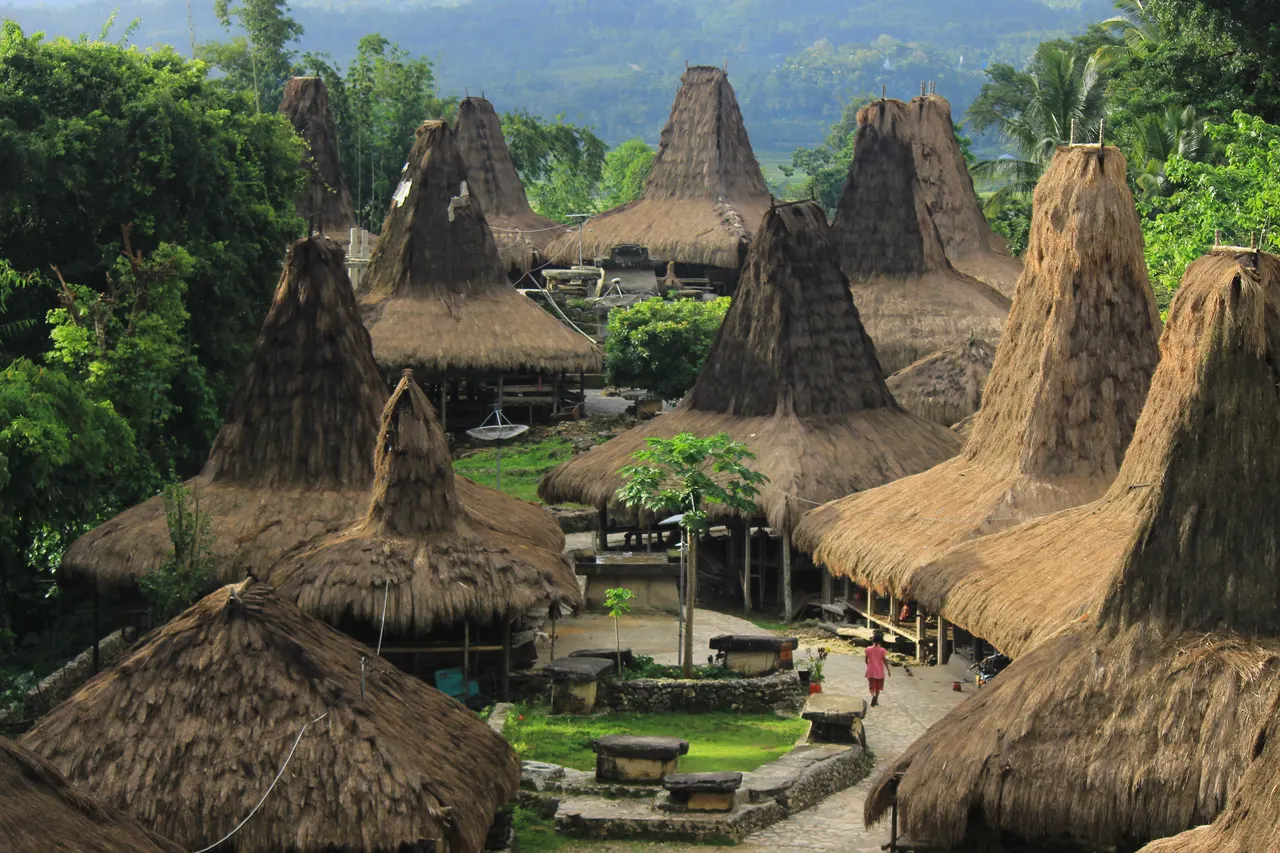
West Sumba (Kabupaten Sumba Barat) is the smallest of Sumba's four regencies, about 737 km² with roughly 160,000 people (BPS mid-2025 estimate), governed from the highland town of Waikabubak, about 42 km and 1 hour from Tambolaka airport. It is the island's most traditional corner for visitors: clan villages such as Tarung and Praijing, the Lapopu waterfall, the surf beaches of Lamboya and the Pasola of Lamboya, Wanokaka and Gaura in February and March. Base yourself in Waikabubak and withdraw cash there.
- Capital
- Waikabubak (plateau, about 400 m)
- Size and population
- 737.42 km², the smallest regency; 160,170 people (BPS mid-2025 estimate)
- Nearest airport
- Tambolaka (TMC), about 42 km, roughly 1 hour
- Highlights
- Tarung, Praijing, Lapopu waterfall, Wanokaka valley, Marosi
- Pasola
- Lamboya (February); Wanokaka and Gaura (March)
Evening falls early on the Waikabubak plateau, and with it comes a cool breeze that feels almost un-tropical. Buffaloes plod down the main street on their way home, church bells and the call to prayer overlap, and on the wooded hills around town the tall thatched peaks of clan villages stand black against the sky. Half an hour south, the land falls away to the rice terraces of the Wanokaka valley and the white beaches of the Indian Ocean.
The short version: West Sumba is small, green and densely settled, and it is where most travellers meet traditional Sumbanese village life for the first time. Waikabubak is the base; everything else is within about an hour.
West Sumba at a glance
West Sumba Regency (Kabupaten Sumba Barat) was established in 1958 and was much larger until 2007, when Southwest Sumba and Central Sumba were carved out of it. Today it covers just 737.42 km², the smallest of the four regencies, and had an estimated 160,170 people in mid-2025, according to BPS figures published on Wikipedia. It has six districts (Lamboya, Wanokaka, Laboya Barat, Loli, Kota Waikabubak and Tana Righu) and 74 villages.
Low Tide, every Sunday
One short letter a week about living well, from an island with more horses than traffic lights. Free.
We only use your email to send the letter. Unsubscribe in one click.The capital, Waikabubak, sits on a plateau at about 400 m. The town district had about 33,600 people in the 2025 estimate. The centre is tiny, a few long streets with shophouses, a market and government offices, but almost every wooded hill in and around town holds a traditional village.
How to get there
- From Tambolaka airport (TMC): about 42 km, roughly 1 hour by car; minibuses from Tambolaka (Waitabula) take about 1.5 hours. Wings Air flies Bali to Tambolaka several times a day (about 1h30).
- From Waingapu (WGP): about 135 km, 3.5-4.5 hours by car via Waibakul; public buses take around 4.5-5 hours.
- Getting around: the town and its villages are walkable and ojek motorbike taxis are easy to find. For waterfalls and beaches, hire a car with driver or a scooter.
Flights and ferries are explained in how to get to Sumba from Bali.
The landscape
West Sumba is the wetter, greener side of the island. The plateau around Waikabubak is farmed intensively, with rice fields, gardens and patches of forest. To the south, the land drops steeply to the wide delta of the Wanokaka River and the coast of Lamboya, where rocky headlands separate white-sand bays. To the east, the forested hills of Manupeu Tanah Daru National Park hide deep river gorges and waterfalls.
Main places to visit
In and around Waikabubak
- Tarung and Waitabar: twin Marapu villages on a hill west of the centre. Tarung burned in 2017 and has been largely rebuilt in the traditional style.
- Praijing: terraces of tall-roofed houses around stone tombs, about 3 km from the centre, with weaving workshops.
- Smaller villages such as Bodo Ede and Palete Lolu are inside town; some burned in 2024 and are being rebuilt. Less-visited villages lie up to about 12 km north.
Waterfalls
- Lapopu: a tiered fall roughly 60-90 m high (sources differ) in the national park, about 16 km (40-45 minutes) from Waikabubak.
- Matayangu: higher up the same river, just across the border in Central Sumba, reached by a rough jungle trek with a guide.
- Waikelo Sawah: technically in Southwest Sumba, but only about 11 km west of Waikabubak, where an underground river pours from a cave.
The south coast
- The Wanokaka valley: villages on hilltops above the rice fields, some of the island's oldest megalithic tombs, and the beach where the March Pasola is held.
- Marosi: a long, curved white-sand beach in Lamboya, about 30 km (45 minutes to 1 hour) from Waikabubak.
- Kerewe: a reef break near Marosi for intermediate and advanced surfers.
Parts of the Lamboya coast are now fenced off by private villas and resorts, so access to some beaches is limited. Ask locally before walking along the shore.
Culture: languages, Pasola and weaving
West Sumba is a patchwork of small languages. Wanukaka and Lamboya are each spoken by fewer than about 20,000 people; around Waikabubak and in Loli and Tana Righu people speak varieties related to Weyewa. Everyone uses Indonesian with outsiders, and English is limited outside tourism, so a local guide is useful in villages. Our Sumba phrasebook has the basics.
Two of Sumba's four Pasola areas are here. Lamboya holds its Pasola in February (1 February in 2025, 10 February in 2026), and Wanokaka and Gaura (in West Lamboya) follow in March. The dates are set each year by the Rato elders, following the moon and the nyale sea worms; read Pasola explained.
Many villages are Marapu communities, with tombs in front of the houses and ritual objects stored under the roofs. Read Marapu, ikat and traditional villages: sign the guest book, leave a small donation, dress modestly, ask before photographing people or houses, and never touch graves or ritual objects. Several villages have burned in recent years, a reminder that these are homes, not open-air museums.
Practicalities
- Cash: Waikabubak has ATMs; BNI and Mandiri are the most reliable with foreign cards. There are few or none on the coast, so withdraw before heading to the beaches and carry small notes.
- Health: RSUD Waikabubak, the regency hospital, opened a new building after a presidential visit in October 2024 and has been designated a referral centre for serious illnesses such as cancer and heart disease. Smaller clinics and puskesmas cover the districts; for serious emergencies, evacuation to Bali is still the norm. See our safety and health guide.
- Fuel: fill up in or near Waikabubak. After fuel queues in neighbouring Southwest Sumba in October 2026, the local government capped purchases of Pertalite and Pertamax at 5 litres per motorbike and 15 litres per car; see getting around Sumba.
- Signal: Telkomsel works in town and on the main roads but fades in valleys and on parts of the south coast.
- Evenings: traffic lights often stop working after dark and animals use the roads. Drive slowly and avoid long trips at night.
When to go
The dry season, roughly May to September, brings the most reliable roads and clear water at the waterfalls and beaches; surf on the south coast is most consistent in these months. February and March are wetter but bring the Pasola. The rainy months, roughly December to March, make the hills spectacularly green and the waterfalls powerful, but tracks can turn to mud. For the bigger picture, see beaches, lagoons and waterfalls and where to stay in Sumba.
Frequently asked questions
What is the capital of West Sumba?
Waikabubak, a highland town at about 400 m, about 42 km (roughly 1 hour) from Tambolaka airport.
Is West Sumba the same as Southwest Sumba?
No. Southwest Sumba (capital Tambolaka, with the airport and Kodi) was split from West Sumba in 2007. West Sumba is the smaller regency around Waikabubak, Wanokaka and Lamboya.
Where is the Pasola held in West Sumba?
In Lamboya (usually February) and in Wanokaka and Gaura (usually March). The Rato elders set the exact dates each year, often only a few weeks ahead.
How many days do I need in West Sumba?
Two or three days cover Waikabubak's villages, Lapopu waterfall and a south-coast beach such as Marosi; add more for surfing or a Pasola.
Can I visit the traditional villages without a guide?
The villages in Waikabubak can be reached on foot, but a local guide helps with introductions and etiquette. Always sign the guest book, leave a donation and ask before taking photos.
Places in this guide
- Waikabubak · West Sumba · Open in maps
- West Sumba Regency, Wikipedia (area, districts, BPS mid-2025 population)
- Waikabubak and Surroundings, Sumba Information (Matthias Jungk), accessed Nov 2026
- The Southwest of Sumba (Wanukaka, Lamboya, Kodi), Sumba Information, accessed Nov 2026
- Country and People (languages), Sumba Information, accessed Nov 2026
- Tips and Tricks (banks, phone), Sumba Information, accessed Nov 2026
- Tinjau RSUD Waikabubak, Presiden Jokowi tekankan peningkatan fasilitas kesehatan, Kementerian Sekretariat Negara, 2 Oct 2024
- Pertamina menyalurkan 2.500 kl BBM memperkuat pasokan di wilayah Sumba, ANTARA Kupang, 28 Oct 2026
- Wejewa (Weyewa) language and its dialects, Omniglot, accessed Nov 2026
Spotted an error? Write to info@ecobeachcity.com.
Low Tide, every Sunday
One short letter a week about living well, from an island with more horses than traffic lights. Free.
We only use your email to send the letter. Unsubscribe in one click.