Travel
Lapopu waterfall, Sumba: how to get there and when to go
Sumba's tallest waterfall spills down a staircase of rock inside the national park, a short forest walk from the road.
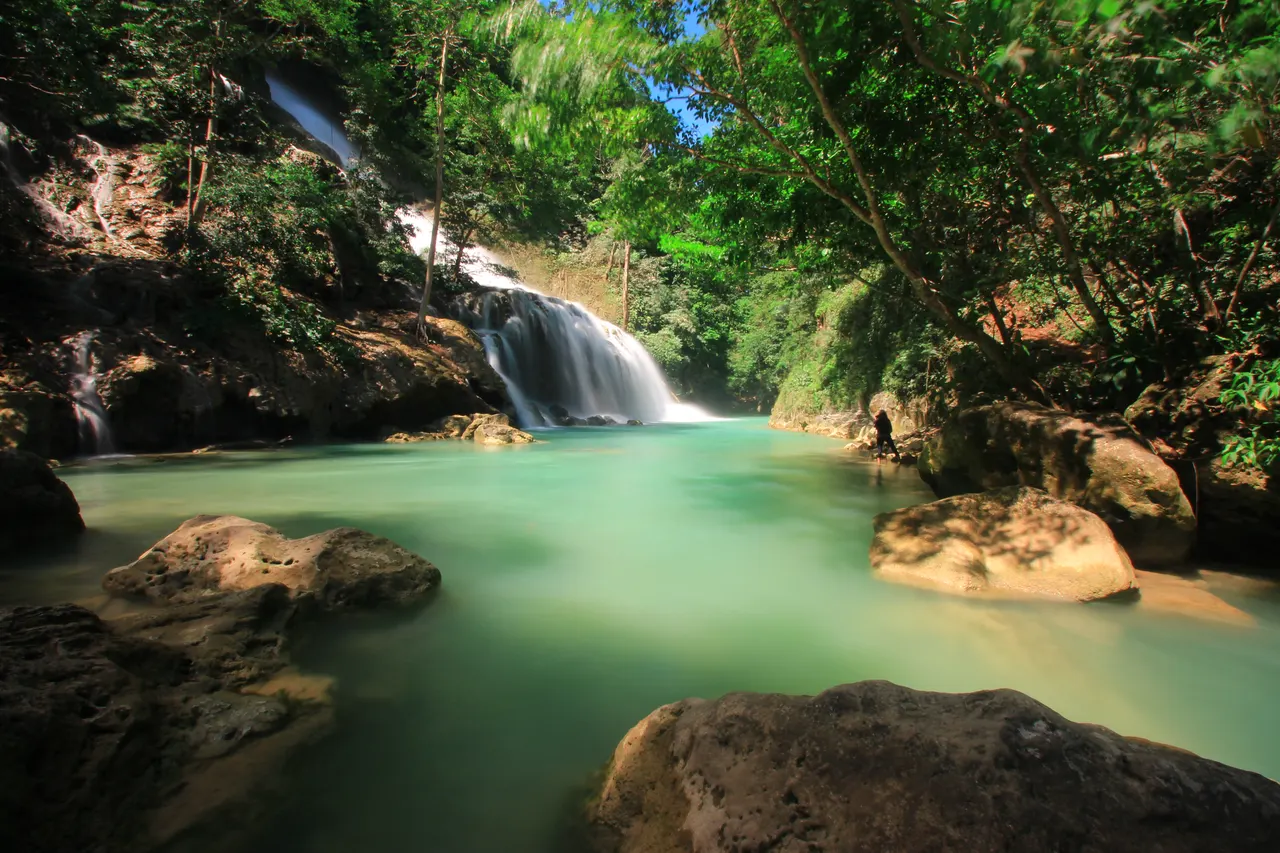
Lapopu is a tiered waterfall about 90 m high inside Manupeu Tanah Daru National Park, in the Wanokaka area south-east of Waikabubak, West Sumba. It is about 16 km (around 40-45 minutes) from Waikabubak and about 56 km (roughly 1.5 hours) from Tambolaka airport, followed by a 10-20 minute walk with a bamboo bridge. Go in the dry season, roughly May to October, when the pool is clear enough to swim; foreigners have paid around IDR 150,000 to enter in recent years.
- Where
- Manupeu Tanah Daru National Park, Wanokaka area, West Sumba
- From the nearest airport
- Tambolaka (TMC): about 56 km, roughly 1.5 hours, plus a 10-20 min walk
- Best time
- Dry season (about May-October), morning
- Entry
- Foreigners around IDR 150,000 in recent years; prices change
- Good for
- A big tiered waterfall, swimming in the dry season, easy half-day trip
You hear Lapopu before you see it: a steady roar coming up the valley through the trees, louder with every step on the rocky path along the river. Then the forest opens and the whole cliff is moving, water sliding down step after step of pale rock, splitting into dozens of white ribbons and gathering again in a turquoise pool. Spray drifts across the boulders, macaques watch from the branches, and the air is suddenly cool.
Lapopu is the best-known waterfall in West Sumba and, by most accounts, the tallest on the island. It is easy enough to reach for a half-day trip from Waikabubak, yet it still feels wild.
What Lapopu is and why go
Lapopu (sometimes written Laipopu or La Popu) falls about 90 m in a series of tiers, wider than it is high in places, so a wide lens or panorama mode helps. The Jakarta Post called it the highest waterfall in East Nusa Tenggara province. A park officer has said the water comes from a cave rather than a normal river, and the plunge pool at the bottom is about 2 m deep. Downstream, a micro-hydro plant built around 2011 uses the river, though reports say it has not produced power for residents for some years.
Low Tide, every Sunday
One short letter a week about living well, from an island with more horses than traffic lights. Free.
We only use your email to send the letter. Unsubscribe in one click.The falls are inside Manupeu Tanah Daru National Park, now managed together with Laiwangi Wanggameti as Matalawa National Park, the only national park on Sumba. Waterfalls are considered sacred by many Sumbanese, so behave as you would at any place of worship.
How to get to Lapopu
- From Waikabubak: about 16 km, around 40-45 minutes by car. Head south towards Wanokaka for about 13 km, then turn east for roughly 4 km to the park entrance; follow the national park signs.
- From Tambolaka airport (TMC): about 56 km, roughly 1.5 hours by car via Waikabubak.
- From Waingapu (WGP): about 150 km, realistically 4-5 hours by car, so stay in West Sumba first.
The final stretch is gravel or partly unpaved and signage is patchy, so a driver who knows the way saves time. From the car park it is roughly 10-20 minutes on foot along the river: rocky, slippery in places, with a short steep section and a bamboo bridge that you cross one at a time. Some older accounts describe a much longer walk from the main road; with a car you can drive to the post.
When to go and the best time of day
The dry season, roughly May to October, is best: the path is safer, the bridge is more reliable and the pool turns turquoise. After heavy rain the water can be brown and the current too strong to swim, and in early 2023 a storm broke the bamboo bridge for a time. Come in the morning for softer light on the cliff and fewer people; weekends and Indonesian holidays are busier.
Tips and etiquette
- Fees: park and local fees change often. Foreigners have paid around IDR 150,000 per person in recent years (roughly EUR 8 or USD 9), with a higher rate reported on holidays, while Indonesians pay much less; parking is around IDR 10,000. A local guide or porter may ask around IDR 50,000. Check the current price at the ranger post and ask for a ticket.
- Shoes: wear shoes with grip, not flip-flops. The boulders near the falls are slippery.
- Swimming: allowed in the dry season, but stay out after rain and do not try to cross the river when the current is strong.
- There is a basic toilet at the car park and sometimes a coconut seller. Bring water and take all rubbish back with you.
- Do not leave offerings, carvings or litter at the falls, and keep music off.
Nearby
- Matayangu waterfall, a harder jungle trek on the same water course, a few kilometres away.
- Waikabubak town, the nearest base for food, cash and fuel.
- Marosi beach, on the south coast in Lamboya, about 1 hour away.
- Praijing village, on the way back into town.
Compare Lapopu with the island's other water spots in our guide to beaches, lagoons and waterfalls in Sumba.
Frequently asked questions
How tall is Lapopu waterfall?
About 90 m, falling in several tiers. It is usually described as the tallest waterfall in Sumba.
How long is the walk to Lapopu?
From the car park about 10-20 minutes along the river, over rocks and a bamboo bridge. Wear shoes with grip.
Can you swim at Lapopu?
Yes, in the dry season the pool (about 2 m deep) is clear and swimming is allowed. After heavy rain the water turns brown and the current can be dangerous.
How much is the entrance fee for Lapopu?
Foreign visitors have paid around IDR 150,000 per person in recent years, more on holidays, plus parking of around IDR 10,000. Fees change, so check at the ranger post.
Places in this guide
- Lapopu waterfall · Wanokaka, West Sumba · Open in maps
- La Popu waterfall, Travelfish (Sally Arnold)
- Lapopu waterfall set to wow tourists, The Jakarta Post, 1 April 2017
- Tips for visiting Lapopu waterfall in Sumba Island, Londoner in Sydney, January 2023
- Air Terjun Lapopu, sumber energi PLTMH dengan keindahan alam, Good News From Indonesia, 12 December 2022
- Pesona keindahan Air Terjun Lapopu Sumba, Good News From Indonesia, 20 March 2020
- Sumba: Wanokaka and Lemboya, The Spice Route End
- Coordinates: Lapopu Waterfall, OpenStreetMap (node 1672995777)
Spotted an error? Write to info@ecobeachcity.com.
Low Tide, every Sunday
One short letter a week about living well, from an island with more horses than traffic lights. Free.
We only use your email to send the letter. Unsubscribe in one click.