Travel
Rende village, Sumba: royal tombs and ikat in the south-east
Massive carved stone tombs between two rows of tall houses, in the old domain of the kings of Rindi: what to know before visiting Rende and Praiyawang.
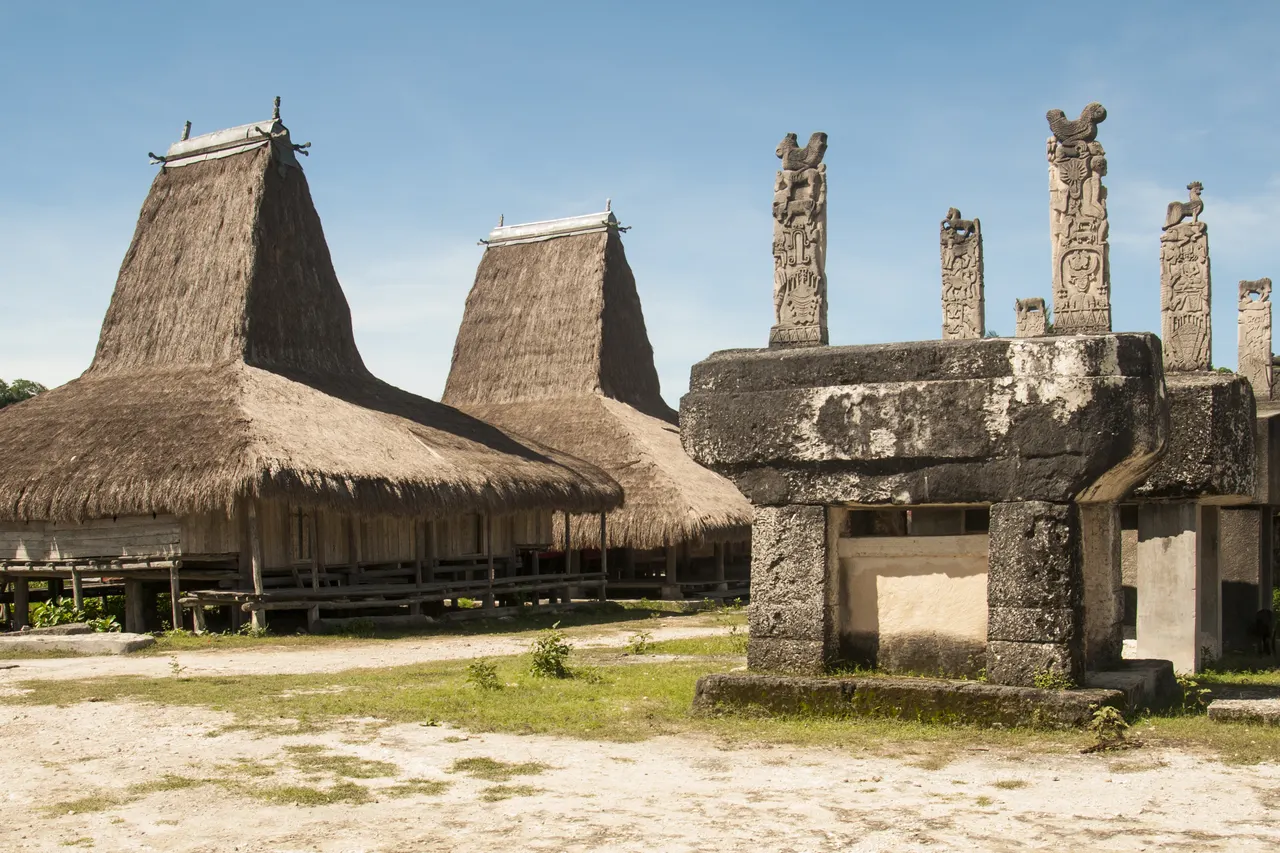
Rende (also written Rindi) is a traditional royal village in Rindi district, East Sumba, about 7 km south of Melolo and roughly 70 km from Waingapu, around 1.5-2 hours by car. It is known for huge megalithic tombs topped with carved animal figures and for fine ikat; there is no ticket, but visitors sign a guest book and leave a donation.
- Where
- Rindi district, East Sumba, about 7 km south of Melolo
- From the nearest airport
- Waingapu (WGP): roughly 70 km, about 1.5-2 hours by car
- Best time
- Morning or mid-afternoon; dry season for the easiest drive
- Entry
- No ticket; guest book and donation (around IDR 20,000-50,000)
- Good for
- Megalithic royal tombs, traditional houses, ikat
The village sits on a rise above a green river valley, and the first thing you notice is the stone. Down the middle, between two rows of tall houses, lie the tombs: enormous slabs raised on stone legs, some topped with carved figures of animals stacked one on another, crocodiles, turtles, horses and roosters, their surfaces softened by weather. Buffalo horns hang under the eaves. It is very quiet, except for a loom being set up on a veranda and the wind in the palms.
Rende is the most famous of East Sumba's royal villages and one of the best places on the island to understand how ancestry, rank and stone are woven together.
What it is and why go
Rende, or Rindi, is the old seat of the Rindi domain, in Rindi district of East Sumba. Travel guides call it a "village of kings". The hamlet of Praiyawang, inside Desa Rindi, is where most visitors go: one of the oldest traditional villages in East Sumba, with intact megaliths and towering traditional houses. Local reporting says the stone tombs, built for nobility, weigh roughly 1 to 5 tons, and that heirlooms such as gongs, drums and old garments, some said to be centuries old, are still kept and used in rituals.
Low Tide, every Sunday
One short letter a week about living well, from an island with more horses than traffic lights. Free.
We only use your email to send the letter. Unsubscribe in one click.Society here has traditionally been divided by birth into nobles and those who served them, a structure linked to Marapu belief, and visitors notice it in who speaks for the village. Rende is also known for ikat. Royal weaving families in the Umalulu and Rindi area are linked by marriage to nearby Pau, and cloth here is made for ceremonies, not only for sale. Naturally dyed pieces cost far more than factory-dyed ones.
How to get there
From Waingapu, take the paved coastal road south-east to Melolo (about 65 km), then continue about 7 km south on the main road towards Baing. Allow roughly 1.5-2 hours by car. Public buses from Waingapu to Melolo take a little over 2 hours, and some continue past the village.
- From Waingapu airport (WGP): about 1.5-2 hours.
- From Tambolaka (TMC): about 4-5 hours to Waingapu, then the drive south; plan it from an East Sumba base.
A local driver or guide is strongly recommended. Ideally someone with family ties can introduce you to the village. Most visitors combine Rende with Pau and Waimarang in one long day from Waingapu: leave early, see the villages in the cooler morning, swim at Waimarang at midday and stop at Walakiri for sunset on the way back.
When to go and best time of day
- Time of day: morning or mid-afternoon. Midday in the south-east is very hot.
- Season: the dry season (roughly May-November in the east) makes the drive easiest. In the rainy months the valley is at its greenest.
- Ceremonies: funerals of nobles can involve large gatherings and animal sacrifice and are planned long in advance. Do not attend unless invited, and follow your host's lead.
Tips and etiquette
- Donation: no ticket. Sign the guest book and leave a contribution, typically around IDR 20,000-50,000 per person (2025-2026); bringing sirih pinang (betel and areca nut) as a gift is a welcome gesture.
- Tombs are sacred: do not climb, sit on or lean against them, and do not touch carvings, horns or ritual objects.
- Ask first: before photographing people or entering any house.
- Dress modestly: shoulders and knees covered.
- Buying ikat: welcome but never required. Ask about dyes and how long a piece took.
Nearby
- Pau, the weaving village of the old Umalulu royal domain near Melolo.
- Waimarang waterfall, an inland turquoise pool south-west of Melolo.
- Walakiri Beach, a sunset stop on the drive back to Waingapu.
For background, read our guide to Marapu, ikat and the traditional villages.
Frequently asked questions
How far is Rende from Waingapu?
Roughly 70 km: about 65 km to Melolo and 7 km further south, around 1.5-2 hours by car.
Are Rende and Praiyawang the same place?
Praiyawang is the traditional village (kampung) within Desa Rindi that most visitors mean when they say Rende.
Is there an entrance fee at Rende village?
No ticket. Visitors sign the guest book and leave a donation, usually around IDR 20,000-50,000 per person.
Can I see a funeral ceremony at Rende?
Only if you are invited. Funerals are family and community events; follow your host and do not photograph without permission.
Places in this guide
- Praiyawang, Rende · East Sumba · Open in maps
- Rende village, Travelfish
- The Southeast of Sumba, Sumba Information
- Praiyawang, a timeless kingdom of Sumbanese heritage, Times Indonesia
- Eksplorasi budaya megalitik di Pulau Sumba, Times Indonesia, 14 Oct 2023
- Ikat hunting in Sumba, What's Next Naomi (travel blog), May 2016
- Melolo, Travelfish
Spotted an error? Write to info@ecobeachcity.com.
Low Tide, every Sunday
One short letter a week about living well, from an island with more horses than traffic lights. Free.
We only use your email to send the letter. Unsubscribe in one click.