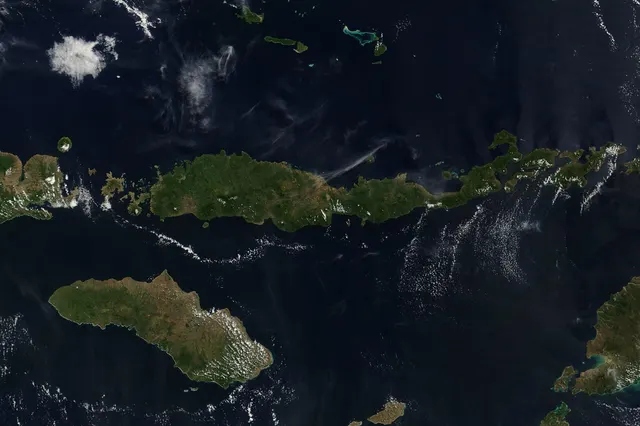
Guide · Travel
Things to do in Sumba: 25 experiences from west to east
From Weekuri Lagoon to the royal villages of Melolo: 25 things to do in Sumba, in road order, with where, when and how for each.
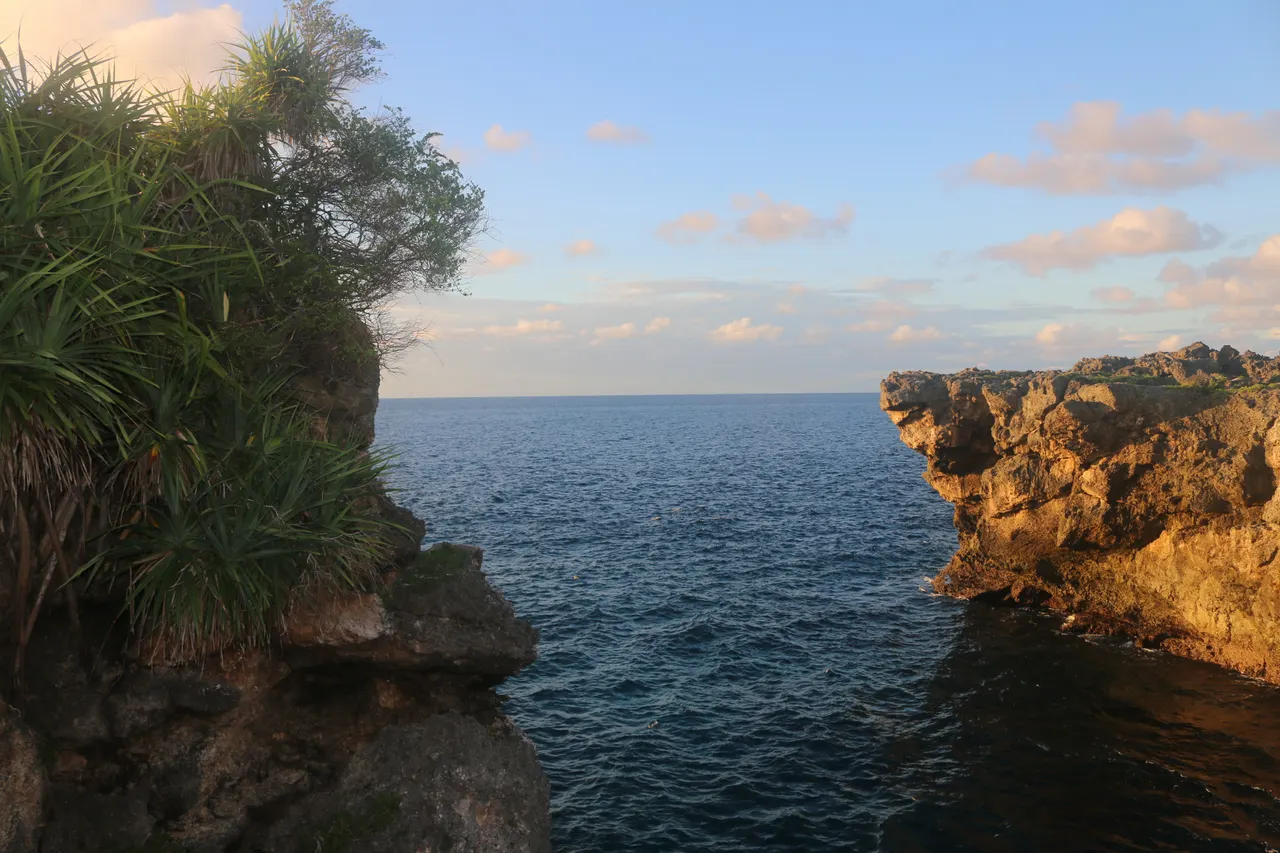
The best things to do in Sumba are to swim in Weekuri Lagoon, visit Marapu villages such as Ratenggaro, Tarung and Praijing, see the carved megalithic tombs of Anakalang, walk to the Lapopu, Tanggedu and Waimarang waterfalls, and watch sunrise or sunset at Wairinding and Walakiri. This guide lists 25 experiences from west to east, not ranked, across the island's four regencies. Tambolaka and Waingapu airports are about 170 km and 4-5 hours apart by car, so most travellers fly into one and out of the other.
- Experiences listed
- 25, from west to east (not ranked)
- Regencies covered
- Southwest, West, Central and East Sumba
- Airports
- Tambolaka (TMC) for 1-14; Waingapu (WGP) for 17-25
- Crossing the island
- About 170 km, 4-5 hours by car
- Best season
- Dry season, roughly May-September (to November in the east)
- Typical village donation
- Around IDR 20,000 or more per person (2025-2026)
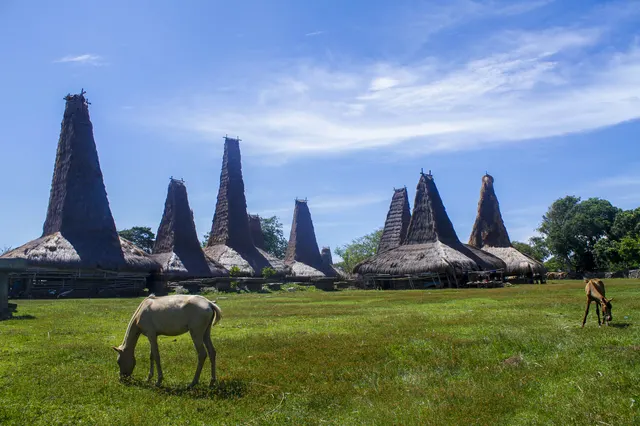
The road across Sumba runs for about 170 km, from a coral coast where villages of tall thatched roofs stand above the surf to dry hills where horses graze under an enormous sky. Almost everything worth doing on the island lies a short detour from that road: lagoons, clan villages, waterfalls in the forest, savanna viewpoints and beaches with nobody on them.
The short answer: the best things to do in Sumba are to swim in Weekuri Lagoon, visit Marapu villages such as Ratenggaro, Tarung and Praijing, see the carved tombs of Anakalang, walk to the Lapopu, Tanggedu and Waimarang waterfalls, and watch the light change over Wairinding and the mangroves of Walakiri. Below are 25 experiences, each with where it is, when to go and a link to our full page.
How this list of things to do in Sumba is organised
The list runs from west to east, the way the main road runs, grouped by regency. It is not a ranking: number 1 is simply the westernmost stop and number 25 one of the easternmost. Use it as a map in words. If you land at Tambolaka, read from the top; if you land at Waingapu, read from the bottom. Fees are approximate (2025-2026) and change, so carry small notes.
Sumba this week, every Sunday
The week's news, one place worth the trip and practical travel notes. Free, and you get our 7-day Sumba guide (PDF) on signing up.
One email a week. No spam. Unsubscribe in one click. Sumba this weekSouthwest Sumba: lagoons, cliffs and the villages of Kodi
1. Swim in Weekuri Lagoon
A saltwater lagoon in Kodi Utara, Southwest Sumba, filled by seawater that seeps through the coral rock separating it from the ocean. The water is calm and clear enough to float in. It lies roughly 40-60 km from Tambolaka, about 1.5-2 hours by car. Go on a weekday morning in the dry season, ideally at higher tide, and wear water shoes. Details: Weekuri Lagoon.
2. Look down on Mandorak cove
A tiny cove of white sand squeezed between rock cliffs, about a kilometre from Weekuri in Kodi Utara, Southwest Sumba. It is a short scenic stop rather than a beach day: come in the morning or late afternoon when the sea is calm, and ask what the fee is before parking, because charges are informal. Pair it with the lagoon. Details: Mandorak Beach.
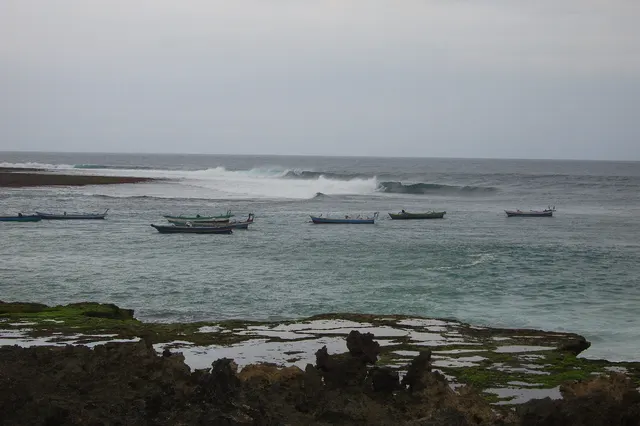
3. Watch the sun set at Pero
Pero is a fishing village in Kodi, Southwest Sumba, about 45 km from Tambolaka, facing the open Indian Ocean. People come for the sunset, for walks along the reef and for surf that suits intermediate and advanced riders at mid to high tide; the sea is often too rough for real swimming. Late afternoon in the dry season is best. Details: Pero Beach.
4. Visit Ratenggaro, the village of tall roofs
A Marapu village in Kodi Bangedo, Southwest Sumba, where houses with towering thatched roofs stand among hundreds of stone tombs beside a river mouth and the sea. It is roughly 50-56 km from Tambolaka. Go in the morning, sign the guest book, leave a donation of around IDR 20,000 or more per person and ask before taking photos. Details: Ratenggaro village.
5. Cross the river to Wainyapu
Directly across the estuary from Ratenggaro, in Kodi Balaghar, Southwest Sumba, Wainyapu is larger and quieter: dozens of tall-roofed houses, around a thousand or more megalithic tombs and a Pasola field. Tombs are still built here. Dry-season mornings are easiest; in February or March the Pasola fills the village, on dates that change every year. Details: Wainyapu village and the Pasola explained.
6. Walk the cliffs of Bawana and Watu Maladong
Two neighbouring beaches in the Kodi area of Southwest Sumba, roughly 1.5-2 hours from Tambolaka. Bawana is reached down about 300 steep steps; its sea arch collapsed in November 2020, but the cliffs and the sand remain. Watu Maladong has limestone rock islands. Come at low tide in the dry season, do not swim and leave before dark. Details: Bawana and Watu Maladong.
7. Spend a morning in Tambolaka
The capital of Southwest Sumba is where most trips begin, with the airport about 1.5 km from the centre. Before driving on, give the town a few hours: the morning market, the Rumah Budaya Sumba culture museum (entry by donation) and the ATMs and fuel you will need later, because both are scarce outside the towns. Mornings are best for the market. Details: Tambolaka town.
8. Climb Bukit Lendongara at sunset
A savanna hill in Karuni village, Loura district, Southwest Sumba, under 30 minutes by car from Tambolaka, with views over rolling grassland to the coast. It is green in the rainy season and golden brown in the dry season, and best at sunset or sunrise, which makes it an easy outing on your arrival day. No entrance fee is published. Details: Bukit Lendongara.
9. Cool off at Waikelo Sawah
In Tema Tana village, East Wewewa, Southwest Sumba, an underground river pours out of a limestone cave over a small irrigation dam built in 1976. It is about 30 km from Tambolaka airport and 11 km west of Waikabubak, a short walk from the road, and local families swim here. The flow is gentler in the dry season, roughly May to October. Details: Waikelo Sawah waterfall.
West Sumba: hill villages, a waterfall and the south coast
10. Surf or walk the sand at Marosi and Kerewe
Two beaches in Lamboya, on the south coast of West Sumba, about 70 km from Tambolaka. Marosi is a long curve of white sand with reef surf; Kerewe, nearby, has a long right-hand wave and limestone islets. The surf is best roughly from May to October and suits intermediate and advanced surfers. Swim with care, and bring water and food. Details: Marosi, Kerewe and surfing in Sumba.
11. Walk up to Tarung and Waitabar
On a small hill on the west side of Waikabubak, the capital of West Sumba, two joined Marapu villages keep tall clan houses around a yard of stone tombs. All 30 houses of Tarung burned in October 2017 and most have been rebuilt in the traditional style. Go with a guide on a dry-season morning; access is restricted during Wulla Poddu, the holy month, around October and November. Details: Tarung village.
12. See Praijing from above
About 3 km from the centre of Waikabubak, in West Sumba, Praijing spreads down a hillside in terraces of tall-roofed houses around megalithic tombs. The village runs its own guided tours, weaving workshops and homestays, and visitors pay a small levy or contribution at the entrance. Early morning in the dry season gives the best light and the fewest people. Details: Praijing village.
13. Go down to the Wanokaka valley
South of Waikabubak, in West Sumba, the road drops to rice fields, a river delta and the flat white beach of Waihura. On the hill above the Pasola field, Praigoli keeps Watu Kajiwa, a tomb nearly 200 years old. The Wanokaka Pasola is usually held in March and is free to watch; otherwise come early in the morning. Details: Wanokaka Beach, Praigoli and the Pasola 2027 dates.
14. Swim below Lapopu waterfall
A tiered waterfall about 90 m high inside Manupeu Tanah Daru National Park, in the Wanokaka area of West Sumba, about 16 km from Waikabubak plus a walk of 10-20 minutes that crosses a bamboo bridge. In the dry season, roughly May to October, the pool is clear enough to swim. Foreigners have paid around IDR 150,000 to enter in recent years. Details: Lapopu waterfall.
Central Sumba: a jungle trek and the great tombs
15. Trek to Matayangu waterfall
A waterfall about 75 m high near Waimanu village in Central Sumba, in the same national park. Reaching it means a poor road from Waikabubak and then a rough jungle trek of about 1-1.5 hours each way with a local guide. It is a sacred Marapu site and suits fit hikers; start early, and choose the dry season for a safer trail. Details: Matayangu waterfall and hiking in Sumba.
16. Stand before the tombs of Anakalang
On the Anakalang plain of Central Sumba, beside the main cross-island road, Pasunga has an upright slab carved in 1926 with the figures of a chief and his wife. A few kilometres south, at Gallubakul, the tomb of Umbu Sawola is a single stone of about 70 tonnes. Both can be seen all year; sign in and leave a donation. Details: Pasunga, Gallubakul and Sumba's megalithic tombs.
East Sumba: savanna, mangroves and royal villages
17. Reach the bay of Tarimbang
A white-sand bay on the south coast of East Sumba, in Tabundung district, about 87 km and roughly 3 hours from Waingapu on a narrow, winding road that leaves the highway near Lewa. The reef has a well-known right-hand surf break, most consistent from about April to October, and calm mornings allow swimming. Facilities are very limited, so plan the night ahead. Details: Tarimbang Beach.
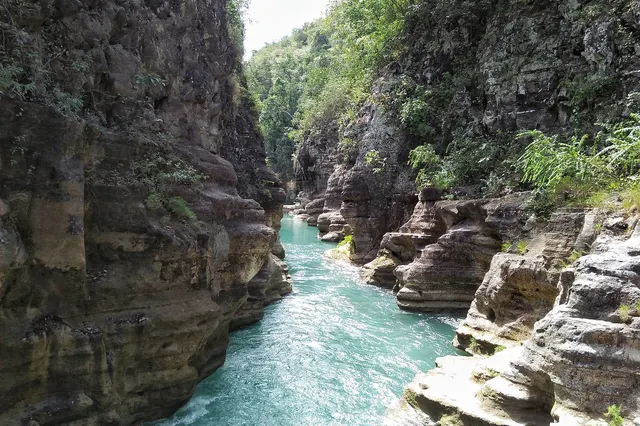
18. Bathe in the canyon pools of Tanggedu
North of Waingapu, in Kanatang district, East Sumba, a river has cut pools and a small canyon into pale rock. It takes about 2 hours by road and then a walk of around 3 km across open savanna, or an ojek ride. Go on a weekday morning in the dry season, roughly May to October, with water and a hat. Details: Tanggedu Waterfall.
19. Watch the hills of Wairinding change colour
The classic savanna viewpoint of East Sumba, about 20-25 km west of Waingapu on the main road to Waikabubak. The hills are golden in the dry season and green in the rainy season; sunrise and late afternoon give the best light. There is no official entrance fee, though a small parking charge has been reported. Details: Wairinding Hill and sunsets and sunrises in Sumba.
20. Look for horses at Puru Kambera
On the north coast of East Sumba, in Mondu village, about 24-26 km from Waingapu, grassland runs down to a calm, shallow beach. The savanna is known for free-roaming Sumba horses, best seen in the dry season in the early morning or late afternoon. Keep your distance from the animals and take your rubbish away. Details: Puru Kambera and Sumba's horses.
21. Watch ikat being woven in Prailiu
A royal village inside Waingapu, East Sumba, roughly halfway between the airport and the town centre. Women weave ikat on backstrap looms under the houses, and the tomb of the last king, Umbu Djaka, who died in 2008, stands among older ones. Visit from Monday to Saturday (weaving is usually not shown on Sundays) and leave a donation. Details: Prailiu village and where to buy ikat.
22. Climb Bukit Persaudaraan before your flight
A grassy limestone hill in Mauliru, almost directly across from Waingapu airport in East Sumba and about 7 km from the town centre. From the top you look over rice fields, the river, the town and the sea. Late afternoon is best; there are no facilities, so bring water and a torch for the way down. Details: Bukit Persaudaraan.
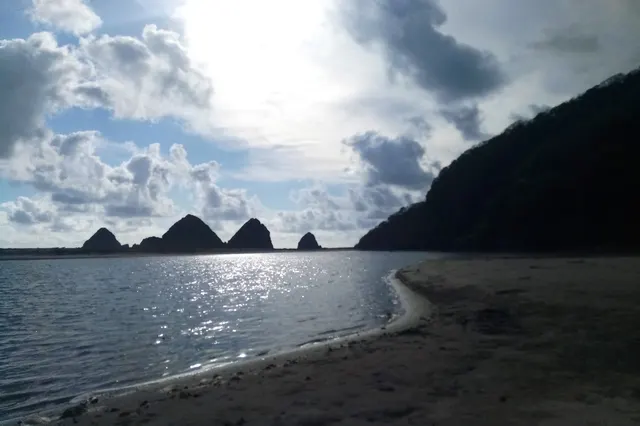
23. See the mangroves of Walakiri at low tide
On the north coast of East Sumba, about 20-24 km east of Waingapu, dwarf mangroves stand on a wide tidal flat. They look best as silhouettes at low tide around sunset, so check the tide table before you go. It is a place for walking and photographs rather than swimming, and entry has been free in recent reports. Details: Walakiri Beach.
24. Swim in the pool of Waimarang
In Tamburi village, Rindi district, inland from Melolo in East Sumba, a walk of 20-45 minutes leads down through forest to a turquoise pool that is good for swimming. It is about 1.5-2 hours by car from Waingapu. Weekday mornings are quietest and the water is clearest in the dry season; the climb back is steep. Details: Waimarang Waterfall.
25. Visit the royal villages of Rende and Pau
Around Melolo, about 1.5-2 hours south-east of Waingapu in East Sumba, two villages show the island's royal past. Rende has huge tombs topped with carved animals; Pau, seat of the old Umalulu domain, is known for pahikung weaving. Go in the morning with a local guide, sign the guest book and leave a donation. Details: Rende and Pau.
How to fit these things to do in Sumba into one trip
Tambolaka and Waingapu are about 170 km and 4-5 hours apart by car, so the simplest plan is to fly into one airport and out of the other and cross the island once. Numbers 1 to 14 are day trips from Tambolaka or Waikabubak, 15 and 16 lie on the crossing, and 17 to 25 are reached from Waingapu. Our itineraries for 5, 7 and 10 days put them in order, and East Sumba or West Sumba helps if you only have time for one side.
Most of these places have no public transport, so budget for a car with driver, roughly IDR 600,000-1,000,000 a day (see getting around Sumba). The dry season, roughly May to September and into November in the east, is the easiest time for roads and waterfalls (see the best time to visit). Many beaches have strong currents and no lifeguards, and Sumba is a malaria risk area: read our safety and health guide before you go.
Frequently asked questions
What is Sumba best known for?
Savanna hills such as Wairinding, Marapu villages with tall thatched roofs and megalithic tombs, Weekuri Lagoon, the Pasola ritual in February and March, ikat weaving and uncrowded surf.
How many days do I need to see the main things to do in Sumba?
With 3-4 days you can cover one side of the island. To see both the west and the east, plan at least 5 days and ideally 7, flying into one airport and out of the other.
Which things to do in Sumba are free?
Viewpoints such as Wairinding, Bukit Persaudaraan and Bukit Lendongara have no official ticket, and Walakiri has been free in recent reports. Villages ask for a guest-book donation, and some beaches and waterfalls charge a small fee.
Can I swim at Sumba's beaches?
Sometimes. Weekuri Lagoon, Waimarang, Tanggedu, Londa Lima and Puru Kambera are usually calm. Many south and west coast beaches have strong currents and no lifeguards, so ask locally first.
Is this list a ranking?
No. The 25 experiences are ordered from west to east, following the main road from the Kodi coast to the villages around Melolo.
Do I need a guide for the villages?
A local guide or driver is strongly advised: they translate, explain what you are seeing and help you follow etiquette, such as signing the guest book and asking before taking photos.
Places in this guide
- Weekuri Lagoon · Southwest Sumba · Open in maps
- Ratenggaro village · Southwest Sumba · Open in maps
- Tambolaka (Waitabula) · Southwest Sumba · Open in maps
- Praijing village · Waikabubak, West Sumba · Open in maps
- Lapopu waterfall · Wanokaka, West Sumba · Open in maps
- Kampung Pasunga · Anakalang, Central Sumba · Open in maps
- Bukit Wairinding · East Sumba · Open in maps
- Walakiri Beach · East Sumba · Open in maps
- Praiyawang, Rende · East Sumba · Open in maps
- Sumba, Wikipedia (area, regencies, seasons), accessed 14 Nov 2026
- East Sumba Regency, Wikipedia, accessed 14 Nov 2026
- West Sumba Regency, Wikipedia, accessed 14 Nov 2026
- Anakalang, Wikipedia (Pasunga and Gallubakul tombs), accessed 14 Nov 2026
- Malaria Information and Prophylaxis, by Country [I], US CDC
Spotted an error? Write to info@ecobeachcity.com.
Sumba this week, every Sunday
The week's news, one place worth the trip and practical travel notes. Free, and you get our 7-day Sumba guide (PDF) on signing up.
One email a week. No spam. Unsubscribe in one click. Sumba this week