Guide · Travel
Sumba packing list: what to bring, season by season
Clothes for the dry and rainy seasons, what to wear in villages, sun and reef gear, cash, medicine, mosquito protection and phone essentials for Sumba.
For Sumba, pack light clothes that cover shoulders and knees for village visits, a sarong, a hat and strong sunscreen, reef shoes or sandals with grip, insect repellent with DEET or picaridin, a small first-aid kit, any antimalarial tablets your travel clinic prescribes, plenty of cash in small rupiah notes and a phone with a Telkomsel SIM and offline maps. Add a rain jacket and a dry bag from December to March. Keep it light: regional flights often have low baggage allowances.
- Temperatures
- Highs around 31-33 C all year; nights about 20-24 C (Waingapu)
- Dress in villages
- Shoulders and knees covered; a sarong is useful
- Mosquitoes
- Malaria risk area (US CDC): repellent with DEET or picaridin, long sleeves at dusk
- Cash
- ATMs only in Tambolaka, Waikabubak and Waingapu; carry small notes
- Phone
- Telkomsel SIM and offline maps
- Baggage
- Regional fares often include little checked baggage; pack light
You will know within an hour of landing what you forgot. The sun on the savanna has no shade to soften it, the coral at the lagoon is sharp under bare feet, the village elder is wearing a woven cloth and you are in shorts, and the last ATM was forty kilometres back. Sumba has few shops outside its three towns, so what you carry is what you have.
The short answer: pack for sun, for respect and for self-reliance. Light clothes that cover, something for your feet on reef and rock, mosquito protection, cash and a phone that works without signal. The reasons behind each item are in our safety and health guide; this page is the list.
First, the bag itself
Bring less than you think. Regional fares to Sumba often include little checked baggage (10 kg has been common on some fares), extra kilos are charged at the counter, and the ATR turboprops used on several routes have small overhead bins. A soft bag is easier than a hard case in the boot of a car that also carries the driver's things, water and your day gear. Add a small daypack for hikes and village visits.
Sumba this week, every Sunday
The week's news, one place worth the trip and practical travel notes. Free, and you get our 7-day Sumba guide (PDF) on signing up.
One email a week. No spam. Unsubscribe in one click. Sumba this weekClothes by season
Temperatures hardly change through the year. In Waingapu, daytime highs stay around 31-33 C, and nights range from about 20 C in August to about 24 C in the wet season. The sea is 26.5-29.5 C. What changes is the rain. See the best time to visit Sumba.
Dry season (roughly May to October)
- Light, breathable shirts and T-shirts, including some with sleeves.
- Long, loose trousers or a long skirt, for villages and for evenings.
- Shorts and swimwear for the beach only.
- A light jumper or long-sleeved layer: August nights are the coolest of the year, and Waikabubak sits on a plateau at roughly 400 m.
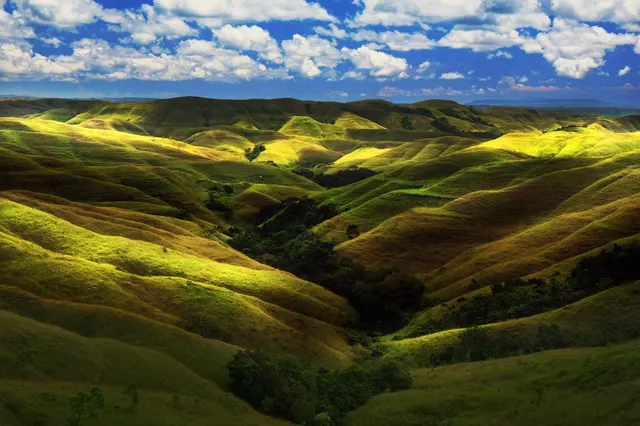
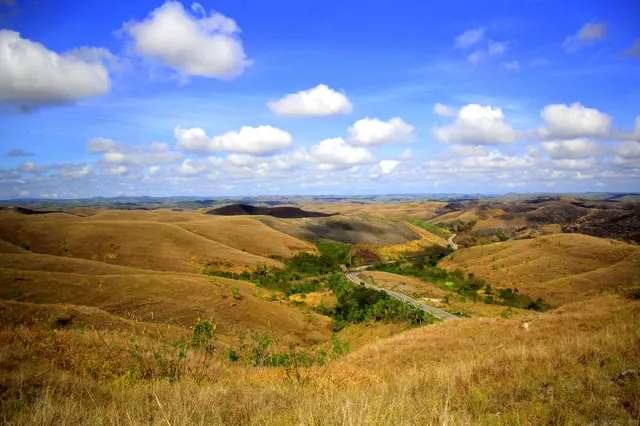
- A hat with a brim and sunglasses. The savanna has no shade.
Rainy season (roughly December to March)
- Everything above, plus a light rain jacket or poncho.
- A dry bag or waterproof pouch for phone, camera and documents.
- Quick-drying clothes and a spare pair of shoes: tracks to waterfalls turn to mud.
- Extra patience and a flexible plan. Read Sumba in the rainy season.
For village visits
Traditional villages are homes where many families follow Marapu, the ancestral religion. Dress is the first sign of respect.
- Covered shoulders and knees, for men and women.
- A sarong: it covers shorts in a moment and doubles as a towel, a sheet and a sunshade.
- Shoes that slip on and off easily, in case you are invited into a house.
- Small notes for the guest book: contributions are commonly IDR 20,000-50,000 per person.
- Optional: a small bundle of betel nut (sirih pinang) bought at a market is a traditional, welcome gift. Your driver can help you buy it.
Leave the drone in its case unless you have asked permission. More in Marapu, ikat and traditional villages. If you plan to buy cloth, leave room in the bag: see where to buy ikat.
Sun and heat
- High-factor sunscreen. Sumba is around 10 degrees south of the equator, and the sun is fierce on open hills such as Wairinding. You can buy sun cream in Tambolaka, but not in the countryside.
- A reusable water bottle, ideally with a filter. Do not drink tap water; guesthouses usually provide filtered gallons to refill from.
- Oral rehydration salts.
- A light scarf or buff for dust on dry-season roads.
Reef, lagoon and sea
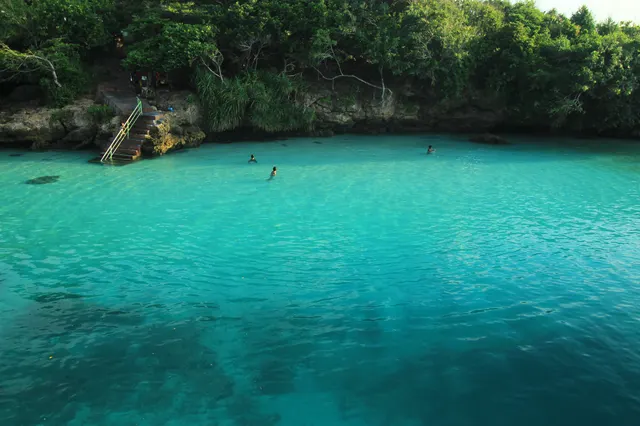
- Reef shoes or sandals with grip. The coral at Weekuri Lagoon is sharp, and rocks at Mandorak and the cliff beaches are slippery.
- A rash vest or swim shirt: sun protection in the water, and more modest on beaches used by local families.
- Your own mask and snorkel if you want to use one. Do not expect to rent them on the beach.
- A quick-dry towel. Many beaches have no facilities at all.
Many of Sumba's beaches have strong currents and no lifeguards. No equipment replaces asking locally where it is safe to swim. See beaches, lagoons and waterfalls.
Health kit and mosquito protection
As our safety guide explains, citing the US Centers for Disease Control and Prevention (CDC), all of East Nusa Tenggara, including Sumba, is a malaria risk area, unlike the resort areas of Bali. The travel site Backindo notes that Sumba has the highest case counts in the eastern islands. See a travel clinic 4-6 weeks before you fly, say that you are going to Sumba, and pack what the doctor prescribes.
- Antimalarial tablets, if prescribed. The CDC's options for Indonesia's risk areas are atovaquone-proguanil, doxycycline, mefloquine or tafenoquine; which one, if any, is a decision for your doctor.
- Insect repellent with DEET (around 50%) or picaridin. Reapply after swimming and sweating, and use it in the daytime too, because dengue mosquitoes bite by day.
- Long sleeves and long trousers for dusk and dawn.
- A mosquito net only if your accommodation does not have nets or screens. Ask when you book.
- First-aid basics: plasters, antiseptic, rehydration salts, antihistamines, a basic painkiller.
- Personal prescriptions in their original packaging, enough for the whole trip. Pharmacies exist in the towns, but do not count on finding a specific medicine.
- Travel insurance documents with the emergency number. Choose a policy that covers medical evacuation, and motorbikes or surfing if you plan them.
Hospitals on Sumba offer basic care, and post-exposure rabies vaccine may not be available on the island, so ask the clinic about rabies vaccination too.
Cash and documents
- Rupiah in cash, with plenty of IDR 10,000, 20,000 and 50,000 notes. ATMs are in Tambolaka, Waikabubak and Waingapu only, and machines sometimes run out at weekends. Neither airport has money exchange.
- A second bank card, kept separately.
- Passport and your visa or e-VOA confirmation; see the visa guide.
- Licence and International Driving Permit if you intend to ride a scooter.
- Paper copies of bookings and your driver's and accommodation's numbers, in case the phone dies.
Phone, power and navigation
- A Telkomsel SIM or eSIM, bought and registered before you arrive, ideally in Bali. It has the widest coverage on Sumba; other networks fade outside the towns.
- Offline maps of the whole island, downloaded on Wi-Fi.
- A power bank. Days are long and you will use the phone as camera, map and torch.
- A torch or headlamp. There is little street lighting outside the towns.
- The InfoBMKG app, Indonesia's official earthquake and tsunami alert service.
- Chargers and spare memory cards. Buy them before you come.
What to buy there, and what to leave at home
Water, snacks, fruit, basic toiletries and sun cream are easy to find in Tambolaka, Waikabubak and Waingapu; stock up before each long drive, because the countryside has few shops. Carry a bag for your own rubbish and take it back to town. Leave at home formal clothes, heavy shoes you will not hike in and anything you would be upset to see covered in dust.
The list in one glance
| Category | Essentials |
|---|---|
| Clothes | Light tops with sleeves, long trousers or skirt, sarong, hat, light layer, swimwear |
| Feet | Sandals with grip or reef shoes, closed shoes for hikes |
| Sun and water | Sunscreen, sunglasses, refillable bottle, rehydration salts |
| Health | Repellent, prescribed antimalarials, first-aid kit, prescriptions, insurance |
| Money | Rupiah in small notes, two cards |
| Tech | Telkomsel SIM, offline maps, power bank, torch, dry bag |
| Rainy season | Rain jacket, quick-dry clothes, spare shoes |
Travelling with children? Add the items in Sumba with kids. Coming to surf or hike? See surfing in Sumba and hiking in Sumba. For the rest of the planning, go to the Sumba travel guide.
Frequently asked questions
What should I wear in Sumba?
Light, breathable clothes. In villages and towns, cover shoulders and knees; keep shorts and swimwear for the beach. A sarong is the most useful single item, and a light layer helps on cooler dry-season nights.
Do I need malaria tablets for Sumba?
Sumba is in East Nusa Tenggara, which the US CDC lists as a malaria risk area. Whether you take tablets is a decision for a travel clinic, which you should see 4-6 weeks before travelling. In all cases bring repellent and cover up from dusk to dawn.
Do I need reef shoes in Sumba?
They are strongly recommended. The coral at Weekuri Lagoon is sharp, and rocks at several beaches are slippery. Sandals with good grip are the minimum.
How much cash should I bring to Sumba?
Enough for several days of fees, donations, meals and fuel, in small notes. ATMs exist only in Tambolaka, Waikabubak and Waingapu, sometimes run out at weekends, and neither airport has money exchange.
Can I buy sunscreen and toiletries in Sumba?
Yes, in the three main towns, but not in the countryside. Buy what you need in Tambolaka, Waikabubak or Waingapu before a long drive, or bring it from Bali.
Which SIM card works in Sumba?
Telkomsel has the widest coverage. Buy and register the SIM or eSIM before you arrive, and download offline maps, because even Telkomsel loses signal in valleys and on remote beaches.
- Malaria in Indonesia: What Travelers Need to Know, Backindo, 1 Jan 2026
- A guide to Sumba, Indonesia, Lonely Planet, 10 Apr 2026
- How to Get to Sumba: Flights, Ferries, Airports and Best Routes (baggage on regional flights), Backindo, 7 Oct 2025 (updated 6 Jul 2026)
- Sumba Motorbike Rental: What to Know First (supplies, signal, licences), Backindo, 4 Oct 2025
- How to Get from Waingapu Airport in East Sumba (cash, no money exchange), Backindo, 7 Oct 2025 (updated 6 Jul 2026)
Spotted an error? Write to info@ecobeachcity.com.
Sumba this week, every Sunday
The week's news, one place worth the trip and practical travel notes. Free, and you get our 7-day Sumba guide (PDF) on signing up.
One email a week. No spam. Unsubscribe in one click. Sumba this week