Guide · Travel
Sumba in the rainy season: what to do, where it stays drier and how to plan
Green hills, roaring waterfalls and the Pasola: the wet months reward flexible travellers. Here is where to go, what to avoid and how the roads really behave.
Sumba's rainy season runs roughly December to March, wettest in January and February, but rain usually comes in short heavy downpours and the east around Waingapu stays much drier than the west. You can still visit villages, see waterfalls at full power and watch the Pasola in February and March; dirt roads to remote beaches can become impassable, so hire a driver, travel in the mornings and keep a spare day.
- Rainy season
- Roughly December to March; wettest January-February
- Rain in Waingapu
- About 170 mm in January on 13 days; about 810 mm a year
- Driest area
- East Sumba around Waingapu; the west and the hills are wetter
- 2026-2027 outlook
- BMKG: late start, December in most of NTT; peak January-February 2027
- Pasola
- February (Kodi, Lamboya) and March (Wanokaka, Gaura); 2027 dates not yet announced
- Roads
- Main road paved; dirt tracks to remote beaches and villages can become impassable
The first big storm of the season arrives in the afternoon. The sky over the savanna turns the colour of slate, the wind smells of wet earth, and then the rain comes down so hard that the road disappears for twenty minutes. An hour later the sun is out again, steam rises from the tarmac, children run through the puddles, and within a week the golden hills of Sumba have turned a green so bright it almost hurts. The rainy season changes the island completely, and for the right traveller it is one of the most beautiful times to come.
The short answer: Sumba's rainy season runs roughly from December to March, with January and February the wettest months. Rain usually falls in heavy, short downpours rather than all day, and the east around Waingapu stays much drier than the west and the hills. You can still visit villages, see waterfalls at their most powerful, photograph the greenest landscapes of the year and watch the Pasola in February and March. What you lose is easy access: dirt roads to remote beaches and villages can turn to mud or flood, sea swimming is less reliable and some plans will need a spare day.
When is the rainy season in Sumba?
Sumba lies in the drier part of Indonesia. In Waingapu, on the north-east coast, average rainfall is only about 810 mm a year spread over roughly 80 rainy days, according to 1991-2020 climate data, and almost all of it falls between December and March. January averages about 170 mm on 13 days, February about 160 mm, March about 145 mm and December about 135 mm on 11 days. By April rainfall halves to about 70 mm, and August and September get about 5 mm each. Temperatures barely move: daytime highs stay around 31-33 C all year, and wet-season nights are warm, around 24 C, with heavy humidity.
Sumba this week, every Sunday
The week's news, one place worth the trip and practical travel notes. Free, and you get our 7-day Sumba guide (PDF) on signing up.
One email a week. No spam. Unsubscribe in one click. Sumba this weekThe start of the rains shifts from year to year. For 2026-2027, Indonesia's meteorology agency BMKG expects a late and shorter wet season because of a very strong El Niño: rains starting in December 2026 in most of East Nusa Tenggara (NTT), with the peak in January 2027 in parts of the province and February 2027 in most of it. Our report on the late rainy season of 2026 has the details, and the month-by-month guide to the best time to visit shows how a normal year unfolds.
East or west: where it stays drier
Sumba has two climates. The east, around Waingapu, is the driest part of the island, with open savanna, few trees and long sunny spells even in the wet months. The west and the interior hills, around Waikabubak, Kodi and the forests of Central Sumba, catch more rain and have a longer wet season, which is why they stay greener all year. Inland hills also get more rain than the coast.
In practice, that means:
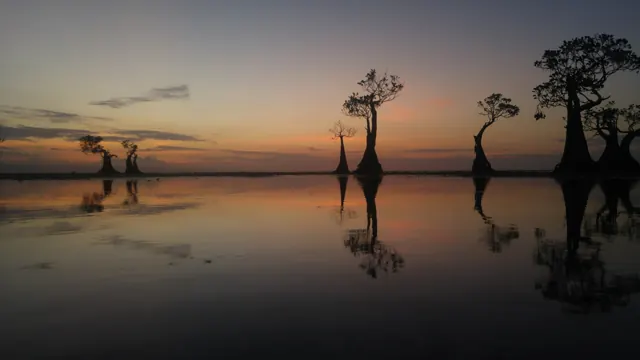
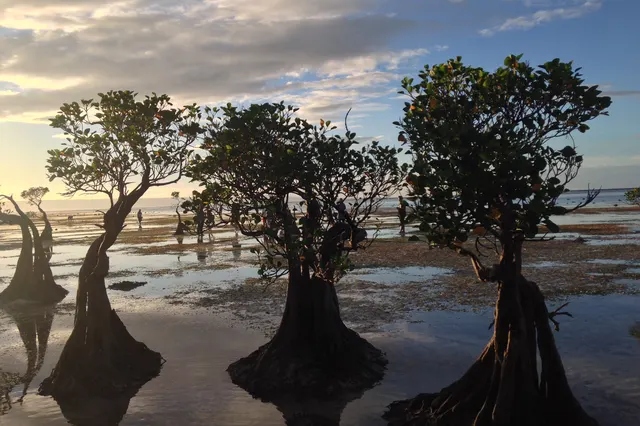
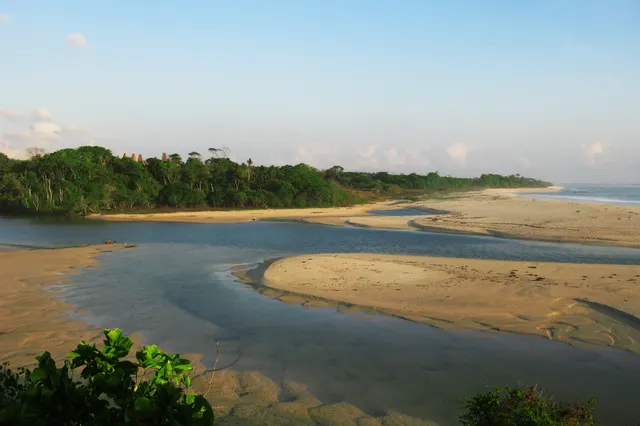
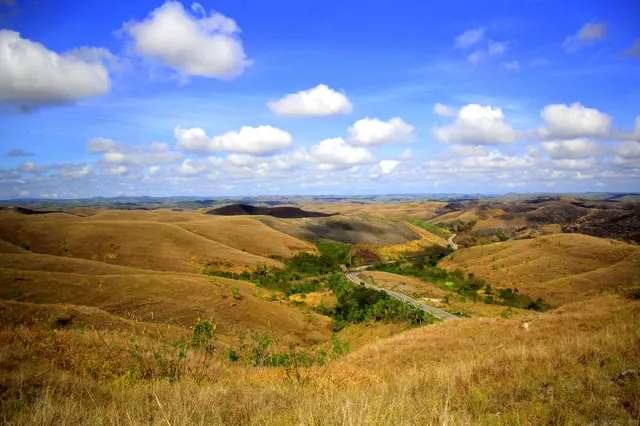
- East Sumba is the safer bet for sunshine in December-March: the hills of Wairinding and Puru Kambera, the mangroves of Walakiri beach at low tide and the king's village of Prailiu near Waingapu are all close to paved roads.
- West and Southwest Sumba are wetter but also where the Pasola and the great traditional villages are. Plan shorter days and keep the long dirt-road trips for mornings, when storms are less likely.
- The south coast of East Sumba, with its remote beaches and waterfalls, is the hardest area to reach in the rains. The East Sumba disaster agency (BPBD) lists the southern districts of Karera, Ngadu Ngala, Paberiwai, Mahu and Tabundung as the most prone to floods and landslides, and floods have also hit Wula Waijelu and Kambera.
Roads in the wet season
The main road that crosses the island (Tambolaka, Waikabubak, Waibakul, Lewa, Waingapu) is mostly paved and stays open, but it is narrow and winding, and heavy rain brings potholes, mud washed across the tarmac and the occasional fallen tree. The real problem is the side roads. Many unpaved tracks to secluded beaches, villages and waterfalls become slippery, rutted or impassable after a storm, and flooded rivers can cut a route for hours.
- Hire a car with a local driver rather than riding a scooter. Drivers know which tracks are passable after rain and which villages can be reached on foot.
- Drive in the morning. Storms tend to build in the afternoon; aim to be back on the main road by mid-afternoon.
- Never cross a flooded river or causeway by car or on foot, even if locals do it.
- Avoid driving at night, when rain, potholes and animals on the road are invisible.
- Add buffer time: a 3.5-hour drive such as Waikabubak to Waingapu (about 130 km) can take longer in the rain. See our guide to getting around Sumba for typical driving times.
Waterfalls at their best, and when to keep away
The rains fill Sumba's waterfalls to their fullest, and this is when they are most spectacular. Lonely Planet singles out Matayangu, in the forest of Central Sumba, as especially impressive after rain, when the spray is fast and powerful; it is reached by a hike of about 90 minutes from the same car park as Lapopu, the tall, multi-tiered fall in West Sumba. In the wet months both run strong and often brown with mud.
- Enjoy the power from a safe distance. Do not swim in fast or muddy water, and stay out of pools at the foot of big falls after heavy rain.
- Trails get muddy and slippery: wear shoes with grip, take a local guide and turn back if it starts to pour.
- Avoid narrow river canyons when storms are around, because water levels can rise quickly.
- For clear water and swimming, come back in the dry season, roughly May to October.
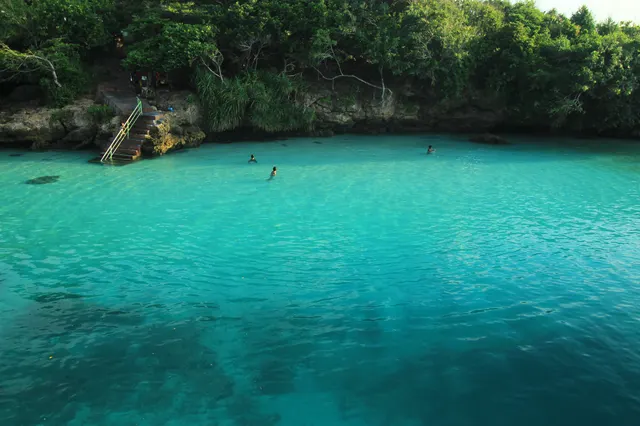
Our guide to beaches, lagoons and waterfalls describes each site.
Pasola: the rainy-season highlight
The Pasola, the ritual horseback battle of West and Southwest Sumba, takes place right in the middle of the wet season. It is usually held in February in Kodi and Lamboya and in March in Wanokaka and Gaura, on days set by the Rato elders of the Marapu religion, who follow the moon and the arrival of the nyale sea worms on the shore. In 2026 it fell on 9-11 February and 9-11 March in Kodi, 10 February in Lamboya, 9 March in Wanokaka and 14 March in Gaura. As of 7 November 2026 the 2027 dates had not been announced; they are usually confirmed only weeks ahead, so build spare days around the expected dates. Read Pasola explained before you go: it is a sacred ceremony, not a show.
What else you can do in the rainy season
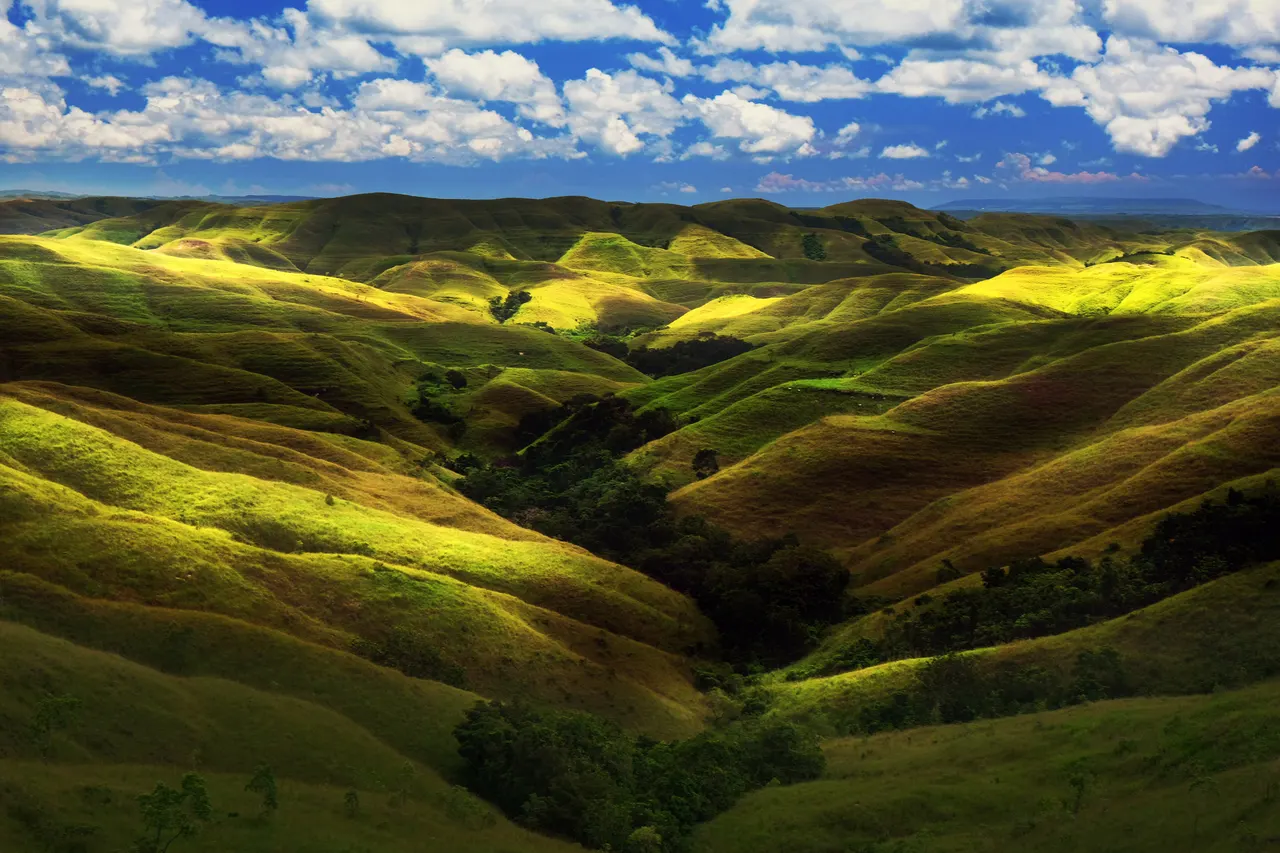
- Photograph green Sumba. From late January to April the hills are at their greenest, a side of the island that surprises visitors who know it only from golden dry-season photos.
- Visit traditional villages. Villages near the main roads, such as Praijing and Tarung around Waikabubak or Prailiu near Waingapu, stay easy to reach. Rainy days are often spent indoors and under the eaves, and visits feel calmer. Remember that villages are homes: sign the guest book, leave a contribution and ask before taking photos.
- Look for ikat weaving. Weavers work under their houses year-round, and textiles are a good reason to slow down on a wet afternoon.
- Enjoy the quiet. December to March is low season, with fewer visitors and the lowest prices of the year, although Christmas and New Year bring families home and can fill flights.
- Surf, with care. Surf guides note that October to December can bring glassy days and solid swells on the west and south coasts. Ask locally about conditions.
Health and packing for the wet months
Mosquitoes multiply with the rain. Sumba is in a malaria risk area and dengue is present year-round in Indonesia, so use a strong repellent day and night, wear long sleeves in the evening and see a travel clinic before you go. Our Sumba safety and health guide explains the risks.
- A light rain jacket or poncho and a dry bag for your phone and camera.
- Sandals with grip for muddy paths, plus a pair of closed shoes for hikes.
- Quick-dry clothes: humidity means nothing dries overnight.
- Insect repellent, a small first-aid kit and oral rehydration salts.
- Cash, offline maps and a power bank, in case storms knock out the signal or the power.
- Flexible plans: one spare day for every three or four days of travel, especially around the Pasola and before a flight.
Before you book, compare costs in how much a trip to Sumba costs, and if you plan to reach the island by sea, read our guide to ferries to and from Sumba, since bad weather can cancel crossings.
Frequently asked questions
Is it worth visiting Sumba in the rainy season?
Yes, if you are flexible. Rain usually comes in short heavy bursts, the landscapes are at their greenest, waterfalls are at full power and February-March brings the Pasola. Prices and crowds are lower. The trade-off is harder access to remote beaches and villages on dirt roads.
Which part of Sumba is driest in the wet season?
East Sumba, around Waingapu, is the driest part of the island: Waingapu averages only about 810 mm of rain a year. The west, around Waikabubak and Kodi, and the interior hills get more rain and a longer wet season.
When does the rainy season start in Sumba in 2026?
BMKG expects a late start in 2026-2027 because of a very strong El Niño, with the rains beginning in December 2026 in most of East Nusa Tenggara and peaking in January-February 2027. In a normal year the rains begin between late October and December.
Are Sumba's roads passable in the rainy season?
The main paved road across the island stays open, though with more potholes and mud. Many unpaved side roads to remote beaches, villages and waterfalls can become slippery or impassable after storms, and flooded rivers can block routes for hours. Hire a local driver and travel in the morning.
Can you swim at Sumba's waterfalls in the rainy season?
It is not advisable after heavy rain. Waterfalls such as Lapopu and Matayangu are at their most spectacular but run fast and often muddy, and trails are slippery. For clear water and safe swimming, come between about May and October.
When is the Pasola in 2027?
The 2027 dates had not been announced as of 7 November 2026. Pasola is usually held in February in Kodi and Lamboya and in March in Wanokaka and Gaura, on days set by the Rato elders and often confirmed only weeks ahead.
Places in this guide
- Waingapu · East Sumba · Open in maps
- Waikabubak · West Sumba · Open in maps
- Matayangu waterfall · Central Sumba · Open in maps
- Lapopu waterfall · West Sumba · Open in maps
- Bondo Kodi (Pasola area) · Southwest Sumba · Open in maps
- Wanokaka beach (Pasola area) · West Sumba · Open in maps
- Walakiri beach · East Sumba · Open in maps
- Sumba climate: average weather, temperature, rain (1991-2020 data, Waingapu), Climates to Travel
- BMKG: El Niño sangat kuat sedang terjadi, musim hujan 2026/2027 diprediksi datang lebih lambat, BMKG, 22 Sep 2026
- BPBD Sumba Timur petakan kawasan rawan banjir dan longsor, ANTARA Kupang, 6 Feb 2024
- Best time to visit Sumba: weather, seasons, climate, MileHacker, accessed Nov 2026
- A guide to Sumba, Indonesia, Lonely Planet, 10 Apr 2026
- Sumba travel guide, Rough Guides, accessed Nov 2026
Spotted an error? Write to info@ecobeachcity.com.
Sumba this week, every Sunday
The week's news, one place worth the trip and practical travel notes. Free, and you get our 7-day Sumba guide (PDF) on signing up.
One email a week. No spam. Unsubscribe in one click. Sumba this week