Guide · Culture
Etiquette in Sumba: 15 things visitors get wrong
From sitting on a stone tomb to handing sweets to children: the 15 most common mistakes visitors make in Sumba, and what to do instead.
The mistakes visitors most often make in Sumba are treating traditional villages as museums rather than homes, photographing people and rituals without asking, sitting or climbing on the stone tombs and skipping the guest book and its contribution. Dress with shoulders and knees covered, accept the betel nut or coffee you are offered, give to adults or the guest book rather than to children, and treat the Pasola, funerals and the sacred month of Wulla Poddu as religious events, not shows.
- Villages
- Homes, not museums: announce yourself, ideally come with a guide
- Guest book
- Sign it and leave a contribution (around IDR 20,000 or more at Ratenggaro)
- Photos
- Ask before every photo of people, houses, tombs and rituals
- Stone tombs
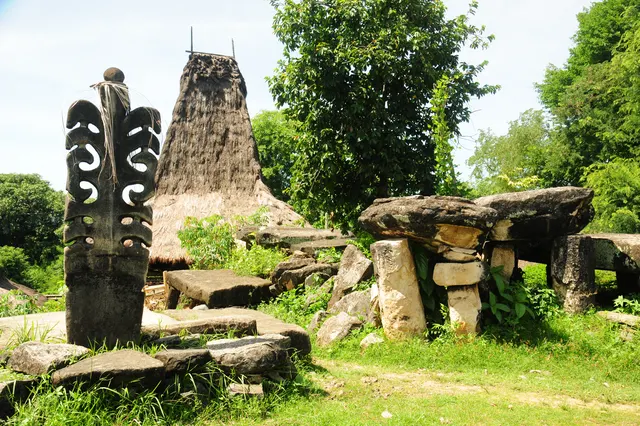
- Never sit, stand or climb on them
- Dress
- Shoulders and knees covered; a sarong works
- Offered betel nut or coffee
- Accept
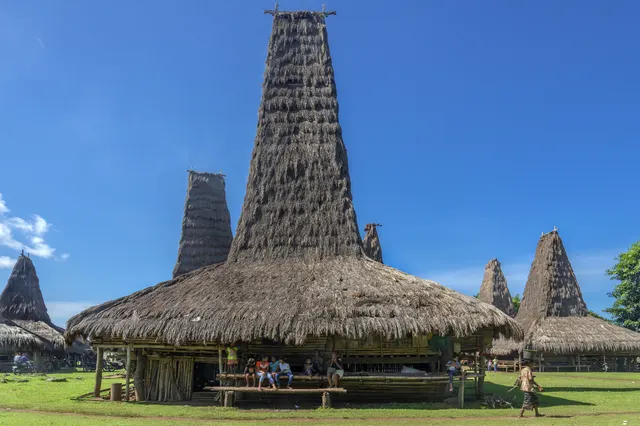
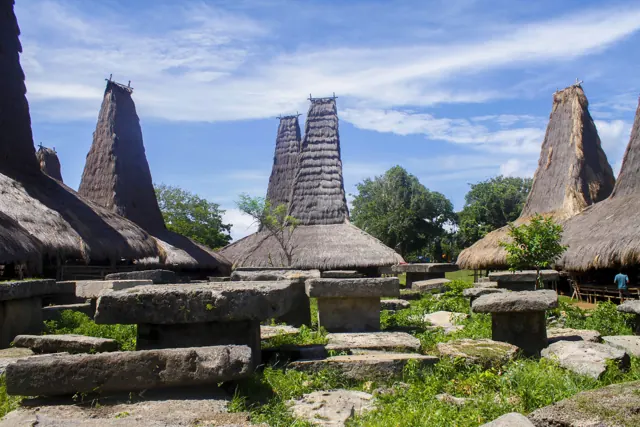
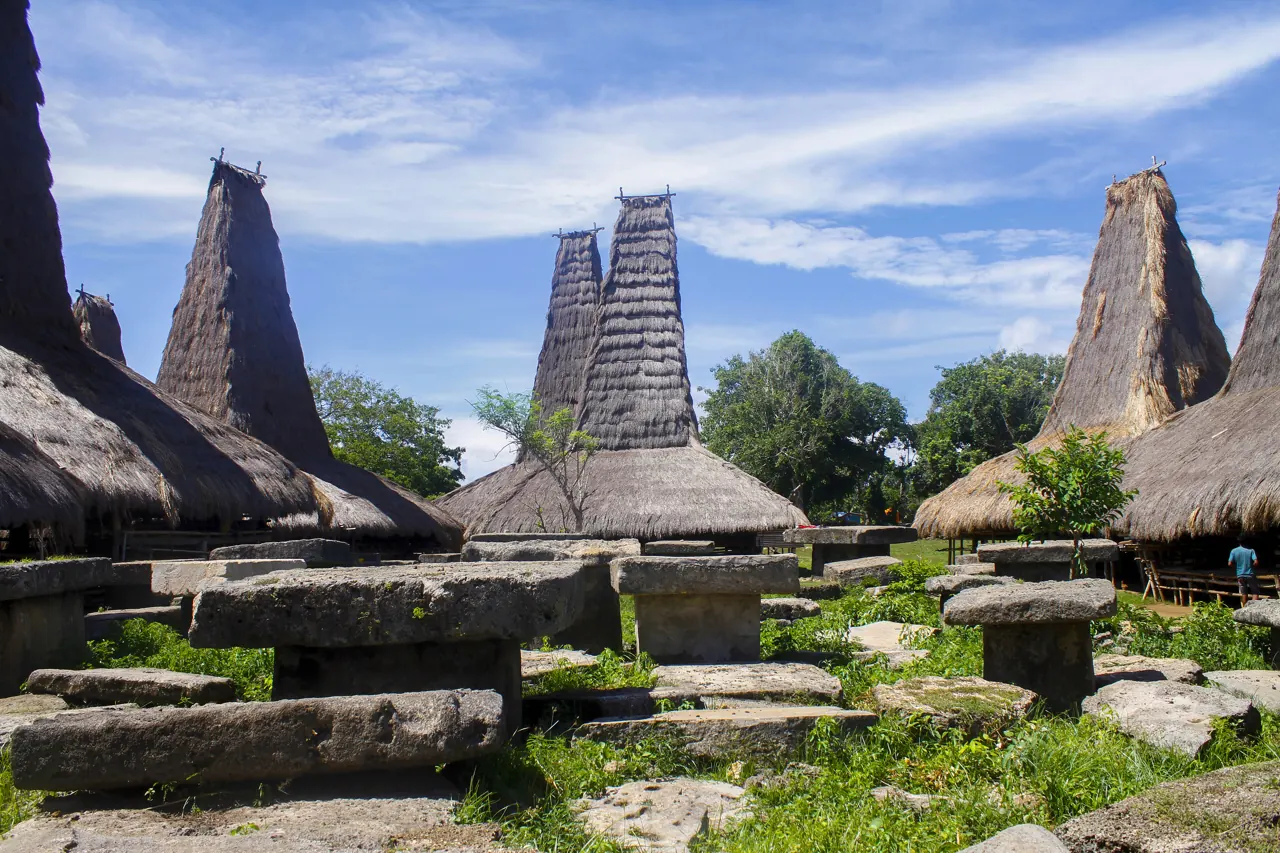
A woman sets down her weaving, wipes her hands and comes to the edge of the veranda with a small box: betel leaf, areca nut, a pinch of lime. Behind her the roof climbs ten metres into the air, and in the yard the grey slabs of her ancestors' tombs are warm in the sun. You have been in the village for two minutes. What you do in the next two decides whether you are a guest or a nuisance.
Sumbanese hospitality is real and patient, and nobody expects a foreigner to know every rule. But the same errors come up again and again in the village rules, ceremony guides and travel advice we have published. Here are fifteen, each with the better choice. The background is in Marapu, ikat and traditional villages.
In the villages
1. Walking in as if it were a museum
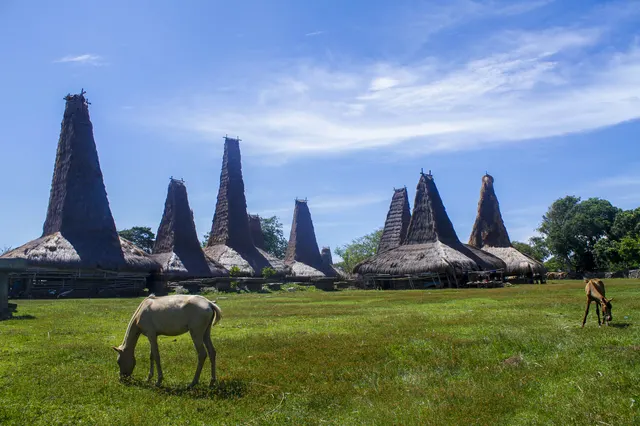
Praijing, Tarung, Ratenggaro and the rest are homes, with clan houses that people sleep in and tombs that hold their parents. Announce yourself at the entrance (permisi is the word), wait to be received and, better still, come with a local guide who introduces you and keeps you away from sacred spots.
Sumba's culture in your inbox
Marapu, ikat, horses and ceremonies, explained with care every Sunday.
One email a week. No spam. Unsubscribe in one click. Sumba this week2. Skipping the guest book
There is usually no ticket. Visitors are expected to sign the guest book and leave a contribution: at Ratenggaro around IDR 20,000 or more per person in 2025-2026. Carry small notes so that you do not need change.
3. Photographing first and asking afterwards
Ask before every photo of people, houses, altars and tombs, and take no for an answer. The same goes, more strongly, for a drone: do not fly over a village without permission.
4. Sitting, standing or climbing on the stone tombs
The megalithic slabs in the yard look like benches and viewpoints. They are graves. Telkomsel's travel advice for the island calls sitting or standing on one highly disrespectful to the ancestors, and every village guide we have published says the same.
5. Touching what is not yours to touch
Ritual objects, altars, the posts of sacred houses and the buffalo horns hung along verandas are not decoration. Look, ask, and keep your hands to yourself. Speak quietly near the sacred houses.
6. Dressing for the beach
Cover shoulders and knees in villages and at ceremonies. A sarong over shorts is enough and is easy to carry, and a woven cloth is appreciated.
Hospitality and money
7. Refusing betel nut or coffee
Guests are received with sirih pinang (betel and areca), tea or coffee. Accept what you are offered: it is the welcome itself. If you want to bring something, betel nut from a town market is an appreciated gesture when you are welcomed into a house. See our guide to Sumba's markets.
8. Handing money or sweets to children
Children may ask. It is kinder to give to the guest book, to the parents or to the village's own enterprise, or to bring school supplies and hand them to an adult.
9. Bargaining for ikat as if it were a souvenir
A large natural-dye cloth represents months of work by several members of a family, and there are no fixed prices. Buy slowly, ask questions and buy directly from the women who wove it. Our ikat guide gives price ranges.
At ceremonies
10. Treating the Pasola as a show
The Pasola is a Marapu ritual tied to the rice cycle, and its date is fixed by the Rato elders a few weeks ahead, not by a tourist calendar. Go with a local guide, stay at the edge of the field and ask before photographing people during the ceremonies around the battle. The 2026 Pasola in Wanokaka was stopped after a brawl among spectators.
11. Expecting business as usual during Wulla Poddu
In West Sumba the sacred month of the Marapu faith usually falls around October and November. While it lasts, work in the fields, funerals and parties are forbidden. Ask your guide whether a village is receiving visitors, and follow the villagers' lead.
12. Photographing a funeral or reacting to the sacrifice
If you are invited to a funeral or wedding, expect animals to be sacrificed, often buffalo, horses or pigs. It is a religious and social duty, not a performance. Never photograph the body, the rituals or the sacrifice without clear permission. More in weddings, funerals and ceremonies in Sumba.
13. Guessing the gift
Gifts at ceremonies follow rules of exchange between families. Go with your host and ask what is appropriate rather than improvising.
On the road and on the land
14. Being alarmed by the parang
You will pass men with a long knife, the parang, at the hip. It is an everyday sight in the countryside and no cause for worry.
15. Assuming an empty beach belongs to nobody
Beaches and fields are not public parks. Almost every slope, spring and stretch of shore is tied to a clan, and a quiet beach may be clan land or sacred ground. If there is a house or a person nearby, ask before you settle in, and never move stones or offerings. Our explainer on customary land in Sumba gives the background.
Five words that open doors
English is rare outside the towns, and a few words of Indonesian turn you from a spectator into a guest: permisi (excuse me, to announce yourself), selamat pagi (good morning), boleh foto? (may I take a photo?), terima kasih (thank you) and maaf (sorry). The rest is in our phrasebook.
Frequently asked questions
What should I wear to visit a traditional village in Sumba?
Clothes that cover shoulders and knees. A sarong over shorts is enough, and a woven cloth is appreciated at ceremonies.
Do I have to pay to enter a village in Sumba?
There is usually no fixed ticket. Visitors sign a guest book and leave a contribution; at Ratenggaro it is around IDR 20,000 or more per person in 2025-2026. Some villages charge a small levy.
Can I take photos in Sumba's villages?
Yes, if you ask first and accept a refusal. Never photograph a body, a ritual or a sacrifice without clear permission, do not climb on tombs for a better angle and do not fly a drone over a village without asking.
What do I do if I am offered betel nut?
Accept it. Betel and areca (sirih pinang), tea and coffee are how guests are welcomed in Sumba.
Is it rude to give sweets or money to children in Sumba?
It is better not to. Give to the guest book, the parents or the village enterprise, or hand school supplies to an adult.
- Sumba travel 2026: east vs west route and seven essential tips, Telkomsel, 16 Feb 2026
- Wulla Poddu, ritual sakral masyarakat Sumba Barat, Good News From Indonesia, 10 Dec 2021
- Dari atraksi budaya ke kepanikan: ritual adat Pasola Wanokaka berakhir oleh kericuhan, Waingapu.com, 9 Mar 2026
- Sumba island travel information and FAQs, Explore Sumba, updated Apr 2023
- Safe solo travel tips for Sumba, IndonesiaJuara (tour operator), 15 Mar 2025
Spotted an error? Write to info@ecobeachcity.com.
Sumba's culture in your inbox
Marapu, ikat, horses and ceremonies, explained with care every Sunday.
One email a week. No spam. Unsubscribe in one click. Sumba this week