Guide · Culture
Weddings, funerals and ceremonies in Sumba: what to do if you are invited
Gifts, dress, betel nut, animal sacrifice and photo etiquette: how to be a good guest at the most important moments of Sumbanese family life.
If you are invited to a ceremony in Sumba, go with your host, dress modestly with shoulders and knees covered, accept the betel nut or coffee offered and ask your host what gift suits you as an outsider. Funerals and weddings involve the exchange of animals and ikat cloth and the sacrifice of buffalo, horses or pigs, a religious and social duty rooted in Marapu belief. Never photograph the body, rituals or sacrifice without clear permission.
- Dress
- Shoulders and knees covered; dark, simple clothes for funerals; woven cloth appreciated
- Welcome
- Betel nut and areca (sirih pinang), tea or coffee
- Gifts
- Relatives bring ikat cloth or animals; visitors ask the host what is appropriate
- Sacrifice
- Buffalo, horses and pigs; a religious and social duty
- Photos
- Ask first; never photograph the body; film the sacrifice only with clear consent
- Religion
- About 63% Protestant, 30% Catholic, a little over 3% Marapu and others (2023)
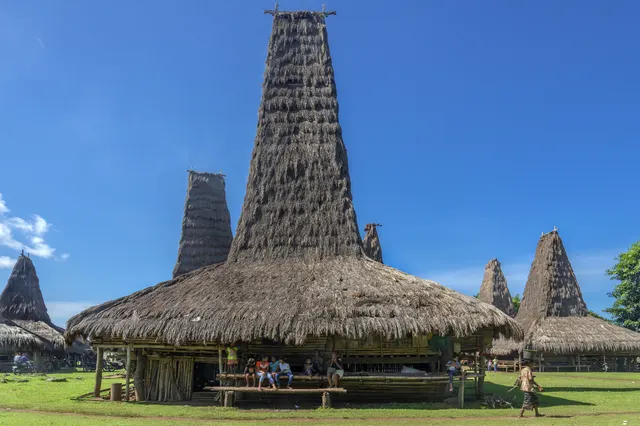
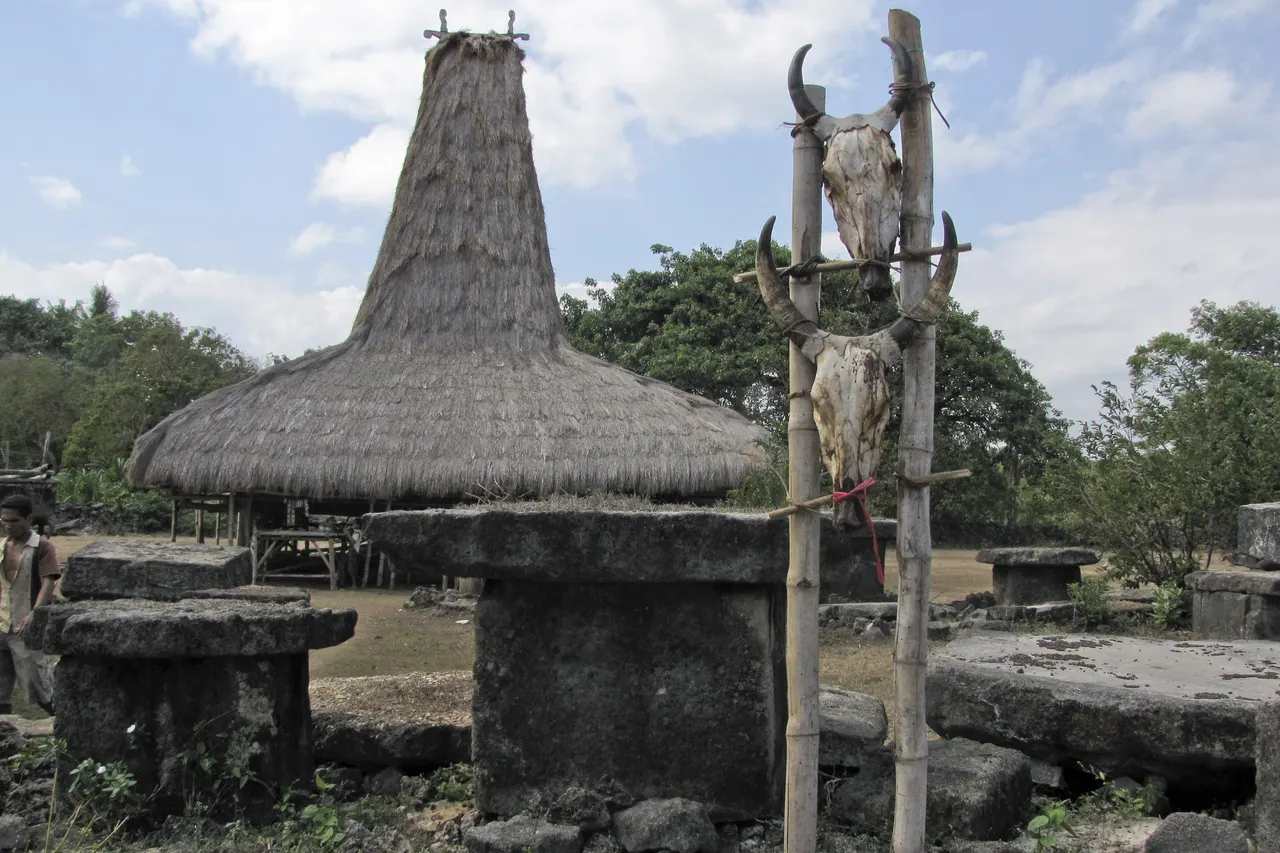
You hear a Sumbanese funeral before you see it: the steady beat of gongs and drums rolling across the valley, sometimes for days. In the yard of the clan house, dozens of relatives sit on mats under a tarpaulin, women in dark ikat sarongs, men in head cloths, betel boxes passed from hand to hand. Buffalo stand tethered by the stone tombs. If a Sumbanese friend, guide or host invites you to something like this, it is an honour, and a few simple rules will help you accept it well.
The short answer: if you are invited to a wedding, funeral or other ceremony in Sumba, go with your host, dress modestly (shoulders and knees covered; a woven cloth is appreciated), accept the betel nut or coffee you are offered, and ask your host what gift is appropriate rather than guessing. Expect animal sacrifice, often buffalo, horses or pigs, which is a religious and social duty, not a show. Never photograph the body, the rituals or the sacrifice without clear permission, and follow the elders' lead.
The background: Marapu, church and adat
Most Sumbanese today are Christian: in 2023 about 63% were Protestant and 30% Catholic, while the ancestral Marapu religion and others accounted for a little over 3%, according to figures compiled on Wikipedia. But the old customs (adat) run through everyone's life. Many families hold a church service and then follow the customary rites; the exchange of animals and cloth between clans continues regardless of religion. In Marapu belief the dead join the ancestors, who in turn bless or punish the living, which is why funerals are the biggest and most carefully staged events in Sumbanese life. For more on the faith, see our guide to Marapu, ikat and traditional villages.
Sumba's culture in your inbox
Marapu, ikat, horses and ceremonies, explained with care every Sunday.
One email a week. No spam. Unsubscribe in one click. Sumba this weekFunerals: what happens
A Sumbanese funeral is less a single day than a long process. Key elements you may see:
- The long wait. Burial can be delayed for months or even years while the family gathers relatives, animals and money. The body is kept in the house, wrapped and carefully tended, and relatives make offerings of betel or cigarettes. In May 2023, for example, a nobleman of the customary village of Praiyawang in Rindi (East Sumba) who died on 1 January 2022 was buried with full rites on 25 May 2023.
- Cloth. The body is wrapped in layers of ikat: a man usually in the hinggi men's cloth, a woman in the lau sarong. Each relative usually brings a cloth as a final tribute; the more cloth, the greater the honour. At the 2023 Praiyawang funeral the body was wrapped in more than 100 East Sumba cloths. A large hand-woven cloth can cost from a few million to more than ten million rupiah.
- The seated position. In East Sumba the dead are traditionally placed seated, knees bent and chin resting on the knees.
- Sacrifice. Buffalo, horses and pigs are slaughtered to accompany the dead and to feed the guests. At the 2023 funeral in Praiyawang, buffalo and horses were killed in front of the house before the burial, and another pair of each afterwards. The number of animals reflects the family's standing and its obligations to other clans.
- The stone tomb. Nobles are buried in megalithic tombs; the Praiyawang tomb, a watu mbeni, weighed between one and five tons. Building a stone tomb takes time and the collective effort of the community.
- Hospitality. Guests are received with betel nut and areca (sirih pinang), tea, coffee and food. Mourners bring something to ease the burden on the bereaved family.
Weddings and bridewealth
A Sumbanese marriage joins two clans, and the bridewealth (belis) is at its heart. The groom's side gives horses and buffalo, often with a gold ear pendant; the bride's side answers with pigs and woven cloth. Anthropologists working in Kodi and East Sumba recorded minimum bridewealths of around ten animals, with larger amounts depending on the bride's family. Part of the bridewealth is often deferred, which keeps the relationship between the two families alive for years.
As a guest you will see speeches, negotiations, gongs, dancing and a big shared meal. You are not part of the exchange, and nobody will expect you to bring a horse.
If you are invited: before you go
- Go with your host. Arrive with the person who invited you, and let them introduce you to the family and elders. They will tell you where to sit (seating has its own rules) and when to greet the family.
- Ask about a gift. Customs differ by region, by family and by the type of ceremony. Ask your host directly what would be appropriate for you as an outsider and how to hand it over. Relatives bring cloth or animals; for a visitor, your host may suggest something practical for the household or a modest contribution.
- Dress modestly. Cover shoulders and knees. Dark, simple clothes are a safe choice for a funeral. If your host offers you an ikat cloth or sarong to wear, accept it; wearing a woven cloth at important events is appreciated.
- Bring cash and patience. Ceremonies run for hours and timings are approximate. Bring water, a hat and small notes.
At the ceremony: etiquette
- Accept the betel. Serving sirih pinang (in East Sumba, the pahappa ritual) is a gesture of respect to guests. If you do not chew betel, you can touch the box with a smile and accept coffee instead, which hosts often offer to those who do not take betel.
- Follow the elders. Sit where you are placed, stand when others stand and keep your voice low during prayers and speeches.
- The sacrifice. The animals are killed in public, often in front of the house. If you find it hard to watch, step back quietly; do not show disgust or leave noisily. Do not intervene.
- Do not touch the body, the coffin, the tomb, offerings or ritual objects, and do not sit or climb on stone tombs.
- Eat what is offered, at least a little. Sharing the meal is part of the ritual. If you do not eat meat, quietly explain to your host.
- No alcohol unless your hosts offer it, and never arrive drunk.
Photos and video
Ceremonies are photogenic, but they are family events, and permission is not automatic, especially at funerals or private rituals. Ask your host before you raise a camera, and ask again before photographing people close up. Never photograph or film the body, and do not film the slaughter unless the family clearly agrees. Turn off the flash and stay out of the way of the ritual specialists. Drones should stay in the bag. Posting images online also deserves a question: some families are happy to share, others are not.
Other ceremonies you may come across
- Pasola. The mounted spear ritual of western Sumba in February and March is public; see our Pasola explainer.
- Tomb building. Raising a new stone tomb is a community effort that can take a long time.
Whatever the occasion, the rule is the same: you are a guest in a family's most important moments. Watch, listen, ask, and leave a little more than you take.
Frequently asked questions
What should I bring to a funeral in Sumba?
Ask your host. Relatives traditionally bring ikat cloth or animals, and mourners bring something to ease the family's burden. As an outsider you are not expected to bring an animal; your host may suggest something practical for the household or a modest contribution.
What should I wear to a Sumbanese ceremony?
Modest clothes that cover shoulders and knees; for funerals, dark and simple. If your host offers an ikat cloth or sarong, wear it, as woven cloth is appreciated at important events. Closed shoes and a hat help on dusty village grounds.
Why are animals sacrificed at Sumba funerals?
In Marapu belief the animals accompany the dead to the world of the ancestors, and they also feed the many guests and repay obligations between clans. The number of buffalo, horses and pigs reflects the family's standing. It is a spiritual duty, not a spectacle.
Can I take photos at a Sumba funeral?
Only with permission, which is not automatic at funerals. Ask your host first, never photograph the body, and film the sacrifice only if the family clearly agrees. Turn off the flash and do not fly drones.
Why are bodies kept at home for so long in Sumba?
Because a proper funeral requires gathering relatives, animals, cloth and money, which can take months or years. The body is wrapped in ikat and tended in the house, and relatives bring offerings until the burial.
What is belis in Sumba?
Belis is the bridewealth exchanged at a marriage: the groom's family gives horses and buffalo, often with gold ornaments, and the bride's family answers with pigs and woven cloth. Part is often deferred, which keeps the two families bound for years.
Places in this guide
- Praiyawang, Rende · Rindi, East Sumba · Open in maps
- Kemenko PMK hadiri upacara pemakaman adat Umbu Kanabu Ndaung di Kampung Adat Praiyawang, Kemenko PMK, 30 May 2023
- Kain tenun Sumba dalam prosesi kematian sebagai simbol penghormatan masyarakat Marapu, Good News From Indonesia, 29 Jul 2026
- Pahappa, tradisi keramahan nan autentik dari Sumba Timur, TIMES Indonesia, 6 Sep 2023
- Marapu in Sumba: what it is and what visitors should know, Backindo, 20 Feb 2026 (updated Jul 2026)
- Sumbanese culture: birth, life and death, The Spice Route End
- Sumba (religion figures 2023), Wikipedia
Spotted an error? Write to info@ecobeachcity.com.
Sumba's culture in your inbox
Marapu, ikat, horses and ceremonies, explained with care every Sunday.
One email a week. No spam. Unsubscribe in one click. Sumba this week