Guide · Travel
Sumba with kids: a practical family guide to health, distances and safe beaches
Horses on the road, a turquoise lagoon and long bumpy drives: how to plan a Sumba family trip that is easy on children and respectful of the island.
Sumba is generally calm and welcoming for families; the real challenges are health and logistics. Visit a travel clinic before you go because Sumba is a malaria risk area, bring children's medicines and insurance with medical evacuation (serious cases go to Bali or Kupang), keep car days short, and swim in sheltered spots such as Weekuri Lagoon or Walakiri rather than the surf beaches. The dry months, roughly May to September, suit children best.
- Is Sumba family-friendly?
- Generally calm and welcoming; logistics and health are the main challenges
- Malaria
- Risk area (CDC); see a travel clinic 4-6 weeks before departure
- Hospitals
- Basic care in Waingapu and Waikabubak; serious cases referred to Bali or Kupang
- Safer swimming
- Weekuri Lagoon and the shallows of Walakiri; avoid south and west surf beaches
- Longest drive
- Tambolaka to Waingapu, about 170 km, 4-5 hours
- Best season for children
- Dry months, roughly May to September
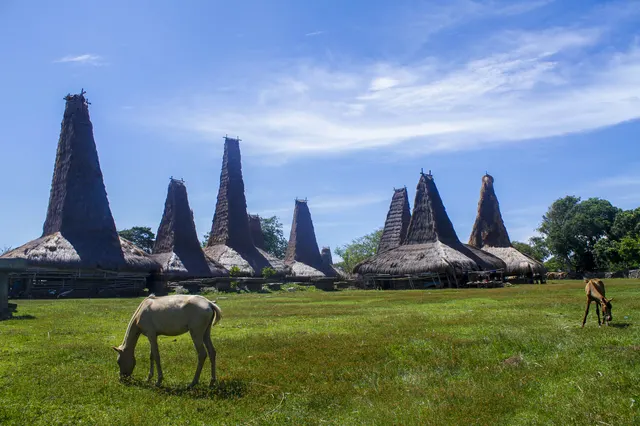
A herd of horses trots across the road and the car stops. In the back seat a seven-year-old presses her face to the window; a buffalo watches from a muddy pool; a group of village children waves and runs alongside, laughing. Later there is a lagoon of clear salt water to float in, a thatched house with a roof as tall as a church, and a sunset over grass the colour of honey. Sumba can be a wonderful family trip. It is also a remote island with long, bumpy roads, basic hospitals and a real malaria risk, and the families who enjoy it most are the ones who plan for that.
The short answer: Sumba is generally a calm, welcoming place for families, and the main concerns are logistics and health rather than crime. See a travel clinic weeks before you go, because Sumba is in a malaria risk area; bring children's medicines and insurance with medical evacuation, since serious cases are referred to Bali or Kupang; keep driving days short; and choose sheltered places to swim, such as Weekuri Lagoon or the shallows of Walakiri, rather than the surf beaches of the south and west. The dry months, roughly May to September, are usually best for children.
Health first: what to sort out before you fly
Health is the part of a Sumba family trip that needs the most preparation.
Sumba this week, every Sunday
The week's news, one place worth the trip and practical travel notes. Free, and you get our 7-day Sumba guide (PDF) on signing up.
One email a week. No spam. Unsubscribe in one click. Sumba this week- Malaria. The US Centers for Disease Control and Prevention lists all of eastern Indonesia, including East Nusa Tenggara, the province that includes Sumba, as a malaria risk area, unlike the resort areas of Bali. The four Sumba regencies recorded most of the province's malaria cases in 2022. See a travel clinic four to six weeks before departure, say clearly that you are going to Sumba, and ask about preventive tablets: the right medicine and dose for a child depend on age and weight.
- Mosquitoes in general. Malaria and dengue are present year-round in most areas. Use a repellent suitable for children, dress them in long sleeves and trousers at dusk and dawn, and make sure every bed has a net or the room is screened.
- Fever is urgent. Any fever during the trip, or in the months after you come home, needs a malaria test the same day.
- Medicines. Pharmacies (apotek) exist in the towns, but do not rely on them for children's medicines. Bring fever reducers, oral rehydration salts, allergy medicine, plasters, antiseptic and any prescriptions.
- Hospitals. Waingapu and Waikabubak have basic public hospitals, and English-speaking staff can be rare. Serious cases are usually referred to Bali or Kupang. Buy travel insurance that covers medical evacuation.
- Rabies. Rabies is present throughout Indonesia and Sumba has many village dogs. Teach children not to touch dogs, cats or monkeys, and if a child is bitten or scratched, wash the wound with soap and running water for 15 minutes and seek care at once. Ask your clinic about pre-exposure vaccination.
- Water. Tap water is not safe to drink. Use sealed bottled water or filtered refills, also for brushing teeth.
Our Sumba safety and health guide covers all of this in more detail.
Distances and car days
Sumba is about 200 km long, roughly twice the size of Bali, and distances on the map always feel longer in real life. Roads are winding and often potholed, and side roads to beaches and waterfalls can be rough. Typical drives:
| Route | Distance | Driving time |
|---|---|---|
| Tambolaka to Weekuri Lagoon | about 40-60 km | 1-1.5 h |
| Tambolaka to Waikabubak | about 40 km | 1-1.5 h |
| Waingapu to Walakiri beach | about 22-24 km | 30-45 min |
| Waingapu to Wairinding hill | about 25 km | 30-45 min |
| Waikabubak to Waingapu | about 130 km | about 3.5 h |
| Tambolaka to Waingapu | about 170 km | 4-5 h |
- Pick one or two bases rather than moving every night: one in the west near Tambolaka, one in the east near Waingapu. Flying into one airport and out of the other saves a long drive.
- Hire a car with a driver and tell him you want a relaxed pace, with stops.
- Car seats are rarely available, so bring a travel seat or booster if your child needs one.
- Bring motion-sickness remedies for winding roads, and plan drives for the cooler morning.
- Leave the stroller at home. Roads and paths are not built for it; a baby carrier works far better.
- Avoid driving after dark: there are few street lights and animals sleep on the road.
Our guide to getting around Sumba has more routes and prices.
Beaches and swimming: choose sheltered water
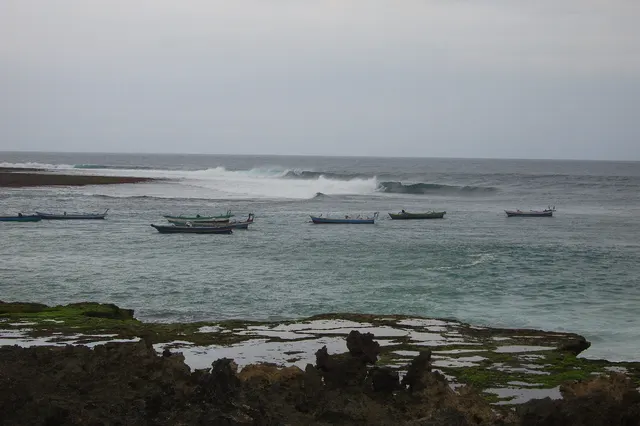
Sumba's south and west coasts face the open Indian Ocean. The same swells that draw surfers create strong rip currents and shore breaks on many beautiful but unguarded beaches, and there are no lifeguards on almost all of them. With children, choose calm, sheltered water and always ask locals before going in.
- Weekuri Lagoon (Southwest Sumba): a saltwater lagoon of clear turquoise water behind a rocky barrier, where village children often come for a dip. It has basic changing facilities and simple stalls. Watch for slippery rocks and deeper sections, and visit outside high tide and big-swell days, when waves can break over the edge.
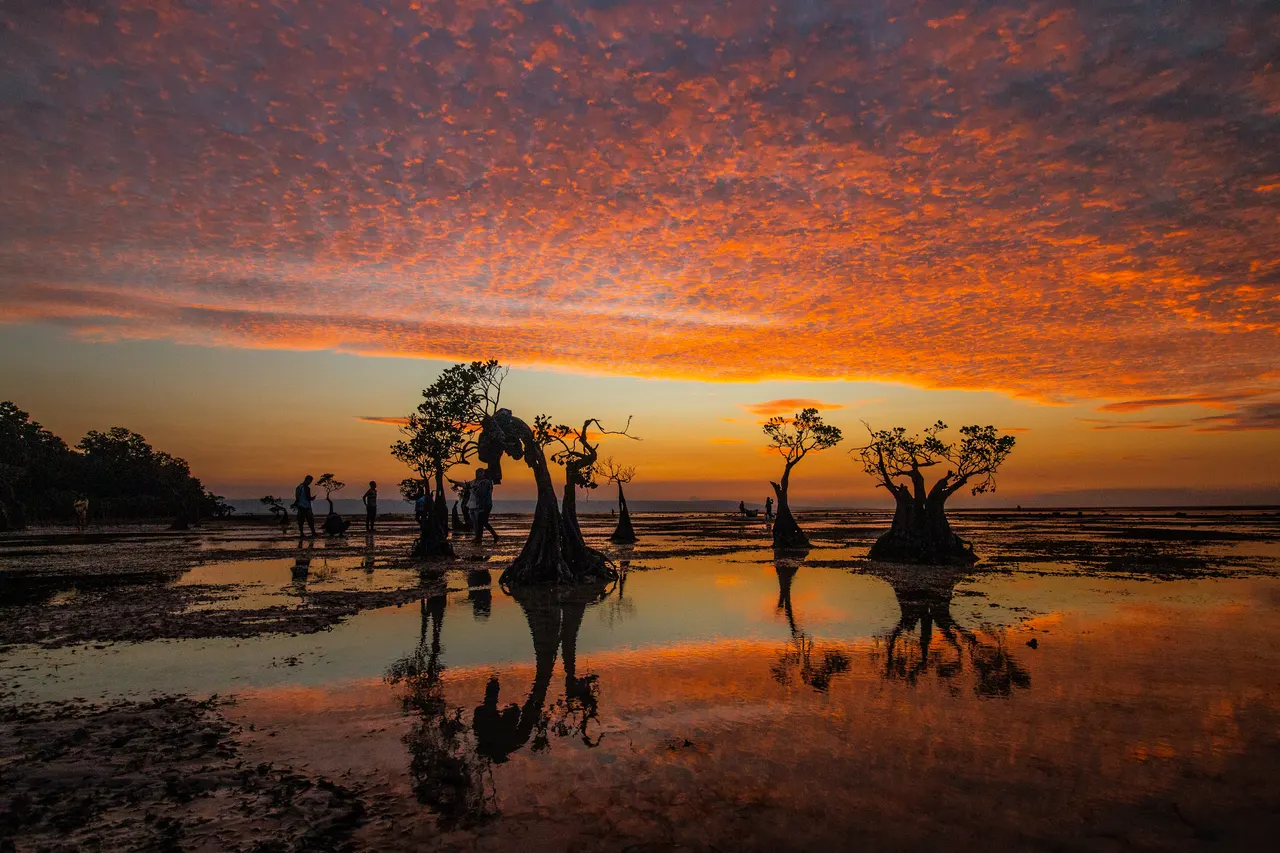
- Walakiri beach (East Sumba, about 30-45 minutes from Waingapu): the water is often shallow and calm, and the mangroves at low tide are magical at sunset. Sea urchins are rare but present, so pack water shoes.
- Mandorak (Southwest Sumba): a small cove between cliffs. Sources disagree about swimming here, with some calling the water calm and others warning of strong waves, so let conditions on the day decide and keep children in the shallows.
- Surf beaches of the south and west, such as Marosi or the beaches of Kodi: lovely for sand play and sunsets, not for swimming with children.
- Rivers, estuaries and mangroves: crocodiles are found around them. Never let children play in or near that water unsupervised.
- Waterfalls: in the dry season some, such as Lapopu or the pools of Waimarang, are lovely for a careful paddle, but trails can be steep and rocks slippery, and in the rainy season they run fast and muddy. See our guide to beaches, lagoons and waterfalls.
Sun and heat
Sumba lies around 10 degrees south of the equator, the sun is fierce and the savanna offers little shade. Daytime highs are around 31-33 C all year.
- Hats with a brim, high-factor sunscreen and long-sleeved swim shirts for children.
- Plenty of water on every drive and hike; the countryside has few shops.
- Plan beaches and viewpoints such as Wairinding for early morning or late afternoon, and rest in the middle of the day.
- Watch for signs of dehydration in small children and carry oral rehydration salts.
Food for children
Local food is simple: rice, noodles, chicken, fish, eggs and vegetables, often with chilli on the side. Many children do fine with plain fried rice or noodles, grilled fish and fresh fruit, but picky eaters may struggle, so bring familiar snacks.
- Ask for food tidak pedas (not spicy).
- Choose freshly cooked, hot dishes and fruit you can peel, such as bananas and papaya.
- Buy snacks, fruit and water in town before long drives.
- Bring baby food, formula and nappies for the trip; choice is limited outside the main towns.
Our guide to Sumbanese food explains local dishes.
Villages, animals and meeting local children
For many children, the best part of Sumba is people and animals: horses on the beaches, buffalo and goats on the roads, and village children who are curious and keen to play. Traditional villages are living homes, so a few rules for the whole family:
- Sign the guest book and leave a small donation; a bag of sirih pinang (betel nut) is a welcome gift.
- Ask before photographing people, especially other children.
- Do not climb on or sit on stone tombs, and do not touch ritual objects or the buffalo horns displayed on houses.
- Dress modestly, with shoulders and knees covered.
- Small gifts such as pencils and notebooks are better given to a school or the village head than handed out to children on the street.
Our guide to Marapu, ikat and traditional villages explains the customs.
When to go with children
The dry months, roughly May to September, are usually best for families: roads are easier, treks are safer and the weather is predictable. July and August are the busiest months, with foreign and Indonesian school holidays, so book transport and rooms early. The rainy season, roughly December to March, brings more mosquitoes, muddy roads and fast-flowing waterfalls, which makes it harder going with small children. See the month-by-month guide to the best time to visit Sumba.
Family packing list for Sumba
- Children's medicines, oral rehydration salts, thermometer, plasters and antiseptic.
- Child-safe insect repellent and, if needed, a light travel mosquito net.
- Sun hats, sunscreen and swim shirts; water shoes for rocky beaches and urchins.
- Travel car seat or booster, and a baby carrier instead of a stroller.
- Reusable water bottles, snacks and a few favourite foods.
- Cash in small notes: ATMs are only in Waingapu, Waikabubak and Tambolaka.
- Downloaded films, books and games for long drives and places without signal.
- Travel insurance with medical evacuation, and copies of passports.
To budget the trip, see how much a trip to Sumba costs, and for flights, how to get to Sumba from Bali.
Frequently asked questions
Is Sumba safe for children?
Generally yes: Sumba is calm and people are welcoming to families. The main risks are malaria and dengue, strong currents on surf beaches, long drives on winding roads and limited medical care, so prepare for health and logistics rather than crime.
Do children need malaria tablets for Sumba?
The CDC lists East Nusa Tenggara, which includes Sumba, as a malaria risk area, unlike Bali's resort areas. Many families are prescribed preventive tablets, but the right medicine and dose depend on a child's age and weight, so see a travel clinic four to six weeks before you go.
Where can kids swim safely in Sumba?
Choose sheltered water such as Weekuri Lagoon in Southwest Sumba, avoiding high tide and big-swell days, or the often shallow, calm water at Walakiri beach near Waingapu. Avoid the surf beaches of the south and west, keep away from rivers and mangroves where crocodiles live, and always ask locals first.
Is there a hospital in Sumba?
Yes, there are public hospitals with basic care in Waingapu and Waikabubak and community health centres in every district, but specialist care is limited and serious cases are referred to Bali or Kupang. Travel insurance with medical evacuation is essential.
Can I rent a car seat in Sumba?
Car seats are rarely available, so bring a travel car seat or booster if your child needs one. Strollers are impractical on Sumba's roads and paths; a baby carrier works better.
What is the best time to visit Sumba with kids?
The dry months, roughly May to September, when roads are easier, waterfalls are clear and treks are safer. July and August are the busiest months, so book early.
Places in this guide
- Weekuri Lagoon · Southwest Sumba · Open in maps
- Walakiri beach · East Sumba · Open in maps
- Tambolaka · Southwest Sumba · Open in maps
- Waingapu · East Sumba · Open in maps
- Waikabubak · West Sumba · Open in maps
- Lapopu waterfall · West Sumba · Open in maps
- Traveling Sumba with kids: tips from an expat mom, Backindo, 7 Oct 2025 (updated Jul 2026)
- Malaria information and prophylaxis, by country [I] (Indonesia), US CDC
- Indonesia travel advice, Smartraveller (Australian Government), accessed Nov 2026
- Sembilan daerah di NTT dinyatakan bebas dari penyakit malaria, ANTARA Kupang, 2 Dec 2023
- A guide to Sumba, Indonesia, Lonely Planet, 10 Apr 2026
- 12 weekend ideas to experience in Sumba, Indonesia.travel (Ministry of Tourism), accessed Nov 2026
Spotted an error? Write to info@ecobeachcity.com.
Sumba this week, every Sunday
The week's news, one place worth the trip and practical travel notes. Free, and you get our 7-day Sumba guide (PDF) on signing up.
One email a week. No spam. Unsubscribe in one click. Sumba this week