Guide · Culture
Languages of Sumba: Kambera, Weyewa, Kodi and more
Sumba is one island with at least eight languages. Who speaks Kambera, Weyewa and Kodi, how they differ, and how much Indonesian you will hear.
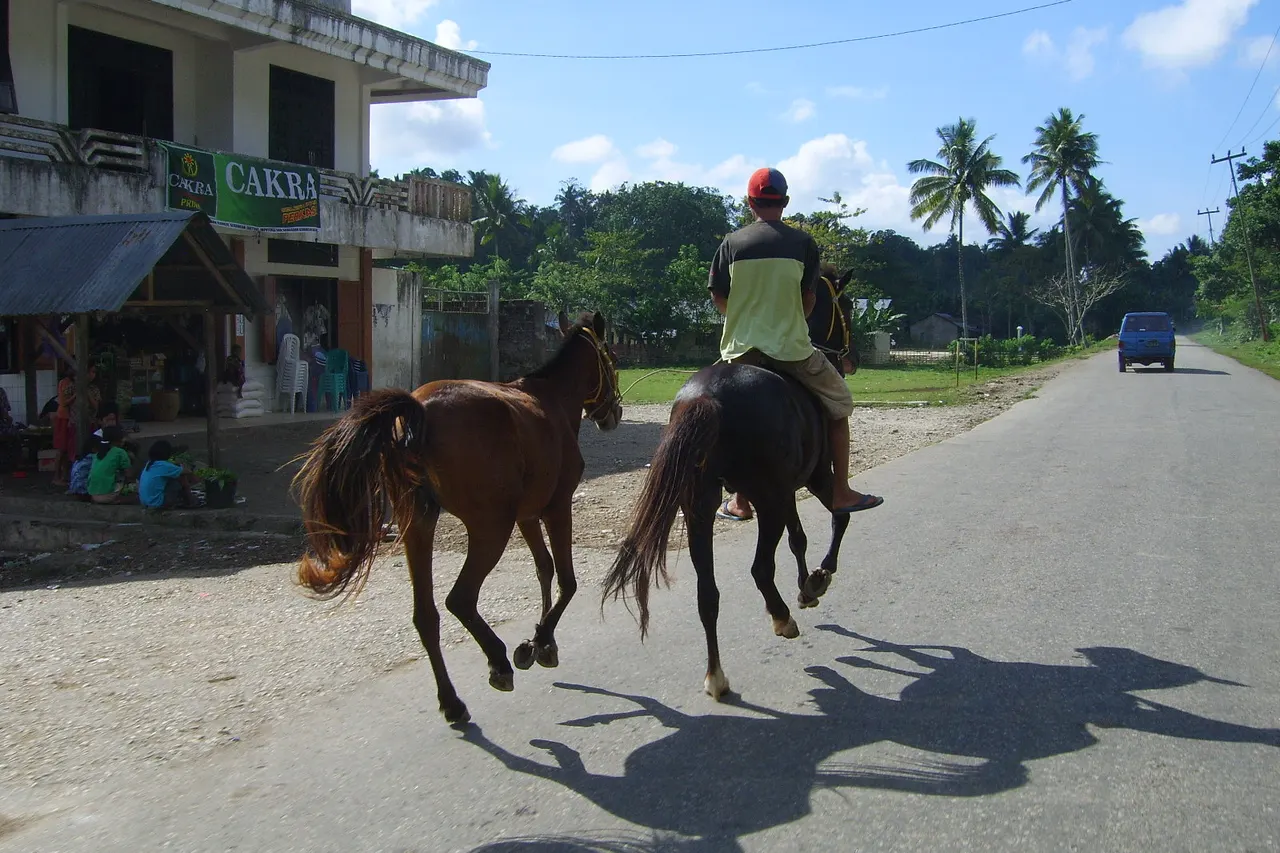
People on Sumba speak at least eight distinct local languages, all Austronesian, plus Indonesian. Kambera dominates the east and is the island's largest language; Weyewa and Kodi are the largest in the west, and smaller ones include Lamboya, Wanukaka, Anakalang, Loura and Mamboru. Indonesian is understood almost everywhere and is the first language of a growing share of town children.
- At least eight languages, depending on who counts: Glottolog lists 7, Ethnologue 8, the Indonesian government map 11.
- Kambera is the language of East Sumba and the lingua franca of the centre and east.
- Weyewa and Kodi each had around 100,000 speakers in the 2010 census; the rest have 20,000 or fewer.
- About 15% of Sumba's people mainly spoke Indonesian at home in 2010, and the share is rising.
- The old ritual speech in paired couplets is fading faster than the everyday languages.
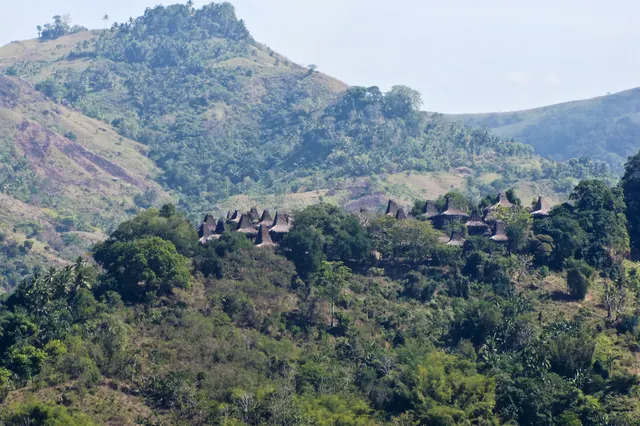
WAINGAPU. Drive from Waingapu to Waikabubak and the greeting changes on the way. In the east, people speak Kambera, the language they call hilu Humba. In the hills around Waikabubak the language is Weyewa or one of its neighbours, and on the far western coast it is Kodi. The island is about 200 km long, yet a linguist working there in 2021 counted at least eight separate languages.
This is a guide to who speaks what, how sure anyone is about the count, and what it means for a visitor who has learned a few words of Indonesian. For useful phrases, see our Sumba phrasebook.
How many languages are spoken on Sumba?
The honest answer is "at least eight". In a 2021 review of the field in the journal NUSA, Joseph Lovestrand of SOAS University of London compared the main reference works and found that they disagree:
Sumba's culture in your inbox
Marapu, ikat, horses and ceremonies, explained with care every Sunday.
One email a week. No spam. Unsubscribe in one click. Sumba this week| Source | Languages on Sumba |
|---|---|
| Glottolog | 7 |
| Ethnologue | 8 (counts Loura apart from Weyewa) |
| Map by the Unit Bahasa dan Budaya (UBB) | 9 (adds Loli) |
| Indonesian government map (Kemdikbud) | 11 (splits Kambera into three and adds Gaura) |
The differences come from the old question of where a dialect ends and a language begins. Gaura, in the far west, is a dialect of Kodi for Glottolog, but its speakers and their neighbours see it as distinct. Loura and Loli are close to Weyewa, yet Ethnologue and the government treat them separately. Lovestrand's own working view is at least eight, including Gaura, with possibly several more.
All of them belong to the Austronesian family, the same family as Indonesian, Tagalog and Malagasy. Within it they form a Sumba group that is closely related to Hawu, the language of the Savu islands to the east. A 2007 study in PNAS by Lansing and colleagues used Sumba as a test case for how languages and genes spread together.
The main languages of Sumba and their speakers
Speaker numbers are uncertain. The table below gives the two figures Lovestrand compares: the 2010 Indonesian census and Ethnologue. He warns that the census figures are unreliable, partly because people used different names for the same language.
| Language | Where it is spoken | 2010 census | Ethnologue |
|---|---|---|---|
| Kambera | East Sumba, the eastern half of the island | 151,000 | 240,000 |
| Weyewa | West: the Wewewa districts and the hills west of Waikabubak | 130,000 | 55,000 |
| Kodi | Far west: the Kodi districts | 93,000 | 20,000 |
| Anakalang | Central Sumba | 19,100 | 16,000 |
| Lamboya (Laboya) | South-west coast of West Sumba | 17,400 | 25,000 (1997) |
| Loura | West | 15,500 | 10,000 (1997) |
| Mamboru | North coast of Central Sumba | 8,400 | 10,000 |
| Wanukaka | South coast of West Sumba | 1,200 | 10,000 (1981) |
Only Kambera, Weyewa and Kodi reach around 100,000 speakers or more. The others have 20,000 or fewer. The island's population was 689,000 at the 2010 census and was projected by Statistics Indonesia (BPS) to pass 800,000 by 2020.
Kambera, the language of East Sumba
Kambera is the best known and best described of the Sumba languages. According to Omniglot, its speakers call themselves Tau Humba and their language hilu Humba, and it serves as a common language across the centre and east of the island. It has several dialects; the UBB map lists Umbu Ratu Nggai, Lewa, Kanatang-Kapunduk, Tabundung, Kambera, Waijilu and Rindi. Researchers disagree on whether Lewa, in the hills between Waingapu and Waikabubak, is part of Kambera or a language of its own.
Dutch officials and missionaries first recorded Kambera in the middle of the 19th century. The key works today are the Kambera-Dutch dictionary by Louis Onvlee (1984), the Kambera-Indonesian dictionary by Oe. H. Kapita (1982) and A Grammar of Kambera by Marian Klamer (1998). It is written in the Latin alphabet.
The patchwork of the west
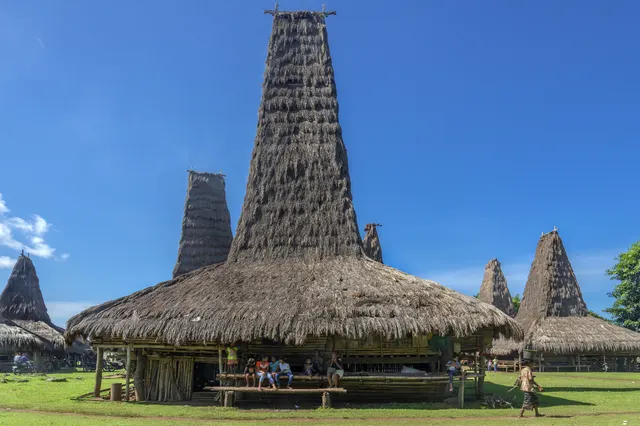
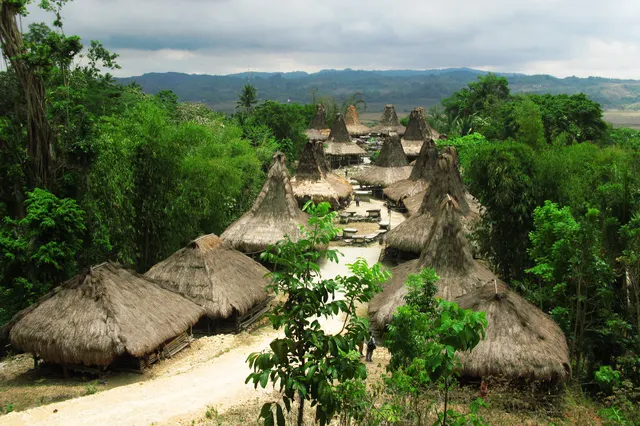
West of Lewa the map breaks into smaller pieces. Weyewa covers the populous highlands of Southwest Sumba; Kodi the coast around the Pasola grounds of Kodi; Lamboya and Wanukaka the south coast, where the other Pasola festivals take place. Anakalang is the language of the megalith villages of Central Sumba, and Mamboru that of the north coast around Mamboro. Lovestrand notes that these languages are much less documented than Kambera: most have short government word lists from 2003, a few have dictionaries, and Kodi and Lamboya have recent descriptions by graduate researchers.
The practical result is that two Sumbanese from opposite ends of the island usually talk to each other in Indonesian.
How much Indonesian will you hear?
A lot, and more each year. In the 2010 census, 104,000 of 685,000 respondents on Sumba said Indonesian was the main language at home, about 15%. Lovestrand writes that the share is probably higher now, that children in the towns often learn only Indonesian, and that schools and media are spreading it in the villages. He still describes the vitality of the local languages as relatively high.
For a visitor, that means Indonesian works in shops, markets, offices and with drivers across Sumba. A few words in the local language are a courtesy that people notice, especially in villages; ask your guide which language the village speaks before you try.
The language of ritual
Sumba's languages have a second, formal register used in ceremonies: speech in paired lines, where each idea is said twice in parallel. It is the language of prayers to the Marapu ancestors, of marriage negotiations and of funerals, and it is the part that is disappearing fastest. Lovestrand cites a study of Weyewa children: 60% of 12-year-olds understood traditional couplets in 1979, against 25% in 1994.
If you attend a ceremony, such as a funeral or the Wulla Poddu rites in West Sumba, the long chanted speeches are this register. Ask afterwards what was said; it is usually the clearest window into what the event means.
What it means
Sumba's languages are one reason the island feels larger than its size. A trip from Waingapu to Kodi crosses at least three language areas, each with its own words for the same houses, horses and ceremonies. Learn some Indonesian for the practical side of travel, pick up a greeting in Kambera or Weyewa for the people you stay with, and do not assume that what you learned in the east will be understood in the west.
Frequently asked questions
What language do they speak in Sumba?
Indonesian is understood almost everywhere. At home most people speak one of at least eight local languages: Kambera in the east, and Weyewa, Kodi, Lamboya, Wanukaka, Anakalang, Loura or Mamboru in the west and centre.
Is Sumbanese one language?
No. 'Sumbanese' is often used for Kambera, the largest language, but the island has at least eight distinct languages that are related but not mutually intelligible across the island.
Do people in Sumba speak English?
Mostly in hotels and among some guides and drivers. Indonesian is far more useful; see our phrasebook for the essentials.
- Lovestrand, Languages of Sumba: state of the field, NUSA 70 (2021), SOAS repository
- Kambera (hilu Humba), Omniglot
- Sumba languages, Wikipedia (classification; Lansing et al. 2007, PNAS)
Spotted an error? Write to info@ecobeachcity.com.
Sumba's culture in your inbox
Marapu, ikat, horses and ceremonies, explained with care every Sunday.
One email a week. No spam. Unsubscribe in one click. Sumba this week