Guide · Travel
Birdwatching in Sumba: endemic birds and where to look
Sumba has 12 restricted-range bird species, four found nowhere else, including the Sumba hornbill. What to look for, where the forest is and the park rules.
Sumba is an Endemic Bird Area with 12 restricted-range species, according to BirdLife International; four are found only on the island: the Sumba hornbill, the red-naped fruit dove, the Sumba buttonquail and the Sumba boobook. Most live in the island's remaining forest, about 10% of its area, which is concentrated in the Laiwangi Wanggameti and Manupeu Tanah Daru national parks.
- 12 restricted-range species on BirdLife's list for the Sumba Endemic Bird Area; four are Sumba endemics.
- The Sumba hornbill, about 70 cm long, is the island's emblem bird and is classed as threatened.
- Closed forest covers only about 10% of Sumba, mostly in small patches; most target birds depend on it.
- The two national parks hold the largest forests; enter only with the park office's permission.
- The Sumba buttonquail lives in grassland, so the savanna is worth scanning too.
WAINGAPU. Most visitors know Sumba for its bare, golden hills. Birdwatchers come for what is left of its forest, and for one bird above all: the Sumba hornbill, a blackish hornbill about 70 cm long that most visitors to the island's forests hope to see. It lives nowhere else on Earth, and it is one of 12 bird species with small ranges that make the island a priority for conservationists.
This guide covers which birds to look for, where the habitat is, how to go about it and the rules for the national parks.
Why Sumba matters for birds
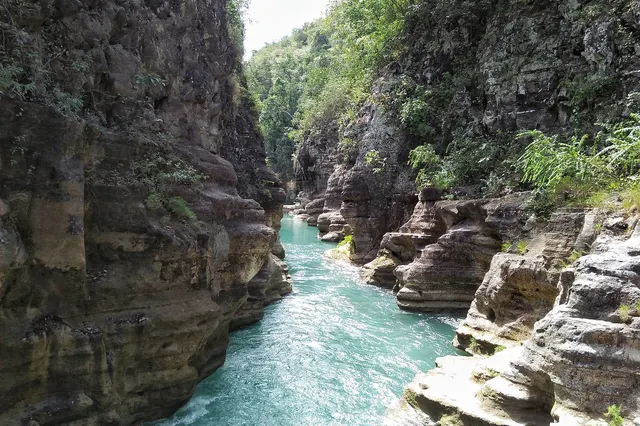
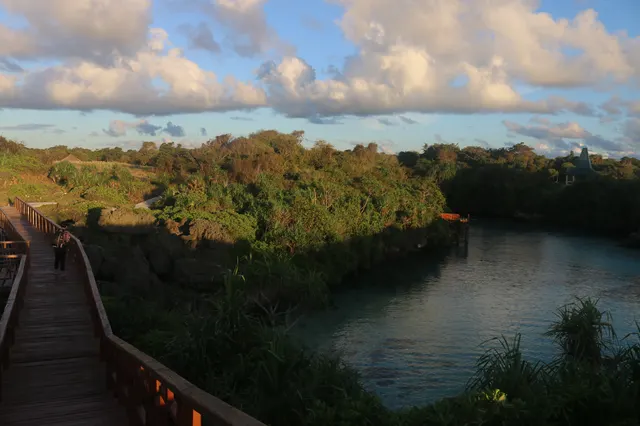
BirdLife International lists Sumba as an Endemic Bird Area, number 163 in its global inventory, covering about 11,000 km² from sea level to 1,200 m. Its factsheet gives the main natural vegetation as deciduous monsoon forest, with pockets of semi-evergreen rainforest on south-facing slopes, evergreen gallery forest in gullies and montane forest above about 800 m. It also explains the problem: clearing and dry-season burning have turned much of the island into grassland and savanna woodland, and closed-canopy forest now covers only about 10% of Sumba, mostly in small, isolated patches.
Sumba this week, every Sunday
The week's news, one place worth the trip and practical travel notes. Free, and you get our 7-day Sumba guide (PDF) on signing up.
One email a week. No spam. Unsubscribe in one click. Sumba this weekThat is why a birding trip on Sumba is a forest trip, even on an island famous for its open hills.
The endemic and restricted-range birds of Sumba
These are the 12 species BirdLife lists for the Sumba Endemic Bird Area, with the IUCN category it gives:
| Bird | Scientific name | IUCN category |
|---|---|---|
| Sumba green pigeon | Treron teysmannii | Near threatened |
| Red-naped fruit dove (Sumba endemic) | Ptilinopus dohertyi | Vulnerable |
| Sumba buttonquail (Sumba endemic) | Turnix everetti | Least concern in the table; described as scarce |
| Sumba boobook (Sumba endemic) | Ninox rudolfi | Near threatened |
| Sumba hornbill (Sumba endemic) | Rhyticeros everetti | Endangered |
| Cinnamon-banded kingfisher | Todiramphus australasia | Least concern |
| Sumba cicadabird | Edolisoma dohertyi | Least concern |
| Yellow-spectacled white-eye | Heleia wallacei | Least concern |
| Chestnut-backed thrush | Geokichla dohertyi | Near threatened |
| Sumba jungle flycatcher | Cyornis oscillans | Not assessed |
| Sumba flycatcher | Ficedula harterti | Least concern |
| Apricot-breasted sunbird | Cinnyris buettikoferi | Least concern |
BirdLife names four of them as found only on Sumba: the red-naped fruit dove, the Sumba hornbill, the Sumba buttonquail and the Sumba boobook. It also notes two local forms, the Sumba brown flycatcher and the Sumba myzomela, that it treats as races of wider species, and a separate conservation case: the island's race of the yellow-crested cockatoo, citrinocristata, with its orange crest, which is endangered and declining because of habitat loss and trapping.
The Sumba hornbill
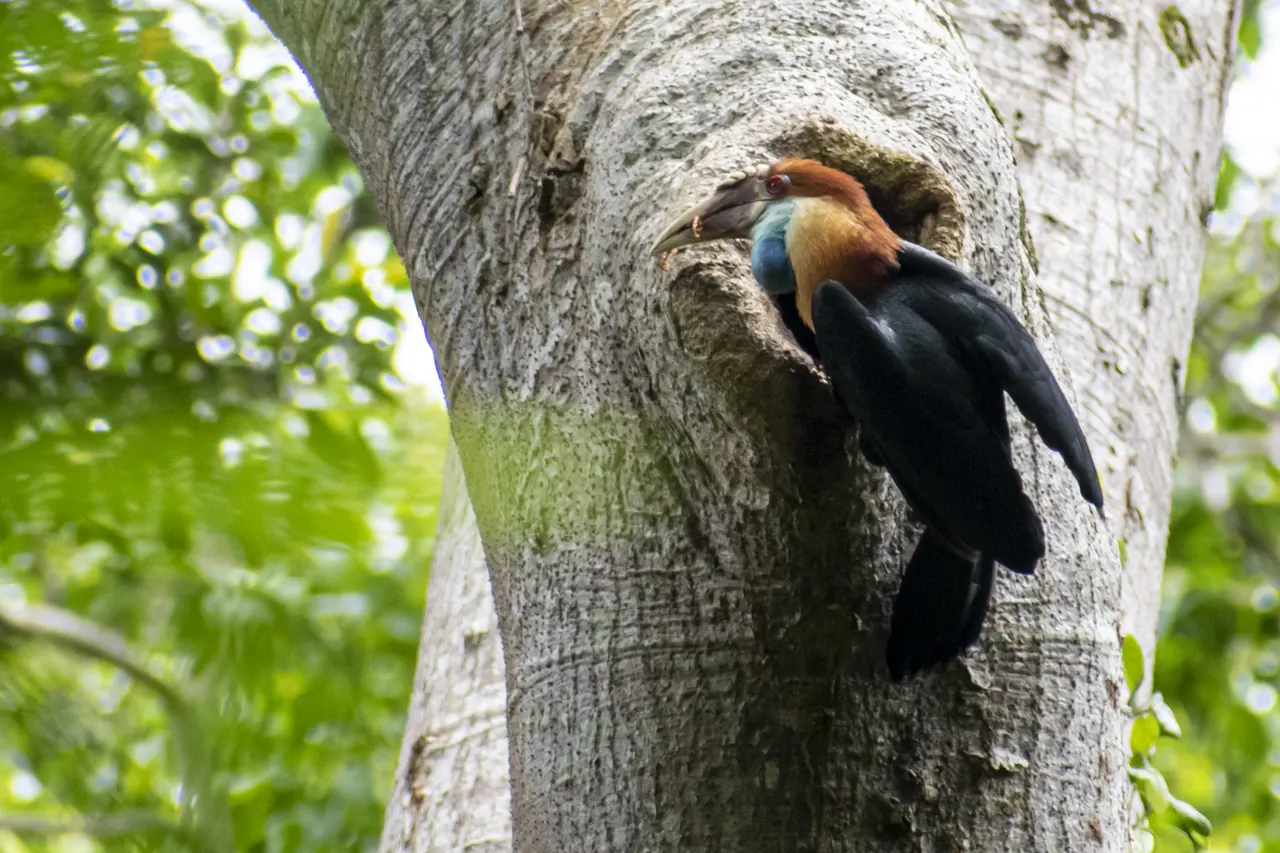
The hornbill (julang sumba in Indonesian) is the one most people come for. Wikipedia's summary of the scientific literature describes a medium-sized, blackish hornbill about 70 cm long that lives in semi-evergreen lowland forest up to about 950 m, eats mainly fruit and is monogamous. It is threatened by habitat loss, a small range and population, and hunting in some areas, and it is listed in Appendix II of CITES, which controls international trade. Part of its habitat is protected in the two national parks.
Hornbills need large old trees with holes for nesting, which is why they disappear when forest is fragmented. Our photo of a male at a nest hole in Laiwangi Wanggameti National Park shows the kind of tree they depend on.
Where to go birdwatching in Sumba
BirdLife lists six Important Bird and Biodiversity Areas on the island: Laiwanggi Wanggameti, Luku Melolo, Manupeu Tanadaru, Poronumbu, Tanjung Ngunju and Yawila. For a visitor, the two national parks are the practical choices:
- Manupeu Tanah Daru, in the west and centre of the island, between Waikabubak and the south coast. It is the easier of the two to combine with a trip to West Sumba.
- Laiwangi Wanggameti, in the south of East Sumba, around Mount Wanggameti, the island's highest point. It holds some of the largest forest blocks and is a long drive from Waingapu.
The two parks are run by one authority, Balai Taman Nasional Manupeu Tanadaru-Laiwanggi Wanggameti (TN Matalawa), with an office in Waingapu. In November 2026 the park said there is no official hiking trail on Mount Wanggameti and that it was not issuing hiking permits there; read our report on the Wanggameti permit case before you plan anything in that park.
Outside the forest, the grassland is worth scanning for the Sumba buttonquail, the one target species that lives in open country.
How to plan a birding day
- Contact the park office first. Ask which areas are open, whether you need a permit and whether a ranger or local guide must come with you.
- Go early. Forest birds are most active in the first hours after dawn; leave Waingapu or Waikabubak in the dark.
- Bring binoculars and a field guide. Neither is easy to find on the island.
- Use a local guide. People from villages near the forest know where fruiting trees and nest trees are, and the park says local people should guide visitors.
- Do not use playback near nests, do not cut vegetation for a better view and keep a long distance from any nest hole.
- Never buy wild birds. Trade in protected species, including the island's cockatoo, is illegal.
Our guide to hiking in Sumba covers terrain and heat, and the guide for photographers in Sumba covers light and drone rules.
What it means
Sumba is a small but serious birding destination: four species that exist nowhere else, a threatened hornbill and an endangered cockatoo, all in forests that now cover about a tenth of the island. For visitors, that means going through the national park office, hiring local guides and accepting that some areas are closed. For the island, birdwatchers who pay local guides are one of the few ways the remaining forest earns money while standing.
Frequently asked questions
What birds are endemic to Sumba?
BirdLife International names four: the Sumba hornbill, the red-naped fruit dove, the Sumba buttonquail and the Sumba boobook. Eight more restricted-range species share the island with a few neighbouring islands.
Where can I see the Sumba hornbill?
In the remaining semi-evergreen forest, mainly inside Manupeu Tanah Daru and Laiwangi Wanggameti national parks. Ask the park office in Waingapu which areas are open and go with a local guide.
Do I need a permit for Sumba's national parks?
Contact the park authority (TN Matalawa) before you go. In November 2026 it said it was issuing no hiking permits for Mount Wanggameti because there is no official trail.
- Sumba Endemic Bird Area (EBA 163) factsheet, BirdLife International DataZone
- Sumba hornbill, Wikipedia (IUCN 2020 assessment and CITES Appendix II references)
- Wanggameti hikers had no permit, park says, The Sumba Times, 19 November 2026 (from Waingapu.com)
Spotted an error? Write to info@ecobeachcity.com.
Sumba this week, every Sunday
The week's news, one place worth the trip and practical travel notes. Free, and you get our 7-day Sumba guide (PDF) on signing up.
One email a week. No spam. Unsubscribe in one click. Sumba this week