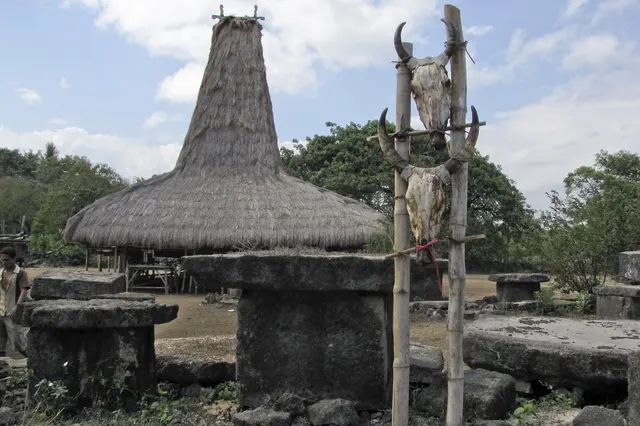
Guide · Culture
Why Sumba's traditional villages keep catching fire
Tarung in 2017, Kampung Deke in 2020, Waru Wora in 2025: West Sumba's thatched villages burn again and again. The record, the causes and what visitors can do.
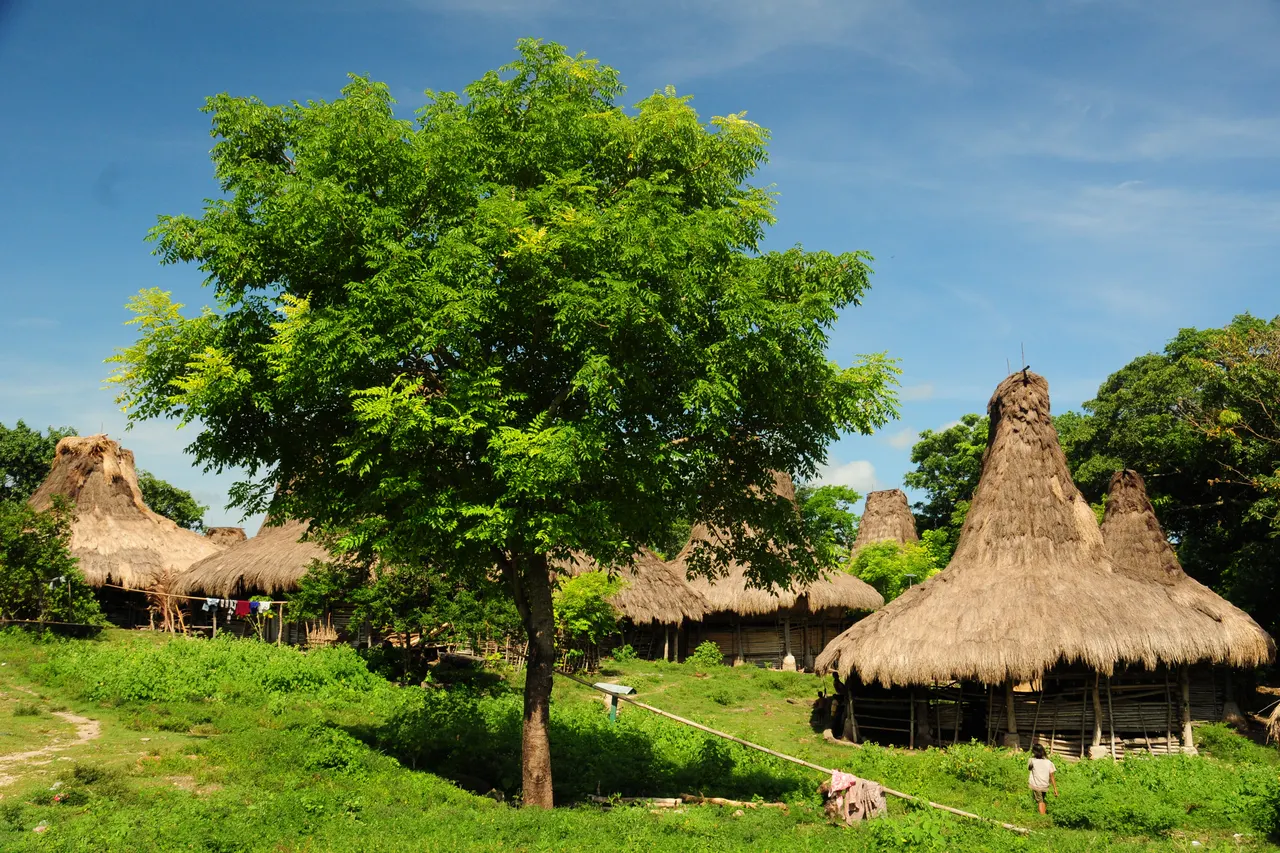
Traditional villages in West Sumba have burned repeatedly: 30 houses in Tarung, Waikabubak, in October 2017; 21 houses in Kampung Deke, Lamboya, on 10 August 2020; and 26 houses destroyed in Waru Wora, also in Lamboya, on 5 December 2025. Officials and researchers point to wooden houses with alang-alang thatch, cooking fires inside the houses, sparks from field burning and strong dry-season wind.
- At least five fires in West Sumba villages between 2017 and 2025 are documented in the press.
- Tarung (October 2017): 30 traditional houses; Kampung Deke (August 2020): 21; Waru Wora (December 2025): 26 destroyed and 2 damaged.
- Causes named: thatch and timber, cooking inside, sparks from burning fields, dry-season wind; electrical faults are rare.
- Losses include ritual heirlooms and textiles that cannot be replaced.
- Visitors should never smoke or light anything in or near a village.
WAIKABUBAK. On the afternoon of 5 December 2025, residents of Waru Wora, a traditional village in Lamboya, West Sumba, went to collect wood for a pig pen and saw flames on the back of a roof. By the time the fire was under control, about an hour and three-quarters later, 26 of the village's roughly 36 houses had been destroyed and two more damaged. Forty-one families, 139 people, lost their homes. Nobody died.
It was not the first such fire, and it was not the first in that area. This report sets out the documented record, the causes officials name and what it means for people who visit Sumba's villages.
A record of village fires in Sumba
| Date | Village | Houses | Source |
|---|---|---|---|
| October 2017 (a Saturday; reported 10 October) | Tarung, Waikabubak, West Sumba | 30 traditional houses destroyed | The Jakarta Post, via the Asia Fire News archive |
| July 2019 | Ubu Bewi, Taramanu village, Wanokaka, West Sumba | Not given | Antara, 12 August 2019 |
| 10 August 2020, about 16:30 WITA | Kampung Deke, Patiala Bawa village, Lamboya | 21 traditional houses; 28 families affected; losses about IDR 630 million | Liputan6, 11 August 2020 |
| 7 October 2024, afternoon | Kampung Kahale, Haronakalla village, West Laboya | 10 houses, including one traditional house | detikBali, 8 October 2024 |
| 5 December 2025, about 16:00 to 17:45 | Waru Wora, Patiala Bawa village, Lamboya | 26 destroyed, 2 damaged; 41 families, 139 people | Fire Risk Heritage, 19 December 2025 |
Two of these fires, in 2020 and 2025, hit hamlets of the same village administration, Patiala Bawa in Lamboya. In 2019, Antara's report also listed Tarung among villages in East Nusa Tenggara (NTT) that had burned.
Sumba's culture in your inbox
Marapu, ikat, horses and ceremonies, explained with care every Sunday.
One email a week. No spam. Unsubscribe in one click. Sumba this weekWhy Sumba's villages burn
In August 2019, the head of NTT's provincial tourism office, Wayan Darmawa, explained the risk to Antara. The houses are built of wood and alang-alang thatch, which catch fire easily. Families cook inside them. And there is often no clear boundary between the fields and the village, so when farmers burn their gardens, sparks can carry to the roofs. Fires are more likely in long dry seasons with strong wind, he said; electrical faults are rarely the cause.
The individual reports fit that picture. In Kampung Kahale in 2024, the police chief of West Sumba, AKBP Hendra Dorizen, said the fire was suspected to have started in a resident's kitchen; the houses, mostly wood and bamboo with thatched roofs, let it spread quickly. In Kampung Deke in 2020, the fire began in one house of wood and thatch and spread to the others, according to Liputan6. In Waru Wora, police said they were investigating, and that the first information pointed to an accident rather than arson. In Tarung, police had ruled out arson.
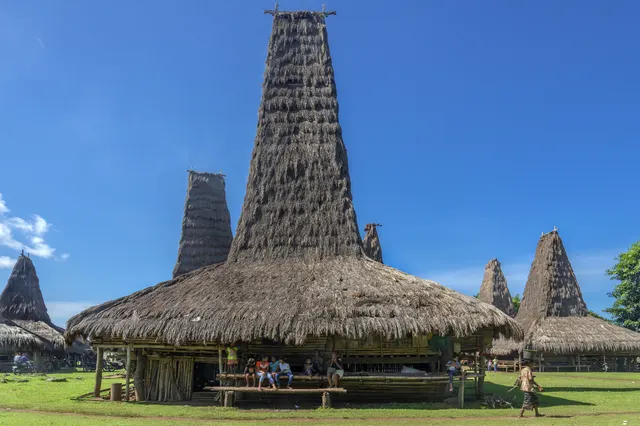
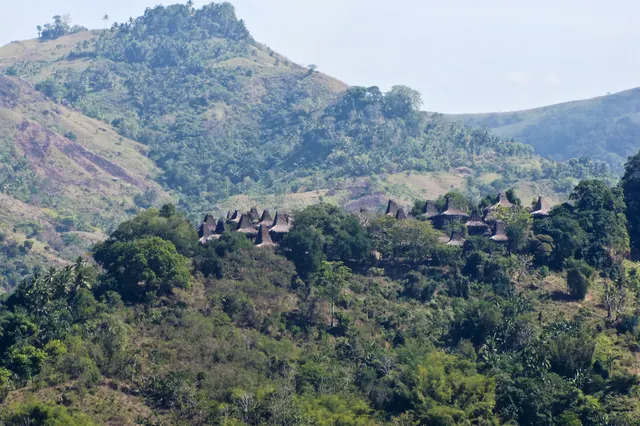
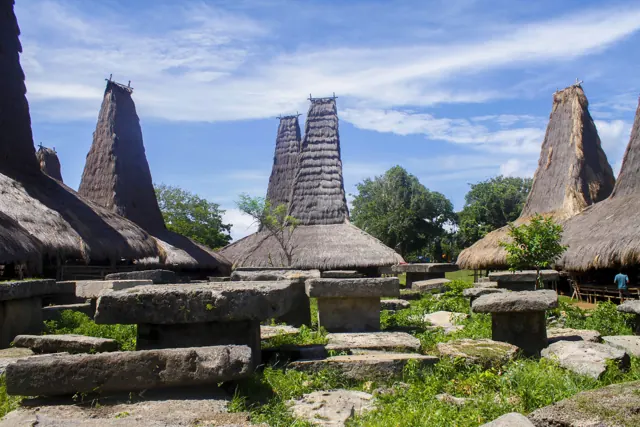
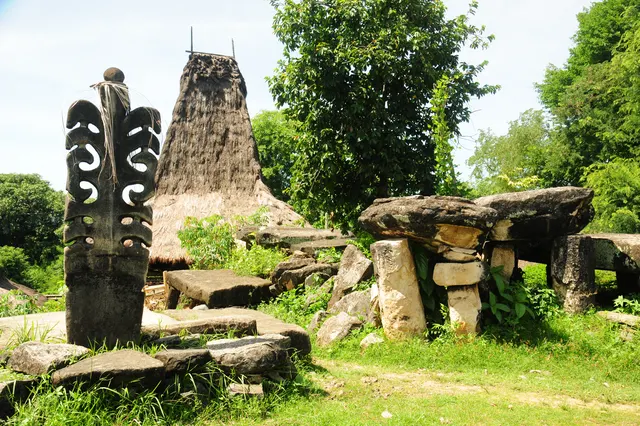
The layout adds to the risk. Our guide to the Sumba traditional house explains how villages are built: houses in close rows around a central plaza, each with a hearth in the middle and a tall roof of dry grass above it. Once one roof is alight, the next is a few metres away.
What is lost in a village fire
A house can be rebuilt. What is inside often cannot. The Fire Risk Heritage report on Waru Wora lists ritual heirlooms, textiles and everyday objects tied to clan identity among the losses. In a Sumba house, the loft under the peak holds the family's sacred objects, such as mamuli and old ikat, and in many cases these are the last physical link to the clan's ancestors.
Fighting the fires is hard. In Waru Wora, residents first tried to pull burning thatch from the roofs by hand, with basic tools and water containers, before three water-tanker trucks brought the fire under control. In Kampung Kahale, residents' attempts with simple tools failed. After the 2020 fire, the West Sumba disaster agency (BPBD), through its secretary Nina Lay, began recording damage and the number of families affected.
What has been proposed
In 2019, Darmawa called for clear boundaries between plantation land and the villages, as planned in tourism policy and regional regulation, and asked residents to take more care, especially when cooking indoors. The Fire Risk Heritage report, written after Waru Wora, calls for fire-safety measures, emergency water supplies, 3D documentation of the villages so that they can be rebuilt faithfully, and reconstruction funding that respects their culture.
What visitors can do
- Never smoke in or near a traditional village, and never drop a match or a cigarette end there.
- Do not use candles, lighters or camping stoves near the houses.
- In the dry season, when you see fields being burned near a village, keep your distance and do not stop on the road downwind.
- If you visit a village that has burned, ask before photographing the ruins, and leave a contribution: rebuilding a thatched house takes timber, grass and labour that the community must find.
- Choose guides and tours that pay the village directly; our guide to helping responsibly in Sumba explains how to check.
Our pages on Tarung and Praijing cover the two most visited villages near Waikabubak.
What it means
Sumba's thatched villages are among the island's great sights, and also among its most fragile places. The same features that make them beautiful, close rows of tall dry roofs with a fire burning in each house, make them burn. Five documented fires in eight years in one regency are a warning. For visitors, the duty is simple: no flame, no cigarette, and support for the communities that rebuild.
Frequently asked questions
Which traditional villages in Sumba have burned?
Documented cases include Tarung in Waikabubak (October 2017, 30 houses), Ubu Bewi in Wanokaka (July 2019), Kampung Deke in Lamboya (August 2020, 21 houses), Kampung Kahale in West Laboya (October 2024) and Waru Wora in Lamboya (December 2025, 26 houses destroyed).
Why do Sumba's traditional houses catch fire so easily?
They are built of timber with alang-alang grass thatch, families cook on hearths inside, villages are tightly packed, and sparks from field burning can reach the roofs in the windy dry season.
Can I still visit villages that have burned?
Often yes, but ask first, do not photograph ruins without permission and leave a contribution towards rebuilding.
- Fire and destruction of a traditional village in Sumba (Indonesia), Fire Risk Heritage, 19 December 2025
- Jerit tangis warga ketika api membakar 21 rumah adat Sumba, Liputan6, 11 August 2020
- Mengapa kampung adat di NTT rawan kebakaran, ini penjelasannya, Antara Kupang, 12 August 2019
- 10 rumah warga di Sumba Barat ludes terbakar, detikBali, 8 October 2024
- Fire ravages traditional houses in Tarung, The Jakarta Post (10 October 2017), Asia Fire News archive, Tokyo University of Science
Spotted an error? Write to info@ecobeachcity.com.
Sumba's culture in your inbox
Marapu, ikat, horses and ceremonies, explained with care every Sunday.
One email a week. No spam. Unsubscribe in one click. Sumba this week